

Introduction
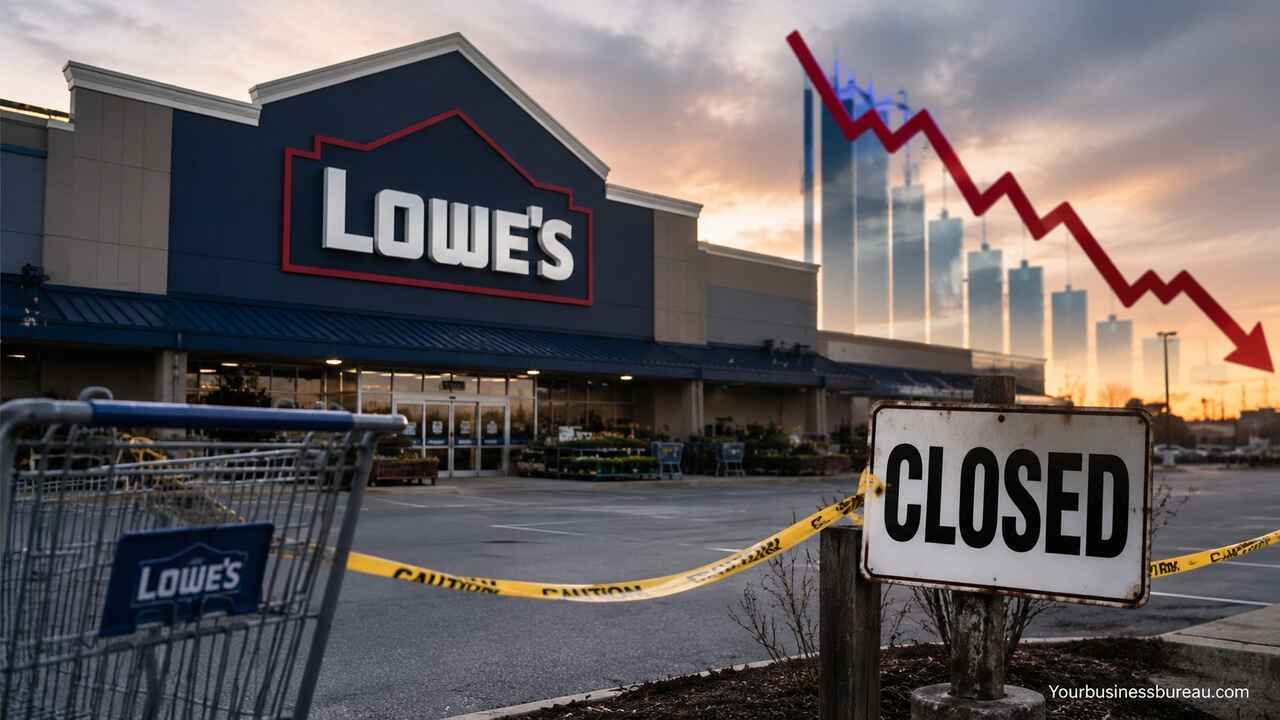
If you have recently searched for “Is Lowe’s going out of business?” you are not alone. Rumors about major retail chains often spread quickly whenever stores close, sales slow down, or economic conditions become uncertain. Seeing a local Lowe’s location shut its doors can naturally lead customers to wonder whether the entire company is struggling.
The short answer is no. Lowe’s is not going out of business. While the company has closed selected underperforming stores over the years and has experienced the same economic challenges affecting many retailers, it continues to operate thousands of home improvement stores across North America. The company remains one of the largest home improvement retailers in the world, investing in technology, supply chain improvements, online shopping, and professional contractor services.
This guide explains the facts behind the rumors, examines Lowe’s financial position, discusses why some stores close, and explores what customers can expect from the company’s future.
Examine Lowe’s Current Business Status
Lowe’s continues to operate as one of the leading home improvement retailers in North America. The company serves millions of homeowners, contractors, builders, and businesses by offering products for construction, remodeling, maintenance, gardening, appliances, and home décor. Its nationwide footprint remains extensive, with stores located throughout the United States and Canada.
The company generates billions of dollars in annual revenue and maintains a strong market position alongside other major home improvement retailers. Rather than shrinking across the board, Lowe’s continues investing in digital shopping experiences, faster delivery options, inventory management, and customer service improvements.
Like most publicly traded retailers, Lowe’s experiences periods of stronger and weaker consumer demand. Higher interest rates, inflation, and slower housing activity can reduce spending on home improvement projects, but these economic cycles do not indicate that the company is shutting down.
Review Lowe’s Financial Performance
A company’s financial health provides one of the clearest indicators of whether it faces serious business risks. Lowe’s continues to report substantial annual revenue while maintaining profitability despite changing market conditions.
Several factors contribute to the company’s financial stability:
| Financial Indicator | Business Impact |
| Annual revenue | Supports continued operations and investments |
| Profitable operations | Allows expansion and modernization |
| Strong cash flow | Funds inventory, technology, and employee programs |
| Established customer base | Creates recurring sales throughout the year |
| Professional contractor sales | Provides consistent business demand |
Although quarterly earnings may fluctuate, Lowe’s continues to generate enough income to support long-term business operations. Investors often evaluate profit margins, operating income, and comparable store sales rather than focusing on temporary market slowdowns.
Financial performance naturally changes with consumer confidence and housing market activity, but occasional declines do not mean bankruptcy or liquidation is imminent.
Understand Why Some Lowe’s Stores Close
Store closures often create the impression that an entire retail chain is failing. In reality, large retailers routinely evaluate the performance of individual locations and may close stores that no longer meet business objectives.
Several reasons can lead to a Lowe’s store closing:
- Poor local sales performance
- Expiring lease agreements
- High operating expenses
- Market overlap with nearby stores
- Changes in customer shopping patterns
- Strategic restructuring
Closing a limited number of locations allows the company to allocate resources toward stronger markets. This practice is common among successful retailers and does not necessarily indicate financial distress.
In many cases, customers can continue shopping at nearby Lowe’s stores or use the company’s online ordering platform for home delivery or store pickup.
Compare Lowe’s with Other Home Improvement Retailers
Lowe’s competes in a highly competitive retail market. Understanding its competitive position helps explain why the company remains financially stable.
| Feature | Lowe’s | Typical Competitor |
| National store network | Extensive | Extensive |
| Online shopping | Available | Available |
| Professional contractor services | Yes | Yes |
| Home delivery | Yes | Yes |
| Appliance selection | Large | Large |
| Seasonal products | Wide variety | Wide variety |
| Installation services | Available | Available |
Competition encourages continuous improvement. Lowe’s invests heavily in pricing, customer service, digital innovation, and inventory management to maintain market share.
Rather than falling behind competitors, the company continues modernizing stores and improving both online and in-store shopping experiences.
Evaluate Factors Affecting Home Improvement Retailers

The home improvement industry depends on several economic conditions that influence customer spending.
Housing market activity plays a major role. When more people purchase homes, renovation projects often increase. During slower housing markets, consumers may postpone large remodeling projects while continuing to purchase maintenance supplies and essential repair materials.
Interest rates also influence spending. Higher borrowing costs may reduce demand for major renovations, while lower rates often encourage remodeling and home improvement investments.
Inflation affects both retailers and customers. Increased costs for lumber, appliances, tools, and transportation can temporarily reduce consumer purchasing power. Successful companies adjust inventory strategies and pricing to remain competitive during these periods.
Despite these economic pressures, home improvement remains an essential industry because homeowners must continue maintaining and repairing their properties.
Explore Lowe’s Growth Strategy
Instead of preparing for closure, Lowe’s continues implementing long-term business strategies designed for sustainable growth.
Technology remains a major investment area. Customers increasingly expect convenient online ordering, accurate inventory information, mobile apps, and flexible delivery options. Lowe’s continues improving these services to meet evolving consumer expectations.
Professional customers represent another important growth opportunity. Contractors, electricians, plumbers, painters, and builders purchase large quantities of materials throughout the year. Lowe’s continues expanding services tailored specifically to these professionals.
Supply chain improvements also help the company maintain inventory availability while reducing delivery times. Efficient logistics contribute to better customer satisfaction and improved profitability.
These initiatives demonstrate ongoing investment rather than business decline.
Recognize Common Reasons Behind Bankruptcy Rumors
Rumors about large retailers often spread online without sufficient evidence. Several situations commonly trigger speculation.
A local store closure may be mistaken for nationwide shutdowns. In reality, retailers frequently adjust their store networks based on regional performance.
Workforce restructuring can also generate misleading headlines. Businesses periodically reorganize departments, invest in automation, or modify staffing strategies to improve efficiency rather than prepare for closure.
Temporary declines in quarterly earnings sometimes receive disproportionate attention. Public companies experience normal fluctuations influenced by seasonal demand, weather, inflation, and broader economic conditions.
Social media posts often amplify isolated events without providing broader financial context. Reviewing official financial reports and company announcements offers a more accurate understanding of business performance.
Follow Lowe’s Digital Transformation
Consumer shopping habits continue evolving toward online research and digital purchasing. Lowe’s has responded by expanding its digital capabilities.
Customers can browse thousands of products online, compare specifications, check inventory availability, schedule deliveries, and arrange installation services without visiting a physical store.
Mobile applications improve convenience by allowing shoppers to create project lists, locate products inside stores, and receive personalized recommendations.
The company also integrates online and in-store shopping through curbside pickup, same-day delivery options in selected markets, and improved order tracking systems.
Digital transformation strengthens competitiveness and supports long-term customer engagement.
Assess Customer Confidence and Brand Reputation
Customer loyalty remains one of Lowe’s strongest assets. Millions of homeowners return regularly for maintenance supplies, seasonal products, appliances, tools, flooring, lighting, and outdoor equipment.
Many shoppers appreciate the company’s broad product selection and knowledgeable staff. Professional contractors also rely on Lowe’s for consistent inventory availability and specialized building materials.
Brand recognition developed over decades contributes to stable customer traffic. Home improvement projects often require multiple purchases over several weeks or months, encouraging repeat business.
Maintaining customer confidence remains central to the company’s long-term strategy.
Monitor Future Business Outlook
Industry analysts generally expect home improvement spending to remain an important part of consumer expenditures over the long term.
Population growth, aging homes, infrastructure improvements, and increasing interest in energy-efficient renovations continue creating opportunities for retailers like Lowe’s.
Although economic conditions may produce temporary slowdowns, homeowners consistently require maintenance materials, repair products, replacement appliances, and renovation supplies.
Future growth will likely depend on continued investments in technology, customer service, inventory management, and professional contractor relationships rather than rapid expansion through new store openings alone.
Conclusion
Lowe’s is not going out of business. While the company has occasionally closed underperforming stores and navigated challenging economic conditions, it remains one of the largest and strongest home improvement retailers in North America.
The business continues investing in digital innovation, supply chain improvements, professional customer services, and enhanced shopping experiences. Temporary fluctuations in sales or selective store closures are common business practices and should not be confused with bankruptcy or liquidation.
Customers can continue shopping with confidence, knowing that Lowe’s remains financially stable and focused on long-term growth. As housing markets and consumer spending evolve, the company appears well-positioned to remain a major player in the home improvement industry for years to come.
FAQ’s
No. Lowe’s continues operating thousands of stores and remains financially stable despite normal business challenges and selective store closures.
Individual locations may close because of low sales, lease issues, market restructuring, or strategic business decisions. These closures do not mean the company is shutting down.
Yes. Lowe’s continues generating billions of dollars in annual revenue, maintains profitability, and invests heavily in technology, customer service, and operational improvements.
Yes. Customers can order products online for home delivery, curbside pickup, or in-store pickup depending on product availability and location.
The company’s strategy focuses primarily on improving existing stores, expanding digital services, strengthening professional customer programs, and selectively pursuing growth opportunities where appropriate.
Based on the company’s current operations, financial performance, and ongoing investments, there is no indication that Lowe’s is preparing to go out of business.
