

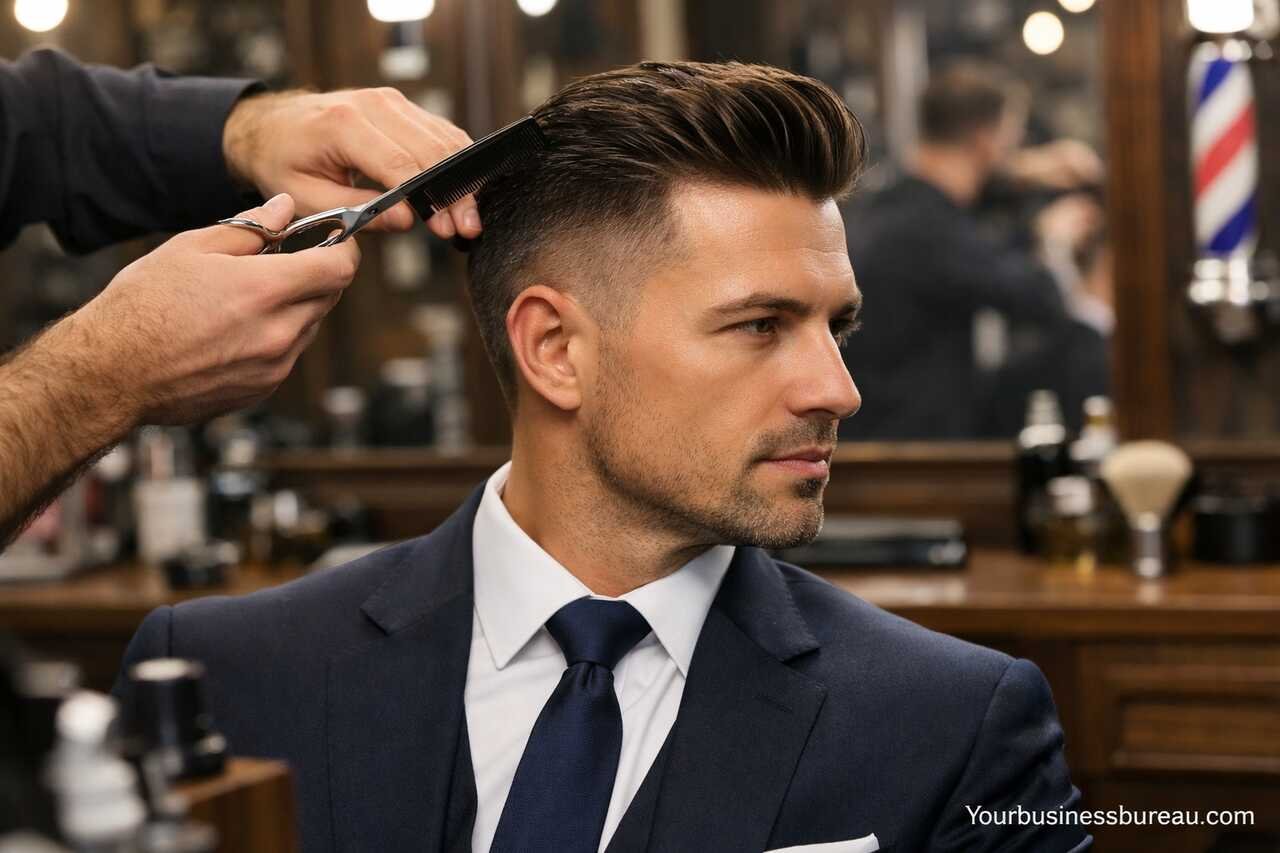
Highlights
- A business haircut creates a clean, structured, and professional appearance that directly improves first impressions in workplace environments.
- Professional grooming strengthens personal branding by aligning appearance with competence, discipline, and reliability.
- Popular styles like side part, taper fade, and crew cut provide flexibility while maintaining workplace appropriateness.
- Face shape and hair type play a critical role in selecting the most suitable haircut for a balanced and confident look.
- Regular maintenance, including trimming and light styling, ensures long-term consistency and polished presentation.
- A well-maintained haircut improves workplace confidence, communication, and perceived authority.
- Modern trends allow slight personalization while still preserving professional standards and neatness.
- Consistency in grooming leads to better opportunities, stronger impressions, and improved career growth potential.
A business haircut defines a structured, clean, and professional hairstyle that aligns with workplace expectations while enhancing personal confidence and credibility. A business haircut combines neat edges, balanced proportions, and controlled volume to create a polished appearance that communicates discipline, reliability, and attention to detail in professional environments.
A business haircut also functions as a personal branding tool that directly connects grooming with perception, communication, and career growth. Professional appearance influences how others evaluate competence, and a well-maintained haircut strengthens that evaluation. Workplace culture evolves continuously, yet grooming standards remain rooted in clarity, neatness, and structure. A business haircut supports both formal and semi-formal environments by adapting classic principles into modern styles. Personal experience confirms that consistent grooming builds confidence, and confidence improves interaction quality, decision-making clarity, and professional relationships over time.
What Defines a Business Haircut in Modern Professional Environments?

A business haircut represents a grooming standard that blends tradition with adaptability. Professional environments value consistency, and consistency reflects through clean fades, tapered sides, and well-maintained lengths. Workplace culture influences haircut choices, yet a universally accepted style always prioritizes neatness and symmetry. A balanced haircut signals professionalism, and professionalism influences first impressions during meetings, interviews, and networking situations.
A modern workplace allows flexibility, yet expectations still revolve around clean presentation. A business haircut does not require extreme styling or bold experimentation. Instead, a structured haircut focuses on subtle refinement. Hair texture, face shape, and personal style combine to create a version of professionalism that remains appropriate while still feeling authentic.
From my experience, a business haircut changes how people respond during conversations. When I walk into a meeting with a clean, sharp haircut, I notice increased attention and respect. Grooming communicates discipline before words even begin, and that silent communication often shapes outcomes.
Classic Structure
Classic structure refers to evenly trimmed sides, moderate length on top, and smooth blending between sections. Traditional styles like side parts and taper cuts fall into this category, offering timeless appeal.
Modern Adaptation
Modern adaptation introduces slight texture, softer fades, and flexible styling options. Contemporary professionals often prefer styles that transition easily from office settings to social environments.
Why Does a Business Haircut Matter for Professional Image?
A business haircut contributes directly to personal branding. Personal branding influences how colleagues, clients, and employers perceive competence and reliability. A well-maintained hairstyle signals discipline, while an unkempt appearance suggests inconsistency. Visual presentation forms an immediate impression, and that impression often becomes difficult to change.
Professional environments rely heavily on non-verbal communication. Grooming choices communicate attention to detail, and attention to detail often correlates with job performance. A business haircut reinforces the idea that an individual values standards, organization, and professionalism.
From my perspective, a business haircut acts like a silent introduction. Before I speak, my appearance already delivers a message. When that message aligns with professionalism, conversations flow more smoothly, and trust builds faster.
First Impression Impact
First impression impact relates to how quickly others form opinions based on appearance. A clean haircut creates a positive initial perception.
Workplace Confidence
Workplace confidence grows when appearance aligns with expectations. A well-groomed look reduces self-consciousness and improves communication clarity.
Which Are the Most Popular Business Haircut Styles Today?
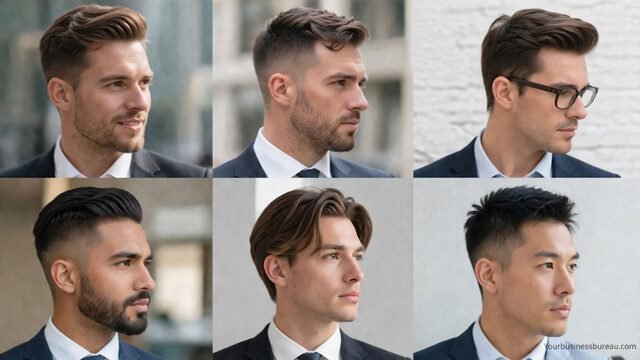
Popular business haircut styles combine tradition with subtle modern elements. The side part remains one of the most recognized styles, offering a structured and clean look. The taper fade provides a gradual transition that enhances neatness without appearing overly bold. The crew cut delivers simplicity and low maintenance, making it ideal for busy professionals.
The textured crop has gained popularity due to its versatility. A textured crop maintains professionalism while allowing slight movement and individuality. The slick back style creates a polished and authoritative appearance, often associated with leadership roles.
From my experience, choosing the right style depends on lifestyle and daily routine. A low-maintenance haircut works best for demanding schedules, while a slightly styled option suits roles that involve frequent public interaction.
| Style Name | Key Characteristics | Maintenance Level | Professional Suitability |
| Side Part | Defined line, combed structure | Medium | High |
| Taper Fade | Gradual blending, clean edges | Medium | High |
| Crew Cut | Short, simple, low volume | Low | High |
| Textured Crop | Natural texture, modern look | Medium | Medium-High |
| Slick Back | Smooth, polished, formal finish | High | High |
Side Part Style
Side part style emphasizes a defined line and combed structure. A side part works well in formal industries and enhances facial symmetry.
Taper Fade Variation
Taper fade variation blends hair gradually from top to sides. A taper fade offers a clean finish without sharp contrasts, making it workplace-friendly.
How Can You Choose the Right Business Haircut for Your Face Shape?
Face shape plays a critical role in selecting a suitable haircut. Oval face shapes accommodate most styles due to balanced proportions. Round face shapes benefit from added height and reduced side volume to create elongation. Square face shapes pair well with softer edges that balance strong jawlines.
Hair type also influences the outcome. Straight hair supports structured styles like side parts, while wavy hair enhances textured looks. Curly hair requires controlled shaping to maintain neatness while preserving natural volume.
From my experience, understanding face shape changed how I approach grooming. Once I aligned my haircut with my facial structure, the overall look became more balanced, and the confidence boost felt immediate.
| Face Shape | Recommended Style | Avoid | Resulting Effect |
| Oval | Most styles | Excessive volume | Balanced appearance |
| Round | High volume top | Flat sides | Elongated face look |
| Square | Soft textured styles | Very sharp edges | Balanced jawline |
| Triangle | Volume on top | Tight sides | Proportion correction |
Oval Face Compatibility
Oval face compatibility allows flexibility. Most styles complement the natural balance of an oval shape.
Round Face Adjustment
Round face adjustment focuses on adding height and reducing width. Styles with volume on top create a more elongated appearance.
What Are the Maintenance Requirements for a Business Haircut?
A business haircut requires regular maintenance to preserve its clean structure. Frequent trims every two to four weeks keep edges sharp and prevent overgrowth. Consistency ensures the haircut maintains its professional appearance over time.
Daily styling also plays an essential role. Light styling products such as pomade, wax, or gel help maintain shape and control. Hair hygiene, including regular washing and conditioning, ensures a healthy and polished look.
From my personal routine, maintenance makes the biggest difference. Even the best haircut loses impact without proper care. A few minutes each day can maintain a sharp, professional appearance effortlessly.
Regular Trimming Schedule
Regular trimming schedule keeps the haircut structured. Visiting a barber consistently prevents uneven growth.
Styling Routine
Styling routine includes using minimal product for a natural finish. Overuse of product can reduce professionalism.
How Does a Business Haircut Influence Workplace Perception and Success?
Workplace perception often connects appearance with competence. A business haircut reinforces discipline and reliability, which are qualities valued in professional environments. Colleagues and clients tend to associate neat grooming with strong work ethics.
Leadership roles often demand a polished appearance. A clean haircut supports authority and credibility, especially in client-facing positions. Professional grooming also reflects respect for workplace standards.
From my experience, grooming influences opportunities. A sharp appearance often leads to stronger first impressions, and those impressions can open doors to new roles and responsibilities.
Professional Credibility
Professional credibility increases when grooming aligns with workplace expectations. A clean haircut enhances trustworthiness.
Career Advancement
Career advancement often depends on perception. A polished look supports leadership presence and confidence.
What Future Trends Are Shaping Business Haircuts?
Future trends in business haircuts focus on personalization and adaptability. Professionals increasingly prefer styles that balance individuality with workplace standards. Subtle texture and natural movement are becoming more accepted across industries.
Sustainability and grooming products also influence trends. Many individuals now choose eco-friendly hair products that support both style and environmental responsibility. Technology and social media continue to shape preferences by introducing new variations of classic styles.
From my observation, business haircuts are evolving rather than changing completely. Core principles of neatness and professionalism remain constant, while small adaptations allow personal expression.
Textured Professional Styles
Textured professional styles combine clean edges with natural movement. These styles offer flexibility without compromising professionalism.
Sustainable Grooming Choices
Sustainable grooming choices include eco-friendly products and minimal chemical usage. These choices reflect modern awareness and responsibility.
Conclusion
A business haircut represents more than a grooming choice. A business haircut communicates professionalism, confidence, and discipline in every interaction. Structured styles, proper maintenance, and alignment with face shape ensure a polished and effective appearance. Personal experience confirms that a well-maintained haircut enhances both confidence and perception in professional environments. Consistency, simplicity, and attention to detail remain the foundation of every successful business haircut.
If you want to explore how we help businesses grow from the ground up, you can visit yourbusinessbureau.com to see what we offer.
FAQ’s
Ideal length varies based on style, yet moderate top length with shorter sides creates the most balanced and professional look.
Maintenance every two to four weeks ensures the haircut remains clean and structured.
A business haircut can include subtle texture and modern elements while maintaining professionalism.
Hair type significantly influences style selection. Straight, wavy, and curly textures require different approaches for optimal results.
A subtle taper fade suits most workplaces, while extreme fades may not align with conservative environments.
