

Introduction
Utah business entity search allows entrepreneurs, investors, and researchers to access official business records registered with the Utah Department of Commerce. The search system helps users verify company names, confirm registration status, review filing history, and identify registered agent information before starting a business or forming partnerships. Many people planning to launch a company in Utah use the database to check whether a business name already exists in the state registry.
What Is Utah Business Entity Search and Why Does It Matter?
Utah business entity search serves as a public database maintained by the Utah Department of Commerce that lists registered companies operating within the state. Entrepreneurs, investors, and legal professionals use the database to verify business legitimacy, confirm registration status, and check whether a business name is already in use.
A business registry provides transparency across the commercial environment. Transparency helps customers trust businesses, helps investors research companies, and helps entrepreneurs avoid legal conflicts when choosing a company name. Without such a system, duplicate company names and fraudulent registrations could become common problems.
During my own experience working with entrepreneurs who want to start a company in Utah, the first step I always recommend involves running a Utah business entity search. That step gives immediate insight into whether a desired company name is available or already registered by another organization.
The Utah registry also plays an important role in regulatory compliance. Businesses must maintain accurate registration information, including registered agent details and filing updates. Public access to that information creates accountability within the marketplace.
Business Transparency
Business transparency refers to the availability of public information about companies operating in a state. Utah business entity search supports transparency by providing records about company formation dates, registration status, and registered agent contact information.
Transparency builds trust between companies and consumers. Consumers can verify that a company exists and operates legally before making purchases or entering contracts.
Name Availability Verification
Name availability verification ensures that a new company does not register a name already used by another organization. Utah business entity search allows entrepreneurs to check business names instantly.
Name verification prevents legal conflicts and protects brand identity. Entrepreneurs who skip this step often face rejected filings or forced name changes later.
How Does the Utah Business Entity Search Tool Work?
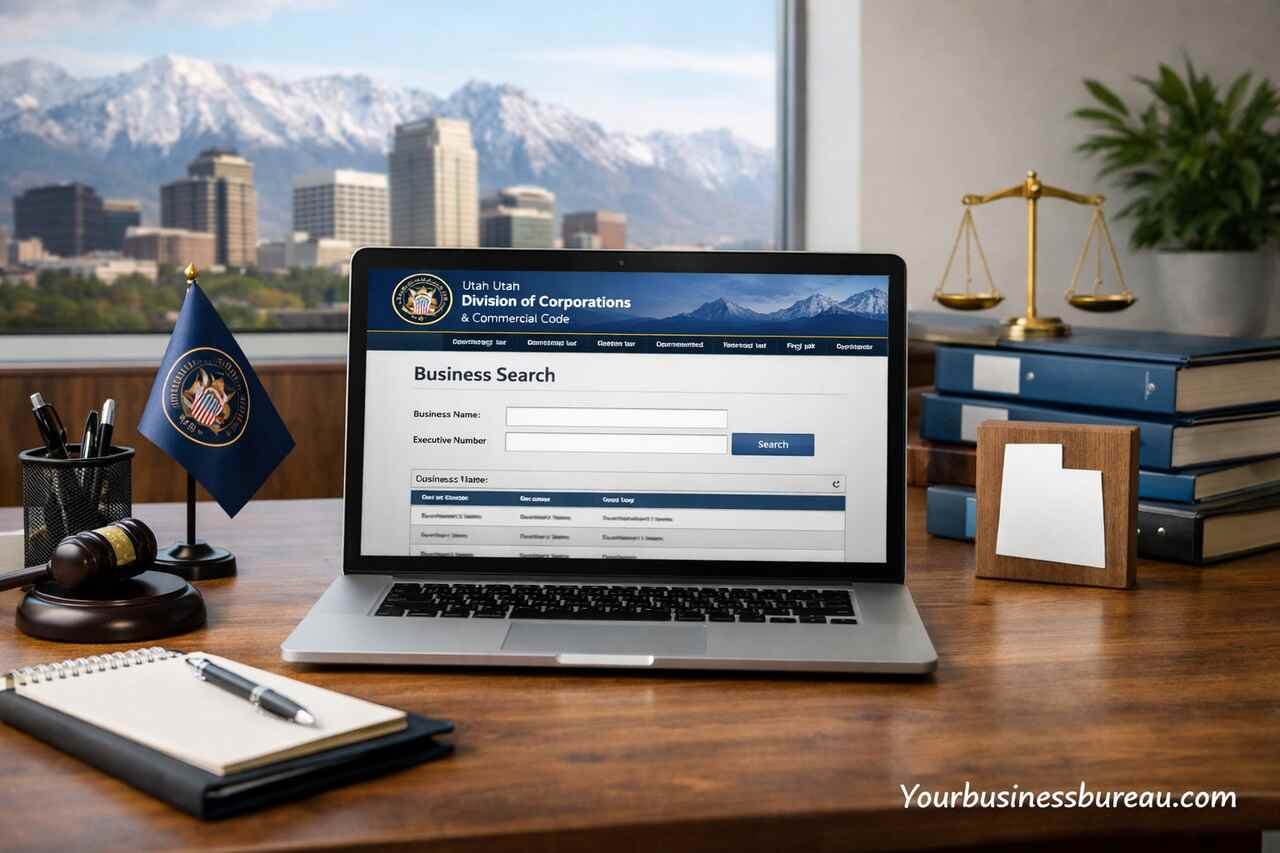
Utah business entity search works through the official online registry operated by the Utah Department of Commerce Division of Corporations. The search system allows users to enter a business name, entity number, or registered agent name to locate records stored in the state database.
The search interface processes the query and returns a list of matching companies. Each record contains key information including business status, registration date, registered agent details, and filing history. The registry acts as an official source of corporate records for the state.
While helping business owners navigate the process, I often explain that the search system functions similarly to a digital library of companies. Each registered business has a unique profile containing official records filed with the state government.
Using the tool requires no registration or payment. Public accessibility ensures that entrepreneurs, journalists, investors, and consumers can research companies freely.
Business Name Search Method
Business name search involves entering a company name into the registry search bar to locate matching results. The database returns businesses with identical or similar names.
Entrepreneurs use this method when planning to register a new company. A clear search result showing no similar names indicates strong availability for the desired brand name.
Entity Number Lookup
Entity number lookup allows users to find a specific business using its unique identification number assigned during registration. Each registered company receives an identification number within the state registry.
Legal professionals and government agencies often rely on entity numbers because the number identifies a single company without confusion.
What Information Appears in Utah Business Search Results?

Utah business entity search results provide detailed information about registered companies. The database includes legal identification data, filing records, and operational status.
Each search result opens a detailed profile containing multiple pieces of information about the company. That profile helps researchers verify whether a business operates legally within Utah.
When I guide entrepreneurs through this process, I show them how to interpret the information displayed on a company profile page. Many new business owners only look at the company name, but the registry offers far more valuable details.
Understanding these details helps business owners make informed decisions about partnerships, contracts, and market competition.
| Information Type | Description |
| Entity Name | Official registered name of the company |
| Registration Status | Active, expired, or dissolved |
| Formation Date | Date when the company was legally registered |
| Registered Agent | Individual or service authorized to receive legal documents |
| Filing History | List of documents submitted to the state |
Registration Status
Registration status indicates whether a business remains active or inactive in the Utah registry. Status categories usually include active, expired, dissolved, or revoked.
An active status means the business meets state filing requirements. An inactive status may indicate that required reports or fees were not submitted.
Registered Agent Information
Registered agent information identifies the person or company responsible for receiving legal notices on behalf of the business. Every registered company in Utah must appoint a registered agent with a physical address in the state.
The registry lists the agent name and contact address to ensure legal communication can reach the business when necessary.
How Can Entrepreneurs Use Utah Business Entity Search Before Registering a Company?
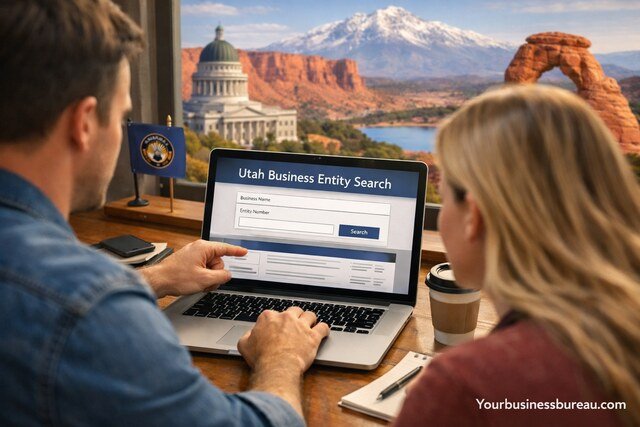
Utah business entity search helps entrepreneurs prepare for company formation by verifying names, researching competitors, and confirming industry activity. Proper research before registration prevents many legal and administrative problems.
During my early experience researching company formation, I learned that skipping a business search often leads to rejected filings. The state registry does not allow duplicate company names, which means name verification must happen before submitting formation documents.
Entrepreneurs also use the registry to analyze market competition. Searching existing businesses in the same industry reveals naming trends, branding patterns, and competitor presence within the state.
That information helps entrepreneurs create stronger branding strategies while avoiding names that resemble competitors.
Brand Protection
Brand protection begins with verifying that a company name remains unique in the state registry. A unique name strengthens legal identity and prevents disputes.
Entrepreneurs who perform a thorough business search can build a brand without worrying about future legal challenges related to naming conflicts.
Competitor Research
Competitor research involves analyzing similar businesses within the registry. Searching industry related keywords reveals companies operating in the same market.
Entrepreneurs can use that information to understand market saturation and identify opportunities for differentiation.
How Does Utah Business Entity Search Support Legal Compliance?
Utah business entity search contributes to legal compliance by ensuring that companies maintain accurate registration records. Businesses must update information when changes occur, including address updates, ownership changes, or agent replacements.
Government agencies rely on the registry to monitor business activity within the state. Accurate records help regulators enforce business laws and taxation policies.
In my conversations with business owners, many express surprise when they learn how often legal issues arise from outdated registration information. Maintaining updated records protects businesses from penalties and administrative dissolution.
Regular use of the Utah business entity search tool allows entrepreneurs to confirm that company records remain accurate.
Annual Reporting Requirements
Annual reporting ensures that a company remains compliant with state regulations. Businesses must submit annual reports that confirm operational status and current contact information.
Failure to submit required reports can change the company status to expired or dissolved.
Legal Record Updates
Legal record updates occur whenever a company changes registered agents, addresses, or ownership structure. Filing updates through the Utah registry ensures that public records remain accurate.
Accurate records protect both the company and the public by maintaining transparency.
What Common Mistakes Should Users Avoid During a Utah Business Entity Search?
Utah business entity search requires careful interpretation of results. Many users misunderstand search results or overlook similar business names that could cause registration conflicts.
During my experience assisting entrepreneurs, I often notice that people search only for exact matches. A slight variation in spelling can still create conflicts if a similar company name already exists.
A thorough search involves checking multiple variations of the desired business name. That approach increases the chances of discovering similar companies already registered.
Another mistake involves ignoring registration status. A dissolved company name may still remain protected depending on state rules and trademark considerations.
Ignoring Similar Names
Ignoring similar names can cause rejected business registrations. State regulators may deny registration if the new name closely resembles an existing company.
Entrepreneurs should search multiple variations, abbreviations, and plural forms of their desired business name.
Misinterpreting Business Status
Misinterpreting status information can lead to incorrect assumptions about company activity. A company labeled inactive may still own trademarks or operate under a different legal structure.
Users should review full records before drawing conclusions about a company’s operations.
How Can the Utah Business Entity Search Help Investors and Researchers?
Utah business entity search serves as a valuable research tool for investors, journalists, and analysts. Public access to corporate data allows researchers to investigate companies before making financial decisions.
Investors often review company registration records to verify legitimacy and operational history. A transparent registry reduces investment risk by providing access to verified corporate information.
From my perspective, researching businesses before entering partnerships has always been an essential practice. Utah’s registry provides one of the easiest ways to perform that verification.
Researchers also analyze registry data to identify economic trends. New company registrations often indicate emerging industries and local economic growth.
Investor Due Diligence
Investor due diligence involves verifying company records before committing financial resources. Registration records confirm that a business operates legally within the state.
Access to filing history also helps investors evaluate how consistently a company maintains compliance.
Market Analysis
Market analysis uses registry data to track industry growth within Utah. Researchers analyze business formation trends to identify sectors experiencing expansion.
Economic development agencies also rely on this information when evaluating regional business activity.
Conclusion
Utah business entity search functions as a powerful tool that supports transparency, compliance, and informed decision making within the state’s business environment. Entrepreneurs use the registry to verify company names before formation, while investors and researchers rely on the database to confirm legitimacy and analyze market activity.
FAQ’s
Utah business entity search is an online database provided by the Utah Department of Commerce that allows users to look up registered companies, verify business status, and review public corporate records.
Yes, the Utah business search database is publicly accessible and free. Anyone can use the system to verify company information without creating an account.
Business name verification prevents duplicate registrations and protects brand identity. A name already registered in the state cannot be used by another company.
Search results typically show company name, registration status, formation date, registered agent information, and filing history.
Investors frequently use the registry to verify company legitimacy and review corporate filing history before making financial decisions.
