


Highlights
- Cloud ERP is a centralized, cloud-based system that integrates finance, HR, inventory, CRM, and operations into one platform
- It operates on a SaaS model, making it accessible anytime, anywhere without heavy infrastructure
- Ideal for growing businesses that need scalability, flexibility, and real-time data insights
- Reduces operational costs by eliminating hardware and minimizing IT maintenance
- Enhances collaboration by providing a single source of truth across departments
- Offers advanced analytics and reporting for smarter, data-driven decisions
- More agile and cost-effective compared to traditional on-premise ERP systems
- Requires proper implementation, training, and continuous optimization for maximum ROI
- Platforms like Oracle NetSuite are widely used for modern cloud ERP solutions
- Future-ready with AI, automation, and predictive analytics capabilities
Introduction
As businesses grow, managing operations through disconnected tools and spreadsheets becomes inefficient and risky. This is where Cloud ERP (Enterprise Resource Planning) steps in as a transformative solution. It centralizes business processes, improves visibility, and enables smarter decision-making all from a single, cloud-based platform.
In today’s fast-paced digital economy, companies are increasingly turning to cloud ERP systems to stay competitive, agile, and scalable. But what exactly is Cloud ERP, and why is it becoming essential for growing businesses?
What Is Cloud ERP?
Cloud ERP is a software system hosted on remote servers and accessed through the internet. Unlike traditional on-premise ERP systems, cloud ERP eliminates the need for in-house infrastructure and offers real-time access to data from anywhere.
At its core, ERP integrates key business functions such as:
- Finance and accounting
- Inventory management
- Human resources
- Customer relationship management (CRM)
- Supply chain operations
Solutions like Oracle NetSuite and other modern platforms provide unified dashboards, automation, and analytics that streamline operations.
How Does Cloud ERP Work?
Cloud ERP systems operate on a subscription-based model (SaaS – Software as a Service). Instead of installing software locally, users access it via a web browser.
Key Components:
- Centralized Database: All business data is stored in one system
- Modular Structure: Businesses can choose features they need
- Real-Time Updates: Instant data synchronization across departments
- Remote Access: Accessible from any device with internet
This structure ensures that decision-makers always have accurate, up-to-date information.
Benefits of Cloud ERP for Growing Businesses

Scalability
Cloud ERP grows with your business. Whether you’re expanding into new markets or increasing workforce size, the system adapts without major infrastructure changes.
Cost Efficiency
- No upfront hardware costs
- Reduced IT maintenance
- Predictable subscription pricing
This makes cloud ERP particularly attractive for startups and SMEs.
Improved Collaboration
Teams across departments can access shared data, improving communication and reducing silos.
Real-Time Insights
Advanced analytics and dashboards provide actionable insights, helping leaders make data-driven decisions.
Enhanced Security
Cloud providers implement strong security protocols, including encryption, backups, and compliance standards.
Cloud ERP vs Traditional ERP
| Feature | Cloud ERP | Traditional ERP |
| Deployment | Online | On-premise |
| Cost | Subscription-based | High upfront cost |
| Maintenance | Vendor-managed | In-house IT |
| Accessibility | Anywhere | Limited to local network |
| Scalability | High | Limited |
For modern businesses, cloud ERP offers flexibility and efficiency that traditional systems struggle to match.
Key Features to Look for in Cloud ERP
When selecting a cloud ERP system, consider the following:
Financial Management
Automates accounting, billing, and reporting.
Inventory & Supply Chain
Tracks stock levels, orders, and logistics in real-time.
CRM Integration
Enhances customer interactions and sales tracking.
Automation
Reduces manual tasks and increases productivity.
Customization
Adapts to your business workflows and industry requirements.
What Is Cloud ERP Used For?
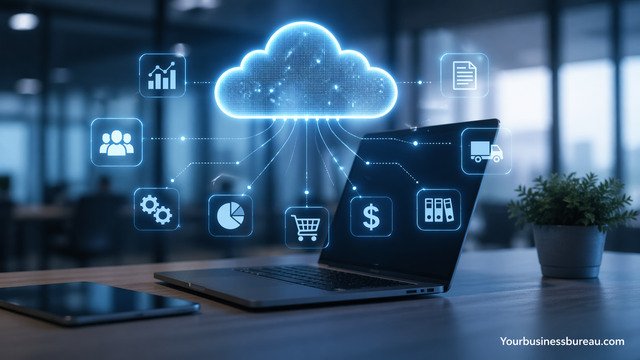
Cloud ERP is used to manage and automate core business processes like finance, HR, inventory, and customer relationships in a centralized system accessible online.
Who Should Use Cloud ERP?
Cloud ERP is ideal for:
- Small to medium-sized businesses scaling operations
- Enterprises seeking digital transformation
- E-commerce companies managing inventory and orders
- Service-based firms needing financial and client management
Implementation Challenges to Consider
While cloud ERP offers many benefits, businesses should be aware of potential challenges:
- Data Migration: Transferring existing data can be complex
- User Training: Employees may need time to adapt
- Customization Limits: Some systems may have restrictions
- Integration Issues: Compatibility with existing tools
Proper planning and expert guidance can mitigate these risks.
Why Optimization Matters
Implementing a cloud ERP system is only the first step. To truly unlock its potential, businesses must continuously refine and optimize how they use it. This includes improving workflows, customizing dashboards, and aligning the system with evolving business goals.
For companies using platforms like NetSuite, investing in strategies such as Netsuite Optimization can significantly enhance performance, reduce inefficiencies, and maximize ROI.
Future of Cloud ERP
Cloud ERP is evolving rapidly with emerging technologies like:
- Artificial Intelligence (AI)
- Machine Learning
- Predictive Analytics
- Internet of Things (IoT)
These innovations will further enhance automation, forecasting, and decision-making capabilities.
Conclusion
Cloud ERP is no longer a luxury; it’s a necessity for growing businesses aiming to scale efficiently and compete in a digital-first world. By centralizing operations, improving visibility, and enabling real-time insights, cloud ERP empowers organizations to operate smarter and faster.
Whether you’re transitioning from spreadsheets or upgrading legacy systems, adopting a cloud ERP solution can be a game-changing move. With the right implementation and ongoing optimization, it becomes a powerful engine for sustainable growth.
If you want to explore how we help businesses grow from the ground up, you can visit yourbusinessbureau.com to see what we offer.
