

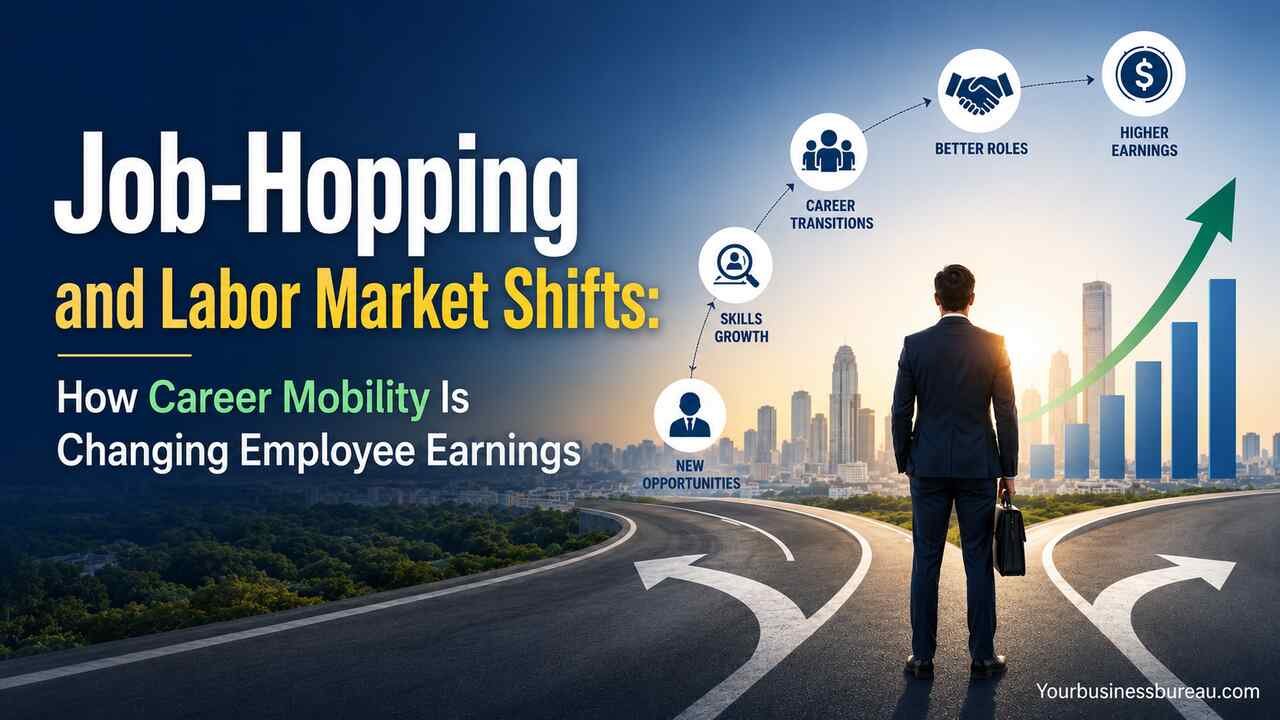
Job-hopping remains one of the most effective strategies for increasing salary growth, yet changing labor market conditions are reducing the financial advantage that frequent job changes delivered during recent years. Employers are slowing recruitment, workforce demand is becoming more selective, and compensation growth is returning to sustainable levels across many industries. Career mobility continues to create opportunities for skilled professionals, but economic conditions now require stronger planning, specialized expertise, and long-term career positioning.
Why Has Job-Hopping Traditionally Increased Employee Earnings?
Job-hopping has historically generated higher wage growth because external employers often value new talent more aggressively than existing compensation structures. Organizations seeking specialized skills frequently offer premium salaries to attract qualified candidates. Salary negotiations during a new hiring process also provide greater flexibility than annual performance reviews within an existing organization.
How Do External Job Offers Create Salary Leverage?
External job offers create salary leverage because employers compete for talent through compensation packages, signing bonuses, and career advancement opportunities. Competition increases candidate bargaining power, especially when professionals possess skills related to technology, data analytics, artificial intelligence, finance, healthcare, or engineering. Higher demand for specialized expertise often translates into stronger salary negotiations and faster income growth.
Why Do Internal Raises Often Lag Behind Market Rates?
Internal compensation systems typically follow predefined salary bands, annual budget cycles, and organizational policies. Salary structures prioritize consistency across teams, while external hiring decisions prioritize talent acquisition speed. Market demand can therefore increase faster than internal pay adjustments, creating situations where new hires receive higher compensation than long-serving employees with similar qualifications.
Which Industries Benefit Most From Career Mobility?
Technology, cybersecurity, healthcare, financial services, digital marketing, and advanced manufacturing often reward career mobility because skill shortages remain significant within those sectors. Organizations facing talent gaps frequently compete for experienced professionals. Competition increases wage growth potential and encourages workers to evaluate external opportunities when career progression slows.
How Does Skill Scarcity Influence Job-Hopping Rewards?
Skill scarcity increases employer urgency. Urgency strengthens recruitment efforts, improves compensation offers, and expands benefits packages. Professionals possessing expertise in automation, cloud computing, machine learning, regulatory compliance, healthcare operations, or specialized engineering frequently experience stronger earning potential because qualified candidates remain limited relative to employer demand.
How Is the Employment Market Changing?
The employment market is transitioning from an employee-dominated environment toward a more balanced hiring landscape. Economic uncertainty, productivity concerns, cost management initiatives, and evolving business priorities are influencing recruitment decisions across multiple sectors. Organizations remain interested in talent acquisition, but hiring standards have become more selective.
Why Are Employers Becoming More Cautious About Hiring?
Employers are becoming more cautious because economic volatility increases pressure on profitability and operational efficiency. Leadership teams are evaluating workforce investments more carefully while emphasizing productivity, measurable outcomes, and strategic hiring. Recruitment activity continues, but organizations increasingly focus on candidates who demonstrate direct business value.
How Are Interest Rates and Economic Conditions Affecting Recruitment?
Interest rates influence borrowing costs, investment decisions, expansion plans, and corporate spending. Higher financing costs often reduce aggressive hiring initiatives and encourage workforce optimization strategies. Business leaders may delay large-scale recruitment projects until economic visibility improves, creating a more competitive environment for job seekers.
Why Has Wage Growth Started to Moderate?
Wage growth is moderating because labor demand and labor supply are moving toward greater equilibrium. Intense post-pandemic competition for workers pushed compensation upward across many sectors. Current market conditions are reducing urgency among employers, resulting in more measured salary increases and fewer exceptionally large compensation jumps.
How Are Employers Evaluating Candidates Differently?
Employers increasingly evaluate candidates based on demonstrated achievements, technical proficiency, adaptability, leadership capabilities, and measurable performance outcomes. Hiring managers are placing greater emphasis on business impact rather than job titles alone. Quantifiable accomplishments now carry greater weight during recruitment and promotion decisions.
What Risks Are Associated With Frequent Job-Hopping?
Frequent job changes can increase earnings, but excessive movement between employers may introduce concerns related to stability, commitment, and long-term development. Hiring managers often examine the strategic rationale behind career transitions when evaluating candidates.
How Can Frequent Moves Affect Professional Reputation?
Professional reputation depends on consistency, credibility, and demonstrated contributions. Multiple short employment periods without clear progression may create questions regarding workplace fit, project completion, or organizational commitment. Career narratives supported by skill growth, leadership development, and measurable results generally reduce those concerns.
Why Is Long-Term Skill Development Important?
Long-term skill development strengthens career resilience during changing economic conditions. Deep expertise often requires sustained exposure to complex projects, organizational challenges, and leadership responsibilities. Professionals who balance career mobility with capability development frequently build stronger market value over time.
How Does Organizational Knowledge Create Career Value?
Organizational knowledge develops through understanding processes, customer relationships, operational systems, and strategic objectives. Extended tenure can provide opportunities to lead initiatives, influence business outcomes, and gain institutional expertise. Such experience often supports future leadership positions and executive-level advancement.
Can Job-Hopping Reduce Career Stability?
Career stability may decline when professionals change employers without strategic planning. Economic downturns, restructuring initiatives, and industry disruptions can affect recently hired employees differently than established team members. Risk management therefore becomes an important consideration when evaluating new opportunities.
What Strategies Should Professionals Use in the Current Labor Market?
Professionals should prioritize skill development, strategic networking, measurable performance, and thoughtful career planning. Career mobility remains valuable, but successful transitions increasingly depend on expertise and market relevance rather than timing alone.
How Can Employees Maximize Earnings Without Excessive Job Changes?
Employees can maximize earnings by pursuing high-impact projects, expanding responsibilities, developing scarce skills, and documenting business results. Strong performance records improve both internal promotion opportunities and external marketability. Career advancement often becomes easier when accomplishments are clearly measurable.
Why Is Continuous Learning Becoming More Important?
Continuous learning supports adaptability in a rapidly evolving economy. Artificial intelligence, automation, digital transformation, and data-driven decision-making are reshaping workforce requirements across industries. Professionals who regularly update knowledge and capabilities maintain stronger competitiveness and broader career opportunities.
How Does Networking Improve Career Opportunities?
Networking expands access to industry insights, referrals, mentorship, and emerging opportunities. Professional relationships often reveal positions before public announcements occur. Strong networks also provide market intelligence regarding compensation trends, skill requirements, and organizational culture.
What Is the Future of Job-Hopping and Salary Growth?
Job-hopping will continue to generate earning opportunities, but future success will depend more heavily on expertise, specialization, and strategic career decisions. Employers are increasingly rewarding professionals who combine adaptability with proven performance. Sustainable career growth is likely to come from a balance of mobility, skill development, leadership capability, and long-term value creation.
Conclusion
Job-hopping remains a powerful mechanism for increasing compensation, yet the labor market is entering a new phase characterized by selective hiring, moderated wage growth, and stronger emphasis on demonstrable skills. Professionals who align career moves with expertise development, industry demand, and measurable achievements are likely to achieve stronger long-term outcomes than individuals pursuing job changes solely for short-term salary gains.
