


Small business marketing services help local companies, startups, consultants, shops, contractors, and service providers reach the right customers with a clear message. A small business often has limited time, budget, and staff, so marketing must connect planning, branding, digital channels, content, advertising, lead generation, and customer retention into one practical system. When each service supports a business goal, marketing becomes easier to measure, improve, and scale.
Define Clear Business Goals
Small business marketing services should begin with clear goals because every campaign needs a measurable direction. A business may want more phone calls, website visits, appointments, online sales, walk-in traffic, quote requests, newsletter subscribers, or repeat customers. Clear goals help the marketing provider choose the right channels and avoid wasting money on tactics that do not support growth.
The goal-setting process should include revenue targets, customer types, service areas, sales capacity, average order value, and profit margins. A bakery may need more daily foot traffic, while a plumber may need emergency service calls from nearby homeowners. A consulting firm may need qualified leads from LinkedIn, while an e-commerce brand may need abandoned cart recovery and paid social campaigns.
Goal clarity also improves reporting. A small business owner should know which marketing activities produce results and which activities need adjustment. When goals are specific, marketing decisions become easier because performance data connects directly to business outcomes.
Identify the Ideal Customer
A small business needs a detailed customer profile before investing in marketing services. The ideal customer includes the people most likely to buy, return, refer others, and generate profitable revenue. Marketing works better when messaging speaks to real needs instead of general audiences.
Customer research should include age range, location, income level, buying motivation, pain points, objections, preferred platforms, search habits, and decision timelines. A family dental clinic may target parents searching for trusted care near home. A boutique fitness studio may target working professionals who value convenience, coaching, and flexible schedules.
This step also shapes offers and content. When a business understands its customer, it can create better headlines, service pages, ads, emails, and social posts. The message becomes more relevant, and relevant marketing usually earns more attention, trust, and action.
Build a Strong Brand Position
Small business marketing services should strengthen brand position before increasing visibility. Brand position explains what the business offers, who it serves, and why customers should choose it instead of competitors. A clear position reduces confusion and makes every marketing channel more consistent.
Brand work may include business name usage, logo refinement, color system, tone of voice, tagline, value proposition, service descriptions, customer promise, and visual style. A small business does not always need a full rebrand, but it does need consistent presentation across its website, social pages, business listings, print materials, and email campaigns.
Strong positioning also supports pricing. A business that clearly communicates quality, speed, specialization, convenience, or trust can compete on value rather than discounts alone. This is especially important for small businesses in crowded markets where customers compare several options before contacting one provider.
Create a Conversion-Focused Website
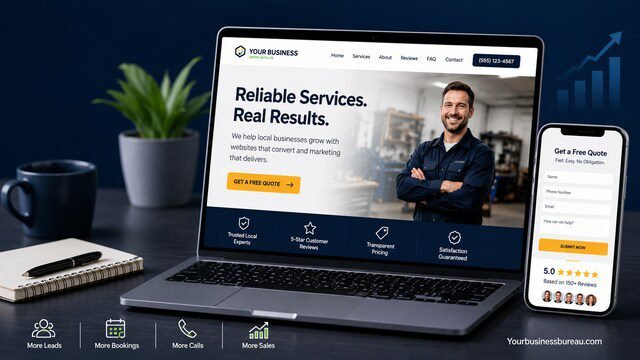
A small business website should turn visitors into leads, buyers, bookings, or calls. Marketing services often include website design, landing page creation, copywriting, search optimization, analytics setup, and speed improvements. The website acts as the central hub for most digital campaigns.
A strong website needs clear navigation, service pages, location information, contact forms, phone numbers, customer reviews, trust signals, pricing guidance, FAQs, and calls to action. Each page should answer the customer’s main question and guide them toward the next step. For local businesses, the site should also include city pages, service-area pages, map information, and business hours.
Website quality affects paid ads, organic search, email campaigns, and social media traffic. If visitors arrive but do not take action, the business loses opportunities. A conversion-focused website improves the value of every marketing dollar because more visitors become customers.
Improve Local Search Visibility
Local search marketing helps small businesses appear when nearby customers search for products or services. This service is especially valuable for restaurants, salons, clinics, repair companies, legal offices, real estate agents, contractors, gyms, and retail stores.
Local marketing usually includes Google Business Profile optimization, local keyword research, review management, citation building, location pages, map visibility, photos, business categories, service descriptions, and local content. Accurate name, address, phone number, hours, and website details are essential because inconsistent information can reduce customer trust.
Reviews play a major role in local decisions. A steady review process helps a business collect feedback, respond professionally, and show credibility. Local search visibility can produce high-intent leads because the customer is already searching for a nearby solution.
Use Search Engine Optimization
Search engine optimization helps a small business earn organic traffic from people searching for relevant products, services, and problems. SEO services may include keyword research, content planning, technical fixes, internal linking, page optimization, competitor review, schema markup, and performance tracking.
Small business SEO should focus on profitable topics. A roofing company may need pages for roof repair, roof replacement, storm damage, inspections, and service locations. A bookkeeping firm may need pages for payroll support, tax preparation, monthly bookkeeping, and industry-specific accounting.
SEO takes time, but it can reduce dependence on paid ads. A well-optimized page can attract visitors for months or years. The best results come from matching search intent, publishing helpful content, improving site structure, and building credibility through reviews, links, and consistent information.
Run Paid Advertising Campaigns
Paid advertising gives small businesses faster visibility than organic channels. Marketing services may manage Google Ads, Meta Ads, YouTube Ads, LinkedIn Ads, TikTok Ads, retargeting campaigns, display ads, and local service ads depending on the business model.
A paid campaign should include audience targeting, keyword selection, ad copy, creative design, landing pages, conversion tracking, budget control, and testing. A small business should avoid running ads without tracking calls, forms, sales, or bookings because spending without measurement creates risk.
Paid ads work best when the offer is clear and the follow-up process is strong. If a customer clicks an ad and reaches a weak landing page, the campaign may underperform. If the business responds slowly to leads, potential revenue may be lost. Advertising success depends on both campaign quality and sales execution.
Develop Social Media Marketing

Social media marketing helps small businesses build awareness, trust, and customer relationships. Services may include content planning, post design, caption writing, short-form video creation, community management, paid social campaigns, and performance reporting.
The right platform depends on the audience. Instagram may work well for restaurants, beauty brands, fitness studios, and boutiques. LinkedIn may work better for consultants, agencies, recruiters, and B2B service firms. Facebook can support local communities, events, groups, and retargeting. TikTok can help brands that use education, entertainment, or product demonstrations.
Social media should not only chase likes. It should support real business actions such as profile visits, website clicks, inquiries, bookings, event attendance, and repeat purchases. A consistent content system helps customers remember the business when they are ready to buy.
Create Useful Content
Content marketing helps a small business educate buyers, answer common questions, and build trust before the sale. Useful content can include blog posts, service guides, videos, case studies, comparison pages, checklists, email newsletters, and downloadable resources.
Good content should connect directly to customer concerns. A pest control company can explain prevention steps, seasonal issues, treatment options, and safety considerations. A financial advisor can explain planning basics, retirement questions, tax coordination, and investment mistakes to avoid.
Content also supports SEO, social media, email marketing, and sales conversations. A helpful article can rank in search, become a social post, support an email campaign, and help sales staff answer objections. This makes content one of the most flexible small business marketing services.
Manage Email Marketing
Email marketing helps small businesses stay connected with leads and existing customers. It is useful for promotions, appointment reminders, educational updates, product launches, newsletters, abandoned cart recovery, loyalty campaigns, and reactivation messages.
An email system should include list segmentation, welcome sequences, lead magnets, campaign templates, subject line testing, automation, personalization, and compliance practices. A new lead should receive different messages than a repeat customer. A past buyer may need a reorder reminder, while a new subscriber may need trust-building information.
Email marketing works because it reaches people who have already shown interest. Unlike social media platforms, an email list is a business-controlled audience. A healthy list can drive repeat revenue and reduce the cost of customer acquisition.
Track Performance and Improve Campaigns
Small business marketing services should include reporting because business owners need to understand results. Reports should show what happened, what changed, and what action comes next. Data should not be overwhelming, but it should be useful.
Important metrics include website traffic, lead volume, conversion rate, cost per lead, revenue by channel, call tracking, form submissions, email open rates, ad spend, return on ad spend, rankings, reviews, and customer lifetime value. These numbers help identify strengths and weaknesses.
Marketing improvement depends on testing. A business may test headlines, offers, landing pages, ad audiences, email subject lines, calls to action, and service descriptions. Small improvements can create meaningful gains over time.
Compare Common Small Business Marketing Services
| Service | Main Purpose | Best For | Common Result |
| Website Design | Convert visitors into leads or sales | All small businesses | More inquiries and credibility |
| Local SEO | Increase visibility in nearby searches | Local service and retail businesses | More calls, visits, and map views |
| Paid Ads | Generate faster traffic and leads | Businesses with clear offers | Immediate visibility |
| Social Media | Build awareness and engagement | Visual, local, and community brands | Stronger customer relationships |
| Email Marketing | Retain and reactivate customers | Service, retail, and online businesses | More repeat sales |
| Content Marketing | Educate and attract customers | Businesses with longer buying cycles | More trust and organic traffic |
Choose the Right Marketing Provider
A small business should choose a marketing provider based on fit, not promises alone. The right provider understands the business model, target customers, budget, service area, sales process, and growth goals. A provider should explain strategy clearly and connect marketing work to measurable outcomes.
Important selection factors include industry experience, portfolio quality, reporting style, communication process, pricing structure, contract terms, ownership of assets, and transparency. A provider should be able to explain what will be done, why it matters, and how success will be measured.
Small businesses should be careful with vague guarantees, unclear deliverables, and one-size-fits-all packages. Marketing requires adaptation because each market has different competitors, customers, and buying behavior. A strong provider builds a plan around business reality.
Plan a Realistic Marketing Budget
A small business marketing budget should match the company’s goals, revenue, competition, and growth stage. A new business may need brand setup, website creation, local listings, and introductory campaigns. An established business may need SEO expansion, paid ads, automation, and customer retention systems.
Budget planning should separate service fees from ad spend. For example, a business may pay a provider to manage campaigns and also pay platforms such as Google or Meta for ad placement. Website development, photography, video production, software, and design may also require separate investment.
A realistic budget prevents underfunded campaigns. Marketing does not need to be expensive to be effective, but it does need enough resources to test, measure, and improve. Consistency often matters more than short bursts of activity.
Use Reviews and Reputation Marketing
Reputation marketing helps a small business turn customer satisfaction into public trust. Reviews influence search visibility, click behavior, and buying confidence. A business with recent, detailed, positive reviews often appears more reliable than a competitor with few or outdated reviews.
Review services may include request templates, automated follow-ups, response management, review monitoring, testimonial collection, and reputation reporting. Businesses should ask customers at the right moment, such as after a completed service, successful delivery, or positive interaction.
Responses matter too. A professional reply shows that the business listens and values customers. Even negative reviews can become trust-building moments when handled with care, accuracy, and respect.
Strengthen Lead Generation and Follow-Up
Lead generation is only valuable when the business can respond quickly and effectively. Marketing services should help create forms, call tracking, quote request pages, booking systems, chat tools, and lead routing processes.
Follow-up may include automated emails, text reminders, CRM updates, sales scripts, proposal templates, and retargeting ads. A lead that does not buy immediately may still become a customer later if the business stays helpful and visible.
Small businesses often lose revenue because leads are not answered fast enough. A simple follow-up system can improve conversion without increasing traffic. This makes lead handling one of the highest-impact improvements in a marketing plan.
Conclusion
Small business marketing services work best when they form a connected growth system. A clear goal shapes the strategy, a strong brand builds trust, a useful website converts traffic, local search brings nearby buyers, paid ads create faster visibility, content educates customers, social media builds relationships, and email supports repeat sales. The right marketing plan does not rely on random tactics. It connects each service to measurable business results and helps the company grow with more confidence.
FAQ’s
Small business marketing services are professional activities that help a business attract, convert, and retain customers. They may include website design, SEO, advertising, social media, email, content, branding, and reporting.
Most small businesses should start with clear goals, customer research, a strong website, local search setup, and basic tracking. These foundations make later campaigns more effective.
The right budget depends on goals, industry, competition, and revenue. A business should budget enough to maintain consistency, test campaigns, and measure results properly.
SEO and paid advertising serve different roles. SEO builds long-term organic visibility, while paid advertising can generate faster traffic. Many businesses benefit from using both.
Many small businesses benefit from social media, especially when customers use platforms to discover, compare, or follow brands. The best platform depends on the audience and offer.
A small business can measure success through leads, calls, bookings, sales, website traffic, conversion rates, customer acquisition cost, repeat purchases, and revenue by channel.
