


Electricity for business is one of the most important operating expenses you need to manage, whether you run a small retail shop, a busy restaurant, a growing office, or a large manufacturing facility. Choosing the right electricity plan can help you control monthly expenses, avoid unexpected charges, and keep your business running without unnecessary interruptions.
What Is Electricity for Business and How Does It Work?
Electricity for business refers to the electrical power supplied to commercial properties for professional activities, including lighting, heating, cooling, machinery, computers, refrigeration, and other operational equipment. Commercial electricity arrangements can differ from residential services because businesses may consume larger amounts of power, operate for longer hours, or require specialized electrical connections.
When you arrange electricity for your business, the supplier or utility determines the applicable pricing structure based on factors such as your location, meter type, expected consumption, and available tariff category. In competitive electricity markets, you may be able to choose between different retail suppliers. In regulated markets, your electricity provider and tariff options may be determined by the local utility or regulator.
For example, a small office may primarily use electricity for computers, lighting, and air conditioning, while a manufacturing facility may require substantial power for industrial equipment. Both businesses need electricity, but their consumption patterns and billing requirements can be completely different. Understanding your actual requirements is the starting point for choosing an appropriate arrangement.
How Is Business Electricity Different From Residential Electricity?
Business electricity can involve commercial tariffs, demand charges, longer contractual commitments, and different customer protections compared with household electricity. Some commercial customers can negotiate rates, while others must use regulated tariffs. Your business classification, connected load, and operating schedule may also influence how your electricity bill is calculated.
Who Needs a Commercial Electricity Connection?
Retail stores, offices, restaurants, hotels, warehouses, workshops, and factories commonly require commercial or industrial electricity connections. Even if you operate a small business from home, you should check your local utility’s rules because business activity does not automatically mean you need a separate commercial meter. The correct connection depends on local regulations and how the property uses electricity.
How Much Does Electricity for Business Cost?
The cost of electricity for business depends on your energy consumption, local electricity rates, billing structure, and any additional network or demand charges. Many businesses pay according to the number of kilowatt-hours they consume, but the final bill can also include fixed service fees, taxes, and other applicable charges. This means two businesses using the same amount of electricity may receive different bills.
To estimate your monthly electricity expense, multiply your consumption in kilowatt-hours (kWh) by the applicable unit rate. For example, if your business consumes 2,000 kWh monthly and the energy rate is $0.15 per kWh, the energy portion of your bill would be $300. This is an illustrative calculation, not a current market quotation, and it excludes additional charges that may apply.
You should also pay attention to when your business consumes electricity. Some tariffs charge higher rates during peak-demand periods and lower rates during off-peak hours. If your business uses energy-intensive equipment throughout the day, these pricing differences may significantly affect your expenses. Reviewing a full year’s bills helps you identify seasonal changes and understand your typical electricity spending.
| Business type | Illustrative monthly usage | Energy cost at $0.15/kWh |
| Small office | 800 kWh | $120 |
| Retail store | 1,500 kWh | $225 |
| Restaurant | 4,000 kWh | $600 |
| Medium-sized workshop | 8,000 kWh | $1,200 |
| Large commercial facility | 20,000 kWh | $3,000 |
These figures are hypothetical examples for comparison. Actual electricity use varies considerably by equipment, business size, climate, and operating hours. The calculations exclude fixed fees, demand charges, and taxes.
What Factors Affect Commercial Electricity Prices?
Commercial electricity prices are influenced by regional energy markets, fuel costs, electricity generation, network expenses, government regulations, and supplier pricing policies. Your business’s consumption pattern, maximum power demand, contract duration, and payment terms may also affect the amount you pay. Comparing the complete tariff rather than only the unit rate gives you a more realistic picture of your electricity costs.
Why Do Business Electricity Bills Change Every Month?
Your monthly bill can increase or decrease because of seasonal temperatures, longer operating hours, additional equipment, changes in electricity rates, or variations in peak demand. For instance, a restaurant may spend more during hot weather because refrigeration and air conditioning systems work harder. Comparing consumption figures with previous months helps you determine whether a higher bill reflects increased usage or a pricing change.
How Can You Choose the Right Business Electricity Supplier?

Choosing a business electricity supplier requires more than finding the lowest advertised rate. You should compare pricing transparency, contract conditions, billing accuracy, customer service, and the supplier’s ability to meet your operational requirements. A low unit price may not deliver the lowest total cost if the agreement includes expensive standing charges, minimum usage requirements, or unfavorable renewal terms.
Start by gathering your recent electricity bills and identifying your annual consumption, meter information, current tariff, and contract expiration date. If your location allows supplier competition, request quotations based on the same usage information. This makes comparisons more meaningful because suppliers may otherwise calculate estimates using different assumptions.
You should also consider what happens when something goes wrong. For example, if your business depends on refrigeration or continuous production, you need to know who handles power outages, metering problems, and billing disputes. In many markets, the distribution network operator remains responsible for physical electricity delivery even when you change retail suppliers. Understanding this distinction can prevent confusion during an outage.
What Should You Compare Before Selecting a Supplier?
Compare the electricity unit rate, fixed daily or monthly charges, contract length, price adjustment clauses, payment requirements, and early termination conditions. Ask whether quoted prices include taxes and network fees. You should also review how the supplier handles complaints, meter readings, and contract renewals. A clear agreement with predictable costs may suit your business better than a slightly cheaper offer with uncertain terms.
Can You Switch Business Electricity Suppliers Easily?
You may be able to switch suppliers if your local electricity market allows competition and your existing contract permits the change. The process generally involves checking your current agreement, selecting a new supplier, confirming the transfer date, and providing the necessary meter details. Before switching, check for outstanding balances, termination fees, and automatic renewal clauses. In regulated markets, switching suppliers may not be available.
Which Business Electricity Contract Is Best for Your Needs?
The best business electricity contract depends on your financial priorities, electricity consumption, and willingness to accept price changes. Some businesses prefer predictable monthly costs, while others want the flexibility to benefit from changing market prices. Understanding the available contract structures helps you choose an arrangement that fits your operating budget.
Fixed-rate agreements generally establish a specified energy price for an agreed period, although other bill components may still change. Variable-rate agreements allow prices to move according to the supplier’s terms or market conditions. Some businesses may also have access to time-of-use or market-linked pricing, which can be attractive when they can shift consumption away from expensive periods.
Imagine you operate a bakery that uses ovens heavily during early morning hours. A tariff with lower rates during those hours could potentially reduce your electricity expenses. However, a retail shop operating primarily during expensive daytime periods might benefit more from a predictable fixed rate. Your actual operating schedule should influence your decision rather than the advertised price alone.
| Contract type | Main advantage | Main limitation | Potential fit |
| Fixed-rate | More predictable energy pricing | May cost more if market prices fall | Budget-focused businesses |
| Variable-rate | Potential benefit from falling prices | Exposure to price increases | Businesses comfortable with uncertainty |
| Time-of-use | Lower rates during selected periods | Higher rates during peak hours | Businesses able to shift consumption |
| Market-linked | Pricing follows a specified market formula | Greater cost volatility | Businesses with active energy management |
Is Fixed-Rate Electricity Better for Small Businesses?
A fixed-rate electricity contract can be suitable if you want more predictable energy costs and have limited time to monitor market prices. However, fixed pricing does not necessarily freeze your entire bill, since taxes, regulated network charges, and consumption can still change. You should examine the full agreement and compare its total estimated cost before deciding.
What Happens When a Business Electricity Contract Expires?
When a business electricity contract expires, the supplier may transfer you to a different tariff, offer renewal terms, or apply another arrangement specified in the agreement and permitted by local rules. Some replacement rates may be less favorable. Review your contract well before expiration, check the required notice period, and compare available alternatives so you are not forced into a rushed decision.
How Can You Reduce Electricity Costs for Your Business?
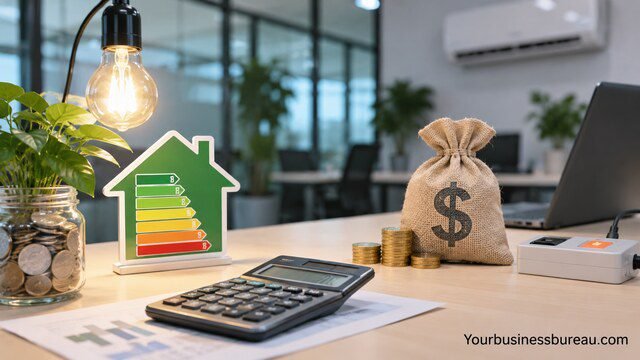
Reducing electricity costs starts with understanding where your business uses the most energy. Lighting, heating, cooling, refrigeration, computers, and industrial equipment can all contribute to your monthly bill. Instead of making random changes, identify the largest sources of consumption and prioritize improvements that offer measurable savings without disrupting daily operations.
A useful approach is to review electricity bills alongside equipment operating hours. For example, if your business uses 3,000 kWh per month and you reduce consumption by 15%, you would save 450 kWh. At an illustrative electricity rate of $0.15 per kWh, that represents $67.50 in monthly energy savings, or $810 annually, assuming the same rate and consumption pattern. Your actual bill savings may differ if demand charges or other pricing components apply.
You can also involve employees in practical energy-saving habits. Encourage staff to switch off unused equipment, maintain reasonable temperature settings, and report malfunctioning electrical systems. These small actions work best when combined with maintenance schedules and regular energy monitoring. You don’t necessarily need a large investment to begin improving efficiency.
Which Energy-Efficient Upgrades Save the Most Electricity?
LED lighting, efficient air conditioning, improved insulation, programmable controls, and modern refrigeration equipment can reduce electricity consumption when replacing less efficient systems. The most valuable upgrade depends on your current equipment and operating hours. Before purchasing anything, estimate the expected annual savings, installation cost, and payback period. This helps you avoid spending money on improvements that offer little benefit.
How Can Smart Meters Help Businesses Control Energy Usage?
Smart meters can provide more detailed electricity consumption information, depending on the meter and available monitoring service. By reviewing hourly or daily usage patterns, you may identify equipment operating unnecessarily outside business hours or unusual increases in consumption. For example, consistently high overnight usage in a closed office could justify checking ventilation systems, lighting controls, and other equipment that remains switched on.
How Can You Set Up Electricity for a New Business?
Setting up electricity for a new business involves confirming that your premises have a suitable electrical connection, identifying the appropriate tariff, and arranging service before operations begin. If you are moving into an existing commercial property, the connection process may be relatively straightforward. A newly constructed facility or a business requiring substantial electrical capacity may need additional technical assessments and installation work.
Before applying, estimate your electricity requirements based on the equipment you intend to operate. Include lighting, cooling systems, computers, machinery, refrigeration, and any planned future expansion. Your local utility or a qualified electrical professional can help determine whether the existing supply capacity is sufficient. This matters because equipment with high starting loads or simultaneous power requirements may need more capacity than basic energy calculations suggest.
Plan your application early enough to avoid delays in opening your business. Depending on the location and connection requirements, you may need property documents, business identification, electrical installation certificates, deposits, or meter inspections. The exact requirements vary, so confirm them with the relevant utility rather than assuming that every business follows the same procedure.
What Documents Are Required for a Business Electricity Connection?
Common requirements may include business registration details, proof of identity, proof of property ownership or tenancy, a completed application, and electrical installation information. Some utilities also require load declarations, safety certificates, or security deposits. The precise documents depend on the jurisdiction, property type, and requested connection capacity. Check the utility’s current application requirements before submitting your paperwork.
How Long Does It Take to Activate Business Electricity?
Activation time depends on whether the property already has a working meter and suitable electrical infrastructure. A straightforward account transfer or reconnection may take considerably less time than a new commercial installation requiring network upgrades, permits, or inspections. Ask the provider for a realistic timeline and avoid scheduling your opening date until the required electrical work and service activation are confirmed.
How Can You Manage Business Electricity for Long-Term Savings?
Long-term electricity management means treating energy as an ongoing operating expense rather than simply paying the bill each month. By monitoring consumption, reviewing contracts, maintaining equipment, and planning for future energy requirements, you can make more informed financial decisions. This approach is particularly useful for growing businesses because electricity demand often changes as operations expand.
Create a simple monthly energy record that tracks electricity consumption, total bill amount, operating hours, and major changes in equipment usage. You can also calculate energy intensity, such as kWh per product manufactured or kWh per square meter of occupied space. These measurements help you understand whether your business is becoming more efficient, even when total electricity consumption rises because of growth.
For example, suppose your workshop produces 1,000 units using 5,000 kWh of electricity. That equals 5 kWh per unit. If production increases to 1,200 units while consumption rises to 5,400 kWh, electricity use per unit falls to 4.5 kWh. Although your total energy consumption has increased, your production efficiency has improved. This distinction helps you evaluate performance more accurately than looking at monthly bills alone.
Is Solar Power a Good Option for Business Electricity?
Solar power may be worth considering if your business has suitable roof space, significant daytime electricity consumption, and access to favorable installation or export arrangements. A solar system can reduce the amount of electricity purchased from the grid, but its financial value depends on installation costs, local sunlight, maintenance, tariffs, and any available incentives. Businesses should compare projected lifetime savings with total ownership costs before investing.
How Often Should You Review Your Business Electricity Plan?
Review your electricity costs at least annually and before your existing contract approaches renewal. You should also reassess your plan after major changes such as adding machinery, extending operating hours, relocating, or installing solar panels. Regular reviews help you identify pricing changes, unnecessary consumption, and opportunities to choose a more suitable tariff as your business develops.
Conclusion
Finding the right electricity for business is about balancing cost, reliability, flexibility, and your company’s actual energy requirements. The cheapest advertised rate is not always the most economical choice, especially when fixed charges, demand fees, contract conditions, and consumption patterns affect your final bill.
Start by reviewing your electricity usage, understanding your current tariff, and identifying where energy is being wasted. Then compare available plans, evaluate efficiency improvements, and monitor your results regularly.
Your business does not need to make every change at once. A few well-informed decisions, supported by accurate consumption records and a clear understanding of your electricity costs, can help you build a more predictable and efficient energy budget over time.
FAQ’s
Sometimes, but not automatically. Commercial electricity rates can be higher or lower than residential rates depending on local tariffs, usage patterns, fixed charges, and contract terms. Compare the complete bill rather than only the price per kWh.
Yes, businesses may still pay fixed service charges and for electricity consumed by equipment operating while the premises are closed. Refrigeration, security systems, servers, and standby equipment can continue using power even when employees are absent.
It depends on your local utility rules, the type of business activity, and how much electricity you consume. Some home-based businesses can remain on residential tariffs, while others may need commercial classification or a separate connection.
A demand charge is a fee based on your highest measured power demand during a specified billing interval, usually expressed in kilowatts. It differs from an energy charge, which is based on total kilowatt-hours consumed. Demand charges are common for certain commercial and industrial tariffs.
Electricity used for legitimate business purposes may qualify as a deductible operating expense under applicable tax laws. The treatment depends on your country, business structure, and whether the electricity is used entirely or partly for business activities. Keep accurate records and consult a qualified tax professional for advice relevant to your situation.
Not necessarily. Renewable electricity pricing depends on the supplier, location, contract, and available generation options. Some renewable plans may carry a premium, while others can be competitive with conventional electricity. Compare total costs and check how any renewable electricity claims are verified.
