


A small business expo gives entrepreneurs, startups, service providers, retailers, consultants, and local companies a practical way to meet customers, partners, suppliers, lenders, and industry peers in one focused environment. For a business owner, the value comes from preparation, clear goals, strong booth presentation, meaningful conversations, and disciplined follow-up after the event.
Set Clear Goals Before Attending a Small Business Expo
A small business expo works best when the business owner enters with specific goals. The main goal may be lead generation, brand awareness, supplier discovery, networking, partnership building, product testing, investor conversations, or learning from workshops. A clear goal helps the owner decide which booths to visit, which sessions to attend, which people to meet, and which materials to bring.
A service business may focus on booking consultations, while a retail brand may focus on product sampling and wholesale contacts. A startup may use the expo to meet mentors, funding sources, technology vendors, or early adopters. A local business may use the event to strengthen visibility within its city or region.
Strong goals also make results easier to measure. Instead of leaving with vague impressions, the owner can track leads collected, meetings scheduled, sales conversations started, partnership opportunities found, and follow-up appointments confirmed.
Choose the Right Small Business Expo
Selecting the right small business expo protects time, money, and energy. The best event matches the company’s industry, location, customer base, growth stage, and budget. A local expo may help a neighborhood business meet nearby customers, while a national expo may help a growing brand reach distributors, franchisors, lenders, and larger suppliers.
Business owners should review the attendee profile, exhibitor list, speaker lineup, workshop topics, sponsorship options, ticket cost, booth fee, and expected foot traffic. An expo with relevant visitors is more valuable than a large event with the wrong audience.
The event format also matters. Some expos focus on networking, some focus on education, some focus on product showcases, and others focus on franchise opportunities, women-owned businesses, minority-owned businesses, technology solutions, or local economic development.
| Expo Type | Best For | Main Benefit | Key Consideration |
| Local business expo | Local shops, service providers, consultants | Community visibility | Smaller audience size |
| Industry-specific expo | Niche brands and B2B companies | Highly relevant contacts | May cost more |
| Startup expo | Founders and early-stage companies | Mentors, investors, tools | Competitive environment |
| Franchise expo | Franchise buyers and sellers | Expansion opportunities | Requires careful legal review |
| Supplier expo | Retailers, restaurants, manufacturers | Vendor discovery | Compare pricing and terms |
Register Early and Review Event Requirements
Early registration gives business owners better access to booth placement, discounted pricing, workshop seats, sponsorship packages, and networking opportunities. Many small business expo organizers offer early-bird rates, premium booth locations, and promotional features for companies that register before the deadline.
Exhibitors should review the event rules carefully. Common requirements include booth dimensions, setup times, teardown times, insurance documents, electrical orders, Wi-Fi access, signage limits, product display rules, food sampling rules, payment processing guidelines, and badge policies.
Attendees should also prepare in advance. They should download the event app, review the floor map, identify priority exhibitors, save workshop times, and create a personal schedule. A planned visit usually produces better results than walking the floor without direction.
Prepare Marketing Materials for the Expo Floor
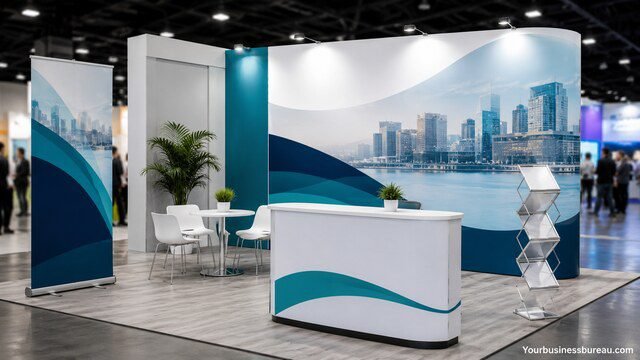
Strong marketing materials help visitors understand the business quickly. A small business expo is busy, so every brochure, banner, flyer, business card, QR code, product sheet, sample, and display message must be clear. The best materials explain who the business serves, what problem it solves, and how a visitor can take the next step.
A company should prepare a simple value statement, product benefits, pricing highlights, customer proof, service packages, and contact options. QR codes should lead to a landing page, booking calendar, catalog, coupon, signup form, or digital brochure.
Printed materials still matter, but they should support the conversation rather than replace it. A polished handout works well when it gives visitors something useful, such as a checklist, discount card, comparison guide, or event-only offer.
Design a Booth That Attracts the Right Visitors
A booth should make the business easy to understand from several feet away. Clear signage, clean layout, lighting, product samples, digital screens, demonstrations, and friendly staff can increase booth traffic. The headline should communicate the main benefit, not just the company name.
The booth should include a front-facing message, an open walkway, organized materials, a lead capture system, and a simple visual hierarchy. Visitors should know where to stand, who to talk to, what to look at, and how to participate.
Good booth design also supports conversation. A cluttered booth creates confusion, while a focused booth guides attention. For example, a bakery may display best-selling products and sampling cards, while a software company may show a live dashboard and a demo signup screen.
Create a Strong Elevator Pitch
A strong elevator pitch helps the team explain the business in a clear and memorable way. The pitch should state the customer, the problem, the solution, and the benefit in one or two sentences. At a small business expo, short explanations perform better than long company histories.
For example, a bookkeeping service may say, “We help small business owners keep clean financial records, reduce tax-time stress, and understand monthly cash flow.” A marketing agency may say, “We help local businesses attract more qualified customers through search visibility, paid ads, and conversion-focused websites.”
The pitch should sound natural. Staff members should practice it, but they should not sound scripted. The goal is to start a useful conversation, ask questions, and learn whether the visitor is a good fit.
Capture Leads With a Simple System
Lead capture is one of the most important parts of a small business expo. A business should collect names, email addresses, phone numbers, company names, buying interests, budget ranges, timelines, and follow-up preferences. The system may use a tablet form, QR code, badge scanner, paper form, CRM app, or business card collection method.
A good lead form should be short enough to complete quickly but detailed enough to guide follow-up. The team should separate hot leads, warm leads, partner contacts, media contacts, vendor contacts, and general newsletter signups.
Consent matters. Businesses should clearly explain how contact information will be used. A visitor who requests a quote, demo, coupon, or consultation expects follow-up, but newsletter subscriptions and promotional messages should be handled carefully.
| Lead Type | Visitor Signal | Recommended Follow-Up |
| Hot lead | Requests pricing, demo, or proposal | Contact within 24 hours |
| Warm lead | Shows interest but needs time | Send useful resources and schedule call |
| Partner lead | Discusses referral or collaboration | Send partnership summary |
| Vendor lead | Offers tools or supplies | Compare offers after event |
| General contact | Joins mailing list | Send welcome email |
Network With Purpose During the Event
Networking at a small business expo should be intentional. Business owners should meet exhibitors, attendees, speakers, sponsors, chamber of commerce representatives, lenders, nonprofit business advisors, and local government support organizations. Each group can offer different value.
A strong networking approach starts with useful questions. Instead of asking only, “What do you do?” the owner can ask, “Who is your ideal customer?” “What type of partnership are you looking for?” or “Which business challenge are you trying to solve this year?”
Good networking also requires listening. Many opportunities come from understanding another person’s needs before presenting an offer. A referral partner, supplier, mentor, or local sponsor may become more valuable than a direct sale.
Attend Workshops and Learning Sessions
Workshops often provide major value at a small business expo. Common topics include marketing, sales, funding, bookkeeping, taxes, legal setup, hiring, franchising, cybersecurity, artificial intelligence tools, e-commerce, branding, customer retention, and business planning.
Business owners should choose sessions that match their current stage. A startup may need legal formation, business funding, and customer acquisition sessions. An established company may need hiring, operations, automation, and expansion sessions.
Notes should be practical. The attendee should write down tools, contacts, action items, deadlines, and questions to research later. Learning only becomes valuable when it leads to implementation.
Promote Your Expo Participation Before the Event
Promotion before the expo increases booth visits and meeting quality. Exhibitors should announce their participation through email, social media, website banners, local business groups, partner newsletters, Google Business Profile posts, and direct outreach to prospects.
The message should tell people where the booth is located, what they can receive, and why they should visit. A special offer, giveaway, product demo, free consultation, limited discount, or sample can motivate attendance.
Pre-event promotion also builds credibility. When customers see a company participating in a recognized business expo, they may view the company as more active, accessible, and trustworthy.
Use Giveaways and Offers Strategically
Giveaways can attract booth traffic, but they should support business goals. Generic items may bring visitors who only want free products. Better giveaways connect to the business and attract qualified prospects.
A fitness studio may offer a free body assessment. A software company may offer a free audit. A bakery may offer product samples with a coupon. A consultant may offer a checklist or mini strategy session.
Event-only offers should be simple. The offer should include a clear value, deadline, next step, and terms. A limited-time consultation or discount can move interested visitors from conversation to action.
Train Staff for Professional Expo Conversations
The people working the booth represent the brand. Staff should greet visitors warmly, ask useful questions, explain the offer clearly, and avoid sitting behind the table while scrolling on phones. Energy, eye contact, and professionalism influence visitor perception.
Staff should know the business offer, pricing range, target customer, common objections, lead capture process, demo process, and follow-up plan. They should also know when to bring in a senior team member for serious prospects.
Good booth behavior creates trust. A visitor should feel welcomed, not pressured. The best conversations feel helpful, focused, and respectful of the visitor’s time.
Follow Up Quickly After the Expo
Follow-up turns expo activity into business results. Hot leads should receive a personal message within 24 hours. Warm leads should receive helpful information, a reminder of the conversation, and a clear next step. General contacts may receive a welcome email or event recap.
A good follow-up message should mention the expo, refer to the specific conversation, restate the value, and suggest one action. That action may be booking a call, viewing a proposal, using a coupon, watching a demo, or visiting the store.
Delayed follow-up reduces results. Many visitors speak with several companies during the event, so fast and relevant communication helps the business stay memorable.
Measure Results and Improve Future Expo Performance
A small business expo should be evaluated after the event. The business owner should review total cost, leads collected, sales closed, appointments booked, partnerships formed, email signups gained, website visits generated, and social media engagement.
Cost should include booth fee, travel, lodging, printed materials, staff time, giveaways, equipment, sponsorship, shipping, and follow-up expenses. Return should include both immediate sales and long-term pipeline value.
The review should also include qualitative lessons. The team should identify which booth messages worked, which questions visitors asked, which offers performed best, and which materials were ignored. These insights improve the next expo.
Build Long-Term Relationships From Expo Contacts
A small business expo is not only a one-day sales opportunity. It can become the start of long-term relationships with customers, suppliers, advisors, lenders, media contacts, referral partners, and community leaders.
The best businesses continue communication after the first follow-up. They add contacts to a useful email sequence, invite them to events, share resources, connect on LinkedIn, send personalized updates, and create partnership opportunities.
Long-term value often appears weeks or months later. A visitor may not buy at the expo but may return when the timing, budget, or need becomes stronger.
Conclusion
A small business expo can help a company gain visibility, meet qualified prospects, discover suppliers, learn from experts, and create partnerships that support growth. The strongest results come from clear goals, the right event choice, professional booth design, practical marketing materials, strong conversations, organized lead capture, and fast follow-up. When business owners treat the expo as part of a larger growth strategy, the event becomes more than a networking day. It becomes a focused opportunity to build trust, increase reach, and generate measurable business value.
FAQ’s
Prepare by setting goals, reviewing the exhibitor list, planning your schedule, creating marketing materials, practicing your pitch, and setting up a lead capture system.
Yes, a small business expo can be valuable when the audience matches your goals. It can help with leads, partnerships, supplier research, education, and brand exposure.
Bring business cards, brochures, product samples, a notebook, charger, QR codes, a lead form, promotional materials, and a clear plan for who you want to meet.
Exhibitors can attract visitors with clear signage, product demonstrations, useful giveaways, friendly staff, event-only offers, and pre-event promotion.
Follow up with hot leads within 24 hours. Warm leads should receive a helpful message within a few days, including a clear next step.
Measure leads collected, appointments booked, sales closed, partnerships created, email signups, total cost, and long-term revenue opportunities.
