


Highlights
- eSIM technology enables remote connectivity without physical SIM cards, making device management faster and more efficient.
- Businesses can scale globally without delays in telecom setup or SIM distribution.
- It significantly improves mobility for remote teams and traveling employees.
- eSIM reduces operational costs, especially related to roaming and logistics.
- It supports IoT ecosystems, allowing seamless connectivity for smart devices and industrial operations.
- IT teams gain centralized control over connectivity, improving efficiency and security.
- eSIM contributes to sustainability goals by eliminating plastic SIM production and shipping.
- It plays a key role in future-ready enterprises, especially with 5G and cloud-based systems.
Introduction
Corporate connectivity is no longer just an IT issue. It now shapes how businesses operate, scale, and compete across markets. As hybrid work, global mobility, cloud platforms, and connected devices become standard, companies need communication systems that are faster, more flexible, and easier to manage.
This is where eSIM technology is changing the conversation. Unlike traditional physical SIM cards, eSIMs are embedded directly into devices, allowing users and organizations to activate mobile plans remotely. For businesses, that means less friction, better control, and more agility in a digital-first environment.
The future of corporate connectivity will depend on solutions that reduce operational complexity while improving employee mobility, device management, and global reach. eSIM is quickly becoming one of the most practical tools for achieving that balance.
What Is eSIM Technology?
eSIM stands for embedded Subscriber Identity Module. It performs the same core function as a physical SIM card by connecting a device to a mobile network, but it is built into the hardware rather than inserted manually.
This shift creates several advantages for companies:
- Remote network provisioning
- Faster onboarding of devices and employees
- Easier switching between carriers and plans
- Reduced dependence on physical logistics
- Better support for international operations
Because activation happens digitally, IT teams can manage connectivity across smartphones, tablets, laptops, wearables, and IoT devices with far more efficiency.
Why Corporate Connectivity Is Evolving
Businesses today rely on continuous access to data, apps, communication platforms, and cloud infrastructure. Employees work from airports, hotels, client sites, branch offices, and home offices. At the same time, organizations are deploying more connected hardware across supply chains, field services, and smart office environments.
Traditional SIM-based connectivity struggles to keep up with these demands. It often involves shipping cards, coordinating manual installations, dealing with roaming issues, and managing multiple telecom vendors across regions.
eSIM helps solve these pain points by giving enterprises a more centralized and adaptable connectivity model. It aligns well with the needs of modern digital transformation, where speed, mobility, and scalability matter.
How eSIM Supports Business Growth

Faster Expansion Into New Markets
When businesses enter new countries or regions, connectivity can slow down deployment. Teams may need local carrier access, region-specific plans, and device setup before operations can begin.
With eSIM, companies can provision service remotely and connect devices almost immediately. This makes it easier to launch sales teams, support remote staff, and deploy equipment without waiting for physical SIM delivery.
For growing businesses, that means less downtime and a faster path to market.
Better Support for Mobile Workforces
Sales teams, consultants, executives, and field technicians depend on reliable mobile connectivity. eSIM makes it easier for them to stay connected while moving between offices, countries, and client locations.
For example, companies can provide flexible plans tailored to each employee’s travel or usage needs. This is especially useful for managing eSIM for business travel in a way that reduces roaming costs and improves access to local networks.
As workforce mobility increases, businesses need connectivity that travels as easily as their people do.
Lower Operational Friction
Managing physical SIM cards across a large organization creates avoidable admin work. Devices can be delayed, lost, or incorrectly configured. Replacing or changing network plans can also consume time and resources.
eSIM reduces these issues because profiles can be activated, updated, or replaced digitally. IT and procurement teams gain more control over provisioning while reducing the burden of physical handling.
This streamlined approach can improve operational efficiency across HR, IT, finance, and travel management functions.
Stronger IoT and Device Ecosystems
The growth of Internet of Things ecosystems is another reason eSIM adoption is accelerating. Businesses in logistics, manufacturing, healthcare, retail, and transport increasingly rely on connected sensors, trackers, and machines.
eSIM is ideal for IoT because it allows remote provisioning at scale. Devices in different geographies can be managed without manual SIM swaps. This is especially valuable for fleets, industrial systems, and smart devices that remain in the field for long periods.
As enterprise IoT grows, eSIM provides the flexibility needed to keep device networks stable and scalable.
What Are the Main Benefits of eSIM for Businesses?
eSIM offers businesses a more agile way to manage mobile connectivity. It reduces manual processes, supports remote provisioning, and improves flexibility across both employee devices and connected hardware.
In simple terms, eSIM helps companies save time, control costs, and scale connectivity more efficiently.
Can eSIM Reduce Business Communication Costs?
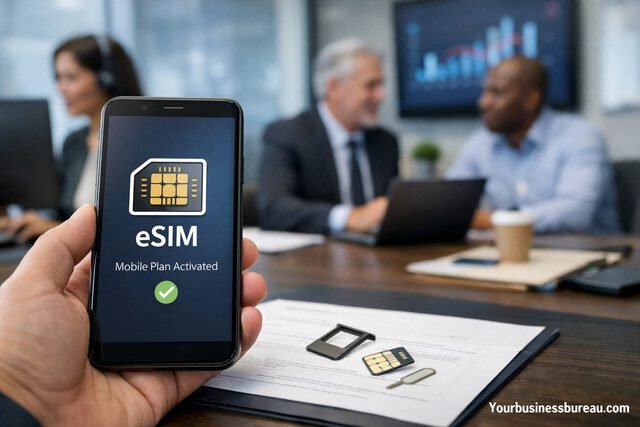
Yes, eSIM can reduce costs by minimizing physical SIM handling, lowering roaming expenses, and allowing businesses to switch or optimize mobile plans more easily.
It also supports better carrier management, which can help organizations negotiate more suitable data and voice packages for their actual usage patterns.
Key Business Advantages of eSIM Integration
Improved Flexibility
Companies are no longer tied to one physical card or one static carrier setup. eSIM allows more responsive network management, which is important in changing business environments.
Simplified IT Administration
IT departments can activate and manage mobile connectivity remotely. This reduces support tickets, shortens setup times, and improves device lifecycle management.
Enhanced User Experience
Employees can get connected quickly without dealing with SIM replacement or manual setup. This creates a smoother experience, especially for remote staff and frequent travelers.
Greater Sustainability
Reducing the production, packaging, and shipping of plastic SIM cards supports broader corporate sustainability goals. While small on its own, this matters for enterprises managing thousands of devices.
Challenges Businesses Should Consider
eSIM is highly promising, but adoption still requires planning. Some organizations may face compatibility issues with older devices or legacy telecom contracts. Teams also need clear policies around carrier selection, security, and mobile device management.
To integrate eSIM effectively, businesses should consider:
- Device compatibility across departments
- Support from preferred network carriers
- Security and compliance requirements
- Centralized management tools
- Employee training and onboarding workflows
A phased rollout often works best. Starting with mobile teams, international travelers, or IoT deployments can help organizations test workflows before scaling more broadly.
The Role of eSIM in the Future Enterprise
The future enterprise will be more distributed, more data-driven, and more device-dependent. Connectivity will need to be built for flexibility rather than fixed infrastructure alone.
eSIM fits this future because it supports:
- Remote-first operations
- Global workforce mobility
- Bring-your-own-device strategies
- Scalable IoT deployment
- Faster digital transformation initiatives
As 5G, edge computing, and connected business tools continue to expand, eSIM will become a core layer of enterprise communication strategy rather than a niche mobile feature.
Conclusion
The future of corporate connectivity is defined by agility, efficiency, and intelligent control. Businesses need solutions that keep employees, devices, and operations connected without adding complexity. eSIM technology answers that need by replacing outdated manual processes with digital flexibility.
From global expansion and travel management to IoT scaling and IT simplification, eSIM offers clear value for business growth. Companies that adopt it early are likely to gain an advantage in responsiveness, cost management, and operational resilience.
In a world where connectivity drives productivity, eSIM is not just an upgrade. It is a strategic foundation for the next phase of enterprise growth.
If you want to explore how we help businesses grow from the ground up, you can visit yourbusinessbureau.com to see what we offer.
