

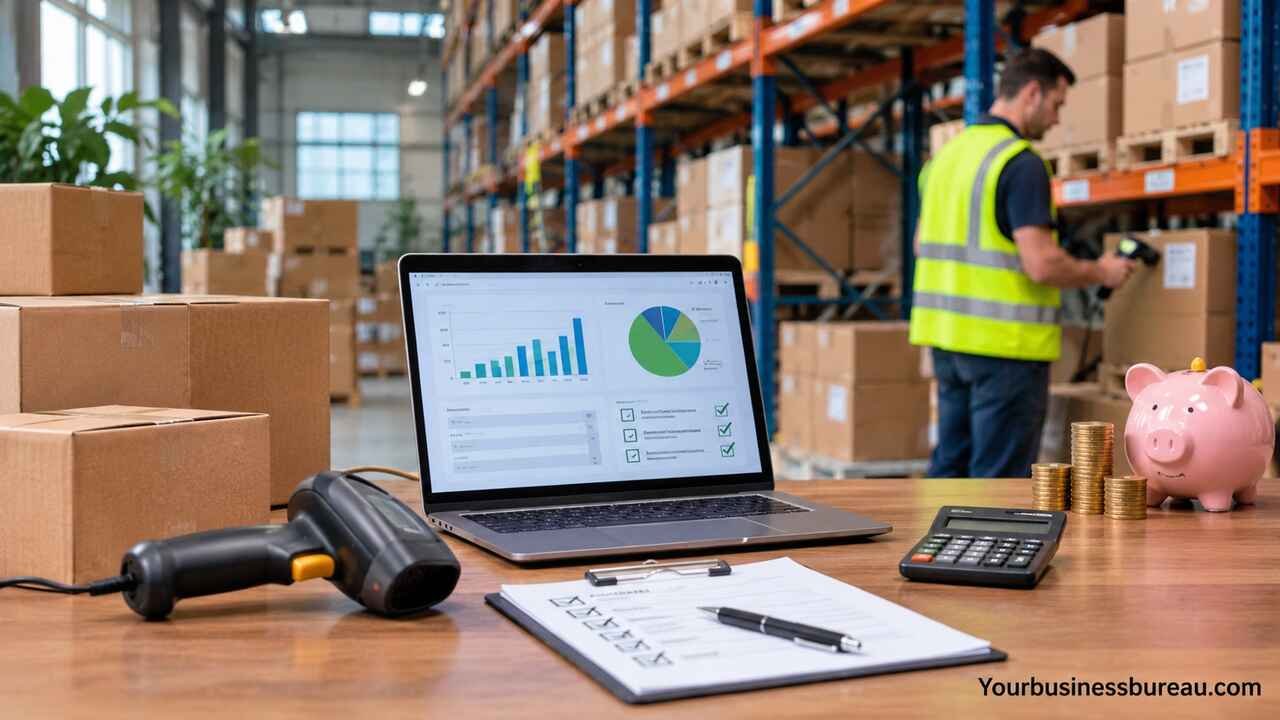
Business stock storage is the process of organizing, protecting, tracking, and managing inventory so products remain accessible, secure, and ready for sale or distribution. Whether you operate a retail store, an e-commerce business, or a growing wholesale company, choosing the right storage system can directly affect your operating costs, order accuracy, and customer satisfaction.
What Is Business Stock Storage and Why Is It Important?
Business stock storage refers to the physical space, equipment, and procedures used to hold inventory before products are sold, manufactured into finished goods, or shipped to customers. It includes everything from a small stockroom behind a retail store to a large warehouse with computerized inventory management.
The primary purpose of stock storage is to keep products in suitable conditions while making them easy to locate, count, and retrieve. A well-designed storage system also helps businesses maintain accurate inventory levels, reduce unnecessary handling, and prevent avoidable losses.
For example, imagine running an online clothing business that sells hundreds of different products. Without organized shelving and product labels, employees may spend considerable time searching for the correct sizes and colors. A structured storage system allows them to locate products quickly, process orders accurately, and maintain a better customer experience.
How Does Proper Stock Storage Improve Business Efficiency?
Proper stock storage improves efficiency by reducing the time employees spend locating, moving, and counting products. Clearly labeled shelves, designated inventory locations, and logical product placement make daily operations more predictable. When frequently ordered products are positioned near packing areas, employees can fulfill orders with less unnecessary movement. This becomes especially valuable when order volumes increase or multiple employees handle inventory.
What Problems Can Poor Inventory Storage Cause?
Poor inventory storage can cause product damage, inaccurate stock counts, misplaced merchandise, workplace hazards, and delayed customer orders. Products stored in unsuitable conditions may deteriorate before they are sold. Inaccurate records can also cause businesses to accept orders for unavailable items or purchase products they already have. These problems increase operating expenses and can weaken customer confidence over time.
What Are the Different Types of Business Stock Storage Solutions?
The most suitable business stock storage solution depends on your inventory volume, product characteristics, available budget, and fulfillment requirements. Common options include on-site stockrooms, self-storage facilities, commercial warehouses, and third-party logistics providers.
Small businesses often begin with storage inside their existing premises because it provides immediate access to products. However, as inventory grows, limited space may create congestion and operational difficulties. At that point, moving to a dedicated facility or outsourcing fulfillment can become a practical option.
Before choosing a solution, consider how frequently you need to access products, whether your merchandise requires temperature control, and how much space you expect to need over the next year. The lowest monthly storage price is not always the most economical choice when transportation, labor, insurance, and handling expenses are included.
| Storage solution | Suitable for | Main advantage | Main limitation |
| On-site stockroom | Small retailers and startups | Immediate inventory access | Limited space |
| Commercial self-storage | Small businesses with overflow inventory | Flexible storage capacity | Business activity and access restrictions |
| Dedicated warehouse | Growing retailers and wholesalers | Greater operational control | Higher fixed expenses |
| Third-party logistics (3PL) | E-commerce and multichannel sellers | Outsourced storage and fulfillment | Service fees and reduced direct control |
| Climate-controlled storage | Temperature-sensitive merchandise | More stable storage conditions | Additional operating costs |
When Should You Choose On-Site Storage?
On-site storage is generally suitable when your inventory is manageable, products require frequent access, and your existing premises have adequate space. A small electronics retailer, for instance, may keep replacement accessories and popular products in a secured stockroom. This arrangement avoids travel between facilities and allows employees to replenish shelves quickly. However, businesses should regularly evaluate whether stock is interfering with customer areas or workplace safety.
Is Renting a Warehouse Better Than Using a Storage Unit?
A warehouse is usually more suitable for businesses that require frequent deliveries, pallet handling, employee workstations, and high-volume order processing. Commercial self-storage may be appropriate for overflow inventory, seasonal merchandise, or products accessed less frequently. However, storage unit contracts may restrict commercial operations, hazardous materials, employee activity, and shipping services. Always confirm permitted business uses, access arrangements, and insurance requirements before signing an agreement.
How Can You Organize Business Stock Storage Efficiently?
Efficient business stock storage begins with assigning every product a designated location and maintaining consistent procedures for receiving, storing, picking, and dispatching inventory. An organized system should make it possible for employees to identify where a product belongs without relying on memory.
Start by dividing your storage space into practical zones. These might include receiving, inspection, active inventory, returns, packing, and outgoing shipments. Within each zone, arrange products according to their size, weight, handling requirements, and frequency of use.
For example, a business selling home improvement supplies might store frequently purchased hand tools near the picking area while keeping slower-moving seasonal equipment farther away. Heavy items should be positioned on appropriately rated shelving, with safe lifting and handling procedures. The objective is to reduce unnecessary movement without compromising accessibility or safety.
How Should You Label Shelves and Inventory Locations?
Use a consistent location identification system that combines aisle, shelf, and bin numbers. A location code such as A03-S02-B04 could identify aisle three, shelf two, and bin four. Each product should also have a stock keeping unit (SKU) that distinguishes it from similar merchandise. Barcode labels can improve accuracy when connected to inventory software, but even a clearly maintained manual labeling system can work for a small operation.
What Is the ABC Inventory Storage Method?
ABC analysis groups products according to their relative importance, commonly measured through annual consumption value, which is annual usage multiplied by unit cost. Category A items account for a high share of inventory value and generally require closer monitoring. Category B items have moderate importance, while Category C items contribute less value individually. Businesses can combine ABC analysis with order frequency to decide which products deserve the most accessible storage locations.
How Does Inventory Management Technology Improve Stock Storage?

Inventory management technology improves business stock storage by connecting physical product movements with digital records. Instead of relying entirely on handwritten notes or disconnected spreadsheets, businesses can track quantities, locations, purchases, and sales through a centralized system.
For small operations, a properly maintained spreadsheet may initially provide enough visibility. However, spreadsheets become harder to manage when multiple employees update records, products move between locations, or orders arrive through several sales channels. Inventory software can reduce these difficulties by recording transactions and supporting more consistent workflows.
The greatest benefit comes from combining technology with disciplined procedures. Software cannot automatically correct products placed in the wrong bins or inventory received without documentation. Every incoming delivery, sale, return, and stock adjustment should follow a defined process so digital quantities reflect physical inventory.
Should Small Businesses Use Barcode Inventory Systems?
Barcode systems are useful when businesses handle numerous SKUs, experience frequent inventory movements, or need faster stock counts. Employees can scan products during receiving, picking, and dispatching, reducing manual data entry. A barcode system generally requires suitable labels, scanning devices or compatible smartphones, and inventory software. Businesses should compare these costs against expected improvements in accuracy and labor efficiency before investing.
How Can You Prevent Stockouts and Overstocking?
Preventing stockouts and excess inventory requires accurate demand forecasts, realistic supplier lead times, and appropriate reorder points. A simple reorder-point calculation is:
Reorder point = Average daily demand × Supplier lead time in days + Safety stock
For example, if you sell 10 units daily, your supplier normally takes 7 days to deliver, and you maintain 30 units of safety stock, your reorder point is 100 units. When the inventory position reaches that level, you should consider placing another order. Adjust the calculation when demand or supplier reliability changes.
How Much Does Business Stock Storage Cost in the United States?
Business stock storage costs vary according to location, facility type, square footage, storage conditions, access requirements, and additional services. A storage facility in a major metropolitan area may have significantly different pricing from a comparable facility in a smaller market.
Monthly rent is only one part of the expense. Businesses may also pay for shelving, security, utilities, insurance, transportation, warehouse labor, software, equipment maintenance, and inventory handling. Third-party logistics providers may charge separately for receiving products, storing pallets or bins, picking orders, packing shipments, and processing returns.
To compare options fairly, calculate the total cost of operating each storage arrangement over the same period. For instance, an inexpensive facility located far from your main operation could increase delivery expenses and employee travel time. A more expensive but conveniently located facility may produce a lower overall operating cost.
What Expenses Should You Include in a Storage Budget?
A practical storage budget should include both fixed and variable costs. Fixed expenses may include rent, security contracts, and software subscriptions. Variable expenses may include packaging, transportation, labor hours, and fulfillment charges. Consider one-time setup costs such as racks, labels, equipment, and moving inventory. You should also allow for unexpected expenses, including repairs, damaged stock, and temporary storage requirements during peak seasons.
How Can You Reduce Inventory Storage Expenses?
Reducing storage expenses begins with identifying products that occupy valuable space without generating sufficient sales. Review slow-moving inventory, avoid unnecessary bulk purchases, and improve demand forecasting. Adjustable shelving, vertical storage, and standardized containers may increase usable capacity without requiring a larger facility. You can also compare storage providers, negotiate suitable contract terms, and consolidate shipments where practical. Cost reductions should never come at the expense of safe storage or product quality.
What Safety, Security, and Compliance Practices Should Businesses Follow?
Safe business stock storage requires appropriate equipment, controlled access, suitable environmental conditions, and procedures that protect employees and merchandise. The exact requirements depend on your products, facility, and applicable federal, state, and local regulations.
For businesses operating warehouses, relevant Occupational Safety and Health Administration (OSHA) requirements may address material handling, storage, walking surfaces, powered industrial trucks, and emergency access. Storage systems should be installed and used according to their rated capacities, and employees should receive training appropriate to their duties.
Product-specific rules also matter. Food, pharmaceuticals, flammable materials, and certain chemicals may require specialized storage conditions or regulatory controls. A general commercial storage unit should not be assumed suitable for these products. Review applicable requirements and confirm that your facility can support them before moving inventory.
How Can You Protect Inventory From Theft and Damage?
Protect inventory through controlled entry, suitable locks, security cameras, documented stock movements, and regular physical counts. Limit access to valuable products and investigate unexplained inventory differences. Environmental protection is equally important: moisture, excessive heat, pests, and poor handling can damage merchandise even when a facility is secure. Review commercial property insurance coverage carefully, including exclusions, deductibles, and coverage for goods stored away from your primary business premises.
What Are the Best Practices for Storing Perishable Products?
Perishable inventory requires storage conditions appropriate to the specific product. Businesses should monitor temperature, maintain sanitation, document receiving conditions, and follow applicable food or product safety requirements. First-expired, first-out (FEFO) rotation prioritizes products with the earliest expiration dates, helping reduce waste. First-in, first-out (FIFO) may be suitable for other products, but it does not always ensure the earliest-expiring items are used first. Temperature requirements should follow product specifications and applicable regulations.
How Can You Build a Scalable Business Stock Storage System?
A scalable business stock storage system allows you to increase inventory capacity and order volume without repeatedly rebuilding your entire operation. The best approach is to establish clear procedures early and expand equipment, space, and technology as business needs change.
Begin by measuring your current inventory, identifying seasonal fluctuations, and estimating future storage requirements. Consider not only the number of products you hold but also their dimensions, packaging, handling needs, and turnover rates. A business selling lightweight accessories has different space requirements from one distributing furniture or industrial supplies.
You should also monitor operational performance. Useful measures include inventory accuracy, order picking accuracy, storage utilization, stock turnover, and inventory carrying costs. Reviewing these indicators can reveal when your existing system is becoming inefficient and whether you need additional shelving, improved software, a larger facility, or outsourced fulfillment.
When Should You Upgrade to a Larger Storage Facility?
Consider upgrading when your current facility consistently lacks usable capacity, employees struggle to access inventory safely, or order processing becomes inefficient. Temporary seasonal increases do not always justify a permanent move. Compare projected growth, relocation costs, lease commitments, and the possibility of improving your existing layout first. A larger facility should solve a measurable operational problem rather than simply provide additional empty space.
How Do You Create a Practical Stock Storage Improvement Plan?
Start with a physical inventory count and a review of existing storage locations. Identify damaged, obsolete, and slow-moving merchandise, then establish clear zones and labeling standards. Document receiving, picking, returns, and counting procedures so employees follow consistent steps. Set measurable improvement targets, such as reducing picking errors or improving inventory accuracy. Review progress monthly and adjust your system as inventory volume, product mix, and customer demand evolve.
FAQ’s
The best solution depends on inventory size, product requirements, and access frequency. A dedicated stockroom may be sufficient for a small retailer, while commercial self-storage can help with overflow merchandise. Businesses handling frequent shipments or growing product volumes may benefit from a warehouse or third-party logistics provider.
Yes, many self-storage facilities permit certain types of business inventory, but restrictions vary. Some prohibit hazardous materials, food products, daily commercial operations, or regular customer visits. Review the rental agreement, confirm permitted activities, and check insurance coverage before storing merchandise.
Required space depends on product dimensions, stock quantities, shelving configuration, aisle access, and handling equipment. Calculate the volume and footprint of your inventory, then account for receiving, picking, packing, and safe movement. Avoid estimating space solely from the number of products because packaging sizes can vary considerably.
Stock storage focuses on the physical arrangement, protection, and accessibility of merchandise. Inventory management covers the broader process of tracking stock quantities, forecasting demand, ordering products, and monitoring inventory movements. The two work together to maintain accurate records and efficient operations.
Inventory counting frequency depends on product value, transaction volume, and the risk of discrepancies. High-value or fast-moving products may need more frequent cycle counts, while slower-moving merchandise can be checked less often. Businesses should also perform broader physical counts when necessary to reconcile records and identify recurring problems.
Outsourcing can be worthwhile when storage and fulfillment demands exceed your internal capacity. A third-party logistics provider may offer warehouse space, inventory tracking, and shipping services without requiring you to operate your own facility. Compare total service charges, accuracy expectations, integration capabilities, and contract terms before deciding.
Conclusion
Effective business stock storage helps protect inventory, control operating expenses, and maintain reliable customer service. The right approach combines suitable storage space, organized product locations, accurate inventory records, and appropriate safety procedures. Whether you use an on-site stockroom, commercial storage unit, warehouse, or third-party logistics provider, your system should reflect your products and daily operating needs.
Start by evaluating your current inventory, identifying wasted space, and reviewing how employees receive, locate, and dispatch products. Even small improvements in labeling, stock rotation, and inventory tracking can create a more efficient operation and provide a stronger foundation for future growth.
