

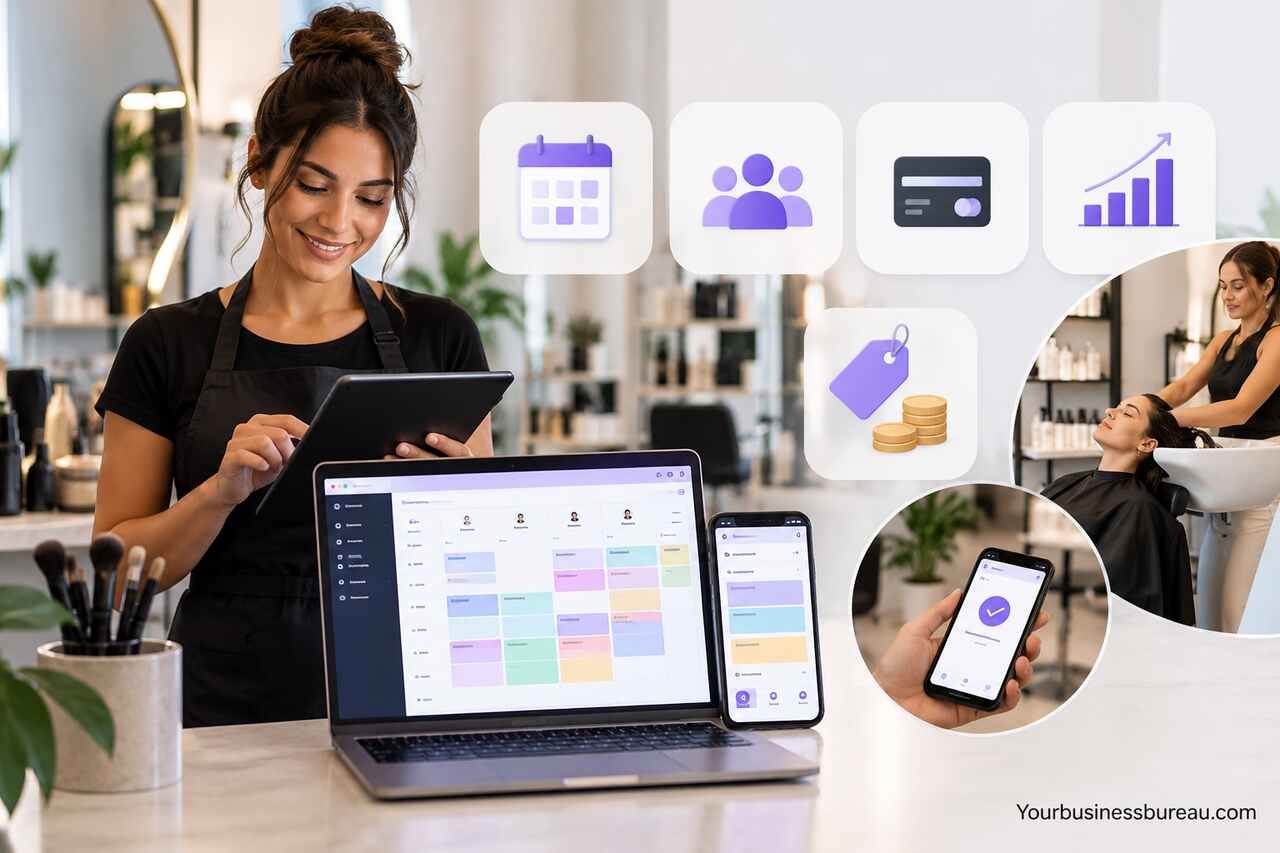
Fresha for business is an all-in-one management platform for salons, spas, barbershops, medspas, and other beauty and wellness businesses. It combines appointment scheduling, online booking, payments, client management, marketing, inventory, and team management.
What Is Fresha for Business?
Fresha is a business management platform focused on the beauty, wellness, and self-care industries. Businesses can use it to organize appointments, manage client records, coordinate employees and resources, accept payments, sell products and services, and make appointments available for online booking.
The platform is particularly relevant to appointment-based businesses such as:
- Hair salons
- Nail salons
- Barbershops
- Spas
- Medspas
- Waxing salons
- Massage and wellness businesses
- Beauty professionals
- Other appointment-based self-care businesses
Fresha says its platform is used across more than 120 countries. Its business website reports more than 130,000 partner businesses, 450,000 professionals, and over one billion appointments booked through the platform.
The system can therefore serve two related purposes. It acts as operational software for managing an existing business, while Fresha Marketplace provides another channel through which potential customers can discover participating businesses and book services.
How Fresha for Business Works
A business creates a Fresha workspace and configures the information needed to run its appointment calendar. This can include locations, employees, working hours, services, service durations, prices, available resources, payment rules, and booking settings.
Once configured, the calendar becomes the center of daily appointment management. Staff can create bookings themselves, while businesses can also enable online booking so clients can schedule appointments without calling the front desk.
Bookings can connect with other parts of the system. For example, a client booking can be associated with the client’s profile, required forms, payment information, appointment reminders, assigned staff member, and necessary resources.
At checkout, the business can process the service along with additional items such as retail products, add-ons, memberships, packages, gift cards, or tips.
That integration is one of the main reasons to compare Fresha with using separate applications for scheduling, payments, customer records, inventory, and marketing.
Fresha for Business Pricing
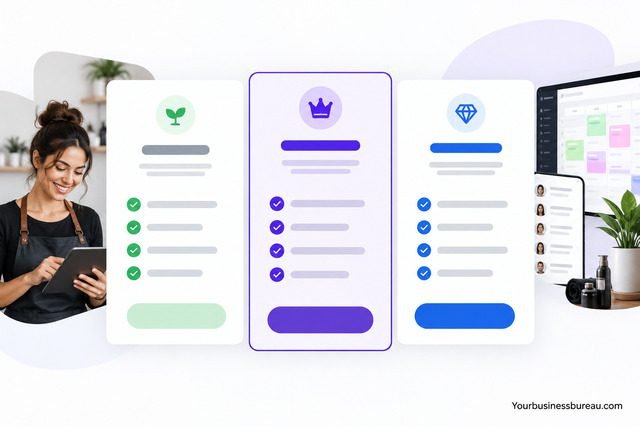
Fresha uses a subscription model based partly on the number of bookable team members.
As of September 2026, Fresha lists the following headline subscription prices:
| Plan | Intended for | Listed subscription price |
| Independent | One-person businesses | $19.95 per month |
| Team | Businesses with multiple bookable team members | $14.95 per bookable team member per month |
| Enterprise | High-volume businesses with more than 20 team members | Custom pricing |
Both the Independent and Team plans currently advertise a seven-day trial.
The Independent plan includes a single calendar column, 100 free messages, 50 free marketing emails, and email and chat support. The Team plan provides multiple calendar columns and includes 100 free messages and 50 free marketing emails per team member, along with phone, chat, and email support.
The advertised subscription should not automatically be treated as the complete cost of operating Fresha. A business may also incur charges associated with paid features, payments, communications, marketplace activity, or optional add-ons depending on how it uses the platform.
For that reason, businesses comparing Fresha with another booking platform should estimate their expected monthly cost based on actual usage rather than comparing subscription prices alone.
Appointment Scheduling and Calendar Management
Scheduling is one of Fresha’s core business functions. Businesses can manage staff availability, services, appointments, and resources through a centralized calendar.
Online bookings update the business calendar, reducing the need to manually transfer appointments from phone calls, messages, or separate booking systems.
Fresha also supports resources. This matters for businesses where staff availability alone does not determine whether an appointment can take place.
A spa, for example, might have five therapists but only two treatment rooms equipped for a particular service. A business can associate resources such as rooms or equipment with services so availability reflects those operational constraints.
Resources can also be scheduled without a staff member in appropriate situations, such as appointments involving saunas or cold plunges.
Waitlists can help fill cancellations
Last-minute cancellations create unused capacity that cannot always be recovered manually. Fresha includes a waitlist designed to match openings with clients waiting for appropriate availability.
Businesses can determine how waiting customers are offered newly available appointments. Depending on the configuration, this can reduce the amount of time employees spend calling or messaging clients individually when a slot opens.
For a busy salon or spa, this feature is more than calendar convenience. Recovering even a portion of otherwise empty appointment time can affect revenue without requiring the business to extend its operating hours.
Online Booking Through Fresha
Fresha allows customers to book appointments online around the clock. Businesses can make booking available through several channels rather than limiting clients to phone calls during opening hours.
Direct booking links can be shared through a company’s website, social media, advertising, and other digital channels. Fresha also supports booking integrations associated with platforms such as Google, Facebook, and Instagram.
Clients can see relevant availability and confirm appointments without a staff member manually handling each booking request.
Businesses can also establish payment policies for appointments. Depending on the setup, clients may be required to provide card details, pay a deposit, or make an upfront payment.
This can be particularly useful for businesses offering expensive or lengthy appointments, where a late cancellation or no-show leaves a large gap that is difficult to refill.
Fresha Marketplace and New Client Discovery
Fresha Marketplace distinguishes the platform from a scheduling tool that only handles customers a business attracts independently.
The marketplace allows consumers to discover beauty and wellness businesses and book available services. Businesses can use their listings to present services and availability and collect verified reviews associated with bookings.
That creates a potential customer-acquisition channel in addition to direct booking links.
The distinction between direct bookings and marketplace-acquired bookings is important when assessing Fresha’s overall economics. A business that already generates nearly all of its appointments through its own website, referrals, social media, or established client base may evaluate marketplace exposure differently from a newly opened salon actively looking for additional discovery.
When comparing platforms, examine how much of your booking volume you expect to originate from each channel and which charges apply to those bookings.
Client Management and CRM Features
Fresha maintains client profiles that allow businesses to keep relevant customer information alongside appointment history.
Depending on the information collected and features being used, profiles can include details such as:
- Appointment history
- Notes
- Forms
- Allergies
- Patch tests
- Documents
- Gift cards
- Memberships
- Packages
- Saved payment cards
Keeping these records connected to appointments can make repeat visits easier to manage.
Consider a hair salon where a returning client’s preferred stylist, treatment history, and relevant notes need to be available before the next visit. Centralized records reduce reliance on handwritten notes or information remembered by individual employees.
For treatment-oriented businesses, digital forms can also collect information before an appointment. Forms may be configured for uses such as consultations, consent, intake information, and treatment preparation.
Businesses handling sensitive customer information should still evaluate their own privacy, recordkeeping, consent, and regulatory responsibilities. Having a software feature available does not by itself satisfy every legal or professional requirement that may apply in a particular jurisdiction.
Automated Reminders and Client Communication
Missed appointments can be costly because appointment-based businesses sell time that usually cannot be stored and sold later.
Fresha provides automated appointment notifications and reminders through supported communication channels, including email, SMS, and app notifications.
The platform can send communications relating to confirmations, appointment updates, reminders, and waitlist activity. Automation can also extend into retention campaigns, such as birthday messages and other customer engagement workflows.
Two-way communication tools allow businesses to handle customer conversations through a centralized inbox rather than treating every interaction as an isolated message.
Businesses should nevertheless consider communication allowances and paid usage when calculating costs. Fresha’s current plans include specified quantities of free messages and marketing emails, so businesses with large customer lists or heavy messaging requirements should estimate usage rather than assuming all communication is unlimited.
Payments and Point of Sale
Fresha combines booking management with payment and POS functionality.
Businesses can accept supported payment methods online and in person. Fresha offers card terminals and tap-to-pay functionality, while the checkout system can handle more than appointment services alone.
A transaction can potentially include:
| Checkout item | Practical use |
| Services | Charge for completed appointments |
| Add-ons | Add upgrades or extras to the original service |
| Retail products | Sell beauty or wellness products |
| Memberships | Create recurring customer relationships |
| Packages | Sell bundled services or offers |
| Gift cards | Generate prepaid sales and future visits |
| Tips | Allow customers to add gratuities |
Fresha also supports split and partial payments, refunds, exchanges, discounts, and other checkout adjustments.
Client self-checkout can allow customers to pay using their own phones through a supported payment flow. This may be useful in higher-volume environments where reducing queues at reception is valuable.
Before adopting the payment system, businesses should review the payment processing rates and conditions applicable to their country and transaction type. Payment costs can vary, so a headline software subscription price alone does not provide a complete cost comparison.
Deposits and Upfront Payments
Deposits can help businesses manage appointments where no-shows create significant financial losses.
Fresha allows businesses to establish payment policies that may involve upfront payments, deposits, or stored card details. The appropriate approach depends on the service and business model.
For example, suppose a treatment requires a 90-minute appointment and costs $150. A missed booking represents not only a lost $150 sale but also 90 minutes that may be impossible to resell at short notice. Requiring a deposit can give the customer a stronger commitment to the appointment and provide the business with a mechanism for enforcing its cancellation policy.
Businesses should clearly communicate cancellation and refund terms to customers and make sure their policies comply with applicable consumer and payment rules.
Team Management for Salons and Spas

Fresha includes workforce management features for businesses with multiple professionals.
Individual team accounts allow staff members to work from their own devices, while permissions can control which parts of the system each person can access.
Businesses can configure working shifts, individual service prices and durations, commissions, timesheets, and pay-related information.
This becomes particularly useful when employees do not all provide the same services.
For example, a senior stylist might charge $90 for a service lasting 60 minutes, while a junior stylist charges $65 and requires 75 minutes. Individual service pricing and duration settings allow the booking system to reflect those differences instead of forcing every professional into the same service template.
Commission calculations can also be associated with sales, reducing some of the manual work required to determine employee earnings.
Inventory and Retail Management
Businesses that sell physical products can use Fresha to manage retail activity alongside services.
The inventory system tracks products and stock, while purchase-order functionality helps businesses organize replenishment from suppliers. Online and in-store inventory can also be synchronized where relevant.
This integration is useful because service appointments often create natural retail opportunities.
A salon may provide a hair treatment and sell the recommended shampoo at checkout, for example. Recording both transactions in the same system provides a more complete picture of sales than maintaining separate service and retail records.
Businesses can also operate an online product store and offer options such as click and collect where available.
Marketing and Customer Retention Tools
Fresha’s marketing tools extend beyond acquiring new clients through its marketplace.
Businesses can create email campaigns, use campaign templates, segment customers, create promotions, and track campaign performance.
Segmentation can help prevent businesses from sending the same offer to every client.
An inactive customer who has not booked for several months, for example, might receive a reactivation offer. A frequent customer may instead be more appropriate for a loyalty reward or an offer related to services they already purchase.
Fresha also provides loyalty functionality designed to reward repeat behavior.
Other promotional tools include off-peak discounts and pricing features that allow businesses to adjust prices in response to demand. Used carefully, these tools can help shift some demand from heavily booked periods into quieter hours.
Businesses should avoid viewing discounts as an automatic solution to empty appointments, however. Frequent discounting can reduce margins or condition customers to wait for offers. Pricing tools work best when the business understands its occupancy, margins, and customer behavior.
Reporting and Analytics
Fresha provides reports covering areas such as sales, finances, clients, employees, and broader business performance.
Reports can help answer operational questions such as:
- Which services generate the most sales?
- Which products are selling?
- How frequently do customers return?
- Which employees have the highest occupancy?
- How are commissions changing?
- Which locations or periods generate the most revenue?
- Are particular services underused?
The value of these reports depends on whether the business uses them to make decisions.
A salon that discovers Tuesday afternoons consistently have low occupancy, for example, could test an off-peak promotion rather than discounting appointments throughout the entire week.
Advanced reporting and data-connection capabilities may also be available through additional Fresha features or add-ons.
Fresha AI Concierge
Fresha has expanded its business platform with an AI Concierge designed to handle client communications and booking-related tasks.
According to Fresha, the AI Concierge can answer calls and messages, respond to common customer questions, and manage bookings and rescheduling while remaining synchronized with the business’s Fresha account.
This type of feature may be particularly relevant to businesses where employees frequently have to interrupt services to answer the phone.
A small salon with no dedicated receptionist, for example, can lose booking opportunities when everyone is serving clients. Automated call and message handling could potentially capture some enquiries that would otherwise go unanswered.
Businesses considering this functionality should review its current availability, cost, configuration options, and suitability for the types of customer enquiries they receive.
Advantages and Limitations of Fresha for Business
Fresha combines a broad range of functions, but whether that makes it appropriate depends on the individual business.
| Potential advantage | Point to evaluate |
| Booking, POS, clients, inventory, and reporting in one platform | Businesses should confirm every required workflow is supported |
| 24/7 online booking | Booking rules need careful configuration |
| Fresha Marketplace provides additional discovery | Marketplace economics should be compared with direct customer acquisition |
| Deposits and payment policies can protect appointment time | Payment terms and processing costs need review |
| Team scheduling and commission tools | Cost can increase as the number of bookable team members grows |
| Integrated marketing and retention tools | Messaging, marketing, and add-on costs should be considered |
| Mobile access | Complex administrative work may still be easier on desktop |
| Inventory and retail functionality | Specialized retailers may require more advanced inventory software |
The important point is that a long feature list does not automatically make Fresha the right choice. A solo practitioner, a five-chair salon, a multi-location spa, and a large medspa may use the same platform in very different ways.
How to Estimate Your Real Fresha Cost
Start with the subscription, then account for the parts of the platform your business will actually use.
Consider a hypothetical salon with five bookable professionals. Using the currently advertised Team price of $14.95 per bookable team member per month, its base subscription would be:
5 × $14.95 = $74.75 per month
That figure should be treated as the starting point, not necessarily the final monthly cost.
The business should then investigate its expected payment-processing charges, marketplace-related costs where applicable, messaging volume, marketing usage, and any optional paid add-ons.
A useful comparison with another salon platform therefore looks like this:
Total software cost = subscription + transaction-related costs + marketplace-related costs + communications + paid add-ons + required hardware
Not every category will apply to every business.
This calculation is much more informative than comparing two platforms solely on their advertised monthly subscription.
Who Is Fresha Best Suited For?
Fresha is primarily built around businesses where appointments, clients, professionals, services, and payments need to work together.
A solo beauty professional may value having scheduling, client records, online booking, and payments in one place. A larger salon may get more value from multi-column calendars, permissions, commissions, inventory, reporting, and team scheduling.
Spas and wellness businesses can benefit from resource scheduling where rooms or equipment constrain appointment availability.
Businesses focused on growth may place greater value on marketplace discovery, marketing, reviews, promotions, and customer retention features.
By contrast, a business with highly specialized workflows should verify those requirements before migrating. The fact that Fresha covers many standard beauty and wellness processes does not mean it replaces every specialist application.
What to Check Before Switching to Fresha
Before moving an established business, map the platform against the way the company actually operates.
Check whether Fresha can accommodate your service durations, staff schedules, locations, resources, memberships, packages, commission structures, forms, payment policies, inventory requirements, and reporting needs.
Then calculate expected costs under realistic booking volume.
Data migration also deserves attention. An established salon may have years of customer information, appointment records, service configurations, product data, and other records in its existing system. Determine what can be imported, what needs to be recreated, and what historical information needs to remain accessible.
Finally, test the customer journey. Booking software affects clients as well as employees. Complete a booking as a customer, test confirmation and reminder workflows, process a payment, reschedule an appointment, and perform a checkout before relying on the system for everyday operations.
FAQ’s
Fresha currently advertises paid subscription plans rather than a completely free core business plan. As of September 2026, the Independent plan is listed at $19.95 per month, while the Team plan is $14.95 per bookable team member per month. Additional fees can apply depending on the features and services used.
The Team subscription is currently priced per bookable team member, rather than simply charging the same fee for every person associated with a company. Businesses should check Fresha’s current pricing definitions when calculating costs for their specific team structure.
Yes. Customers can book online, and businesses can distribute direct booking links through channels such as their websites and social media. Businesses can also be discoverable through Fresha Marketplace.
Fresha supports payment policies that can include deposits and upfront payments. These tools can help businesses protect appointment time and manage cancellations or no-shows.
Yes. Fresha’s POS can process services, products, memberships, packages, gift cards, add-ons, tips, and supported payment methods. It integrates checkout with other parts of the business platform.
No. Although salon software is a major part of Fresha’s offering, the platform supports a broader range of beauty, wellness, and self-care businesses, including spas, barbershops, nail salons, waxing businesses, and medspas.
Is Fresha for Business Worth Considering?
Fresha for business brings appointment scheduling, online booking, client management, payments, POS, team management, inventory, marketing, reporting, and customer discovery into a single platform. That makes it relevant to businesses that want to reduce the number of separate systems used to manage everyday operations.
The decision should come down to workflow and total cost rather than the feature list alone. Calculate the subscription for your number of bookable professionals, identify the transaction and usage-based charges likely to affect you, decide whether Fresha Marketplace adds meaningful value, and test the workflows your employees and customers use most often.
For a beauty or wellness business that can use several parts of the platform together, the integration may be more valuable than any individual feature. For businesses with specialized requirements, high transaction volumes, or an established technology stack, comparing Fresha’s complete cost and workflow against alternatives before migrating is the safer approach.
If you want to explore how we help businesses grow from the ground up, you can visit yourbusinessbureau.com to see what we offer.
