


Highlights
- Risk management in crypto trading protects capital before pursuing profit. Capital preservation increases longevity, and longevity increases the probability of long-term profitability. Survival remains the primary objective for every serious trader.
- Position sizing controls loss exposure by aligning trade size with predefined risk percentage. A structured 1% to 2% risk per trade prevents catastrophic drawdowns and stabilizes emotional performance during losing streaks.
- Stop-loss placement defines trade invalidation, not emotional reaction. Logical exits based on structure improve discipline and protect equity from uncontrolled downside volatility.
- Risk-to-reward planning improves expectancy. A consistent 1:3 ratio allows profitability even with moderate win rates, which reduces psychological pressure and improves execution quality.
- Leverage amplifies both opportunity and liquidation risk. Conservative leverage under controlled exposure reduces stress and prevents rapid capital depletion.
- Portfolio diversification reduces concentration risk. Allocation across large-cap assets, mid-cap assets, and stablecoin reserves creates volatility balance and liquidity flexibility.
- Psychological rules such as daily loss limits and trading journals strengthen discipline. Emotional control directly supports capital protection.
- Long-term capital protection requires a written risk policy. Consistency in applying structured rules builds sustainable compounding growth.
Introduction
Cryptocurrency trading without risk management leads to capital erosion, emotional stress, and inconsistent performance. Risk management in crypto trading protects trading capital through structured position sizing, stop-loss planning, portfolio allocation, and psychological discipline. Capital protection rules define how much to risk, where to exit, and how to preserve liquidity during volatility. Crypto markets operate 24/7, which increases exposure to sharp price swings, liquidity gaps, and sudden liquidation events. I want you to understand one core principle before anything else: survival comes before profit. Long-term profitability begins with capital preservation, and capital preservation begins with structured risk control.
What Is Risk Management in Crypto Trading and Why Does It Matter?
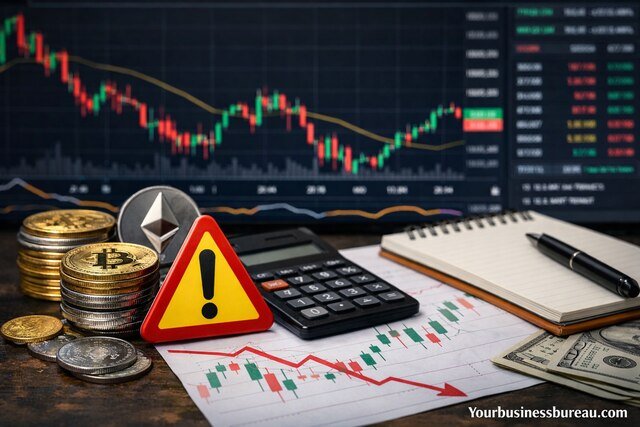
Risk management in crypto trading refers to a structured framework that limits potential losses while maintaining the ability to grow capital over time. Risk management controls downside exposure through defined rules that govern position size, stop-loss placement, leverage usage, and portfolio allocation. Without these controls, market volatility converts minor mistakes into large drawdowns.
Crypto trading involves high volatility, high liquidity shifts, and emotional decision-making pressure. Volatility creates opportunity, yet volatility also magnifies losses. A trader who ignores structured loss limits risks account depletion within a few trades. I have seen traders with accurate market analysis lose everything because no protective rules existed behind their trades.
Capital protection ensures longevity. Longevity allows skill development. Skill development increases probability of consistent returns. When I speak directly to you, I want you to think of trading as a business. Every business protects capital first. Crypto trading requires the same discipline.
Capital Preservation as the Primary Objective
Capital preservation protects trading equity by limiting exposure per trade and per day. A trader who risks 1% to 2% of total capital per trade reduces the probability of catastrophic drawdown. Smaller risk percentages create resilience during losing streaks.
Preservation also stabilizes psychological performance. Reduced emotional pressure leads to better decision-making. When risk per trade remains controlled, recovery from losses becomes mathematically manageable.
The Role of Volatility in Risk Exposure
Volatility measures price fluctuation speed and magnitude. Higher volatility increases potential reward and increases potential loss simultaneously. Crypto markets frequently move 5% to 20% within hours, especially during high momentum cycles.
Volatility requires dynamic stop-loss placement and adjusted position sizing. Static rules without volatility awareness often result in premature stop-outs or oversized losses.
How Should You Determine Proper Position Sizing?
Position sizing defines how much capital enters a single trade based on acceptable risk. Proper sizing aligns trade exposure with predefined risk percentage. A trader who controls position size controls potential loss.
The most practical formula connects three elements: account size, risk percentage, and stop-loss distance. If account equity equals $10,000 and risk per trade equals 1%, maximum acceptable loss equals $100. If stop-loss distance equals 5%, position size equals $2,000. This calculation keeps loss within $100 if stop-loss triggers.
I personally learned position sizing through painful losses early in my journey. Oversized positions magnified small market corrections into emotional panic. Once I shifted to percentage-based risk, emotional stability improved dramatically.
Fixed Percentage Risk Model
Fixed percentage risk allocates a consistent percentage of capital per trade. Most disciplined traders use 1% to 2% risk per position. Lower risk percentage increases survival probability during drawdowns.
Consistency in percentage allocation builds predictable equity curves. Predictability supports long-term compounding.
Volatility-Based Position Adjustment
Volatility-based adjustment modifies position size according to market conditions. High volatility requires smaller position sizes. Low volatility allows slightly larger sizes under controlled risk.
Average True Range and price structure analysis help determine appropriate stop distance, which then influences position size.
| Account Size | Risk per Trade | Stop Loss Distance | Position Size |
| $5,000 | 1% ($50) | 5% | $1,000 |
| $10,000 | 2% ($200) | 4% | $5,000 |
| $20,000 | 1% ($200) | 2% | $10,000 |
Why Are Stop-Loss and Take-Profit Rules Essential?
Stop-loss orders define maximum acceptable loss before trade exit. Take-profit levels secure gains according to planned risk-to-reward ratio. Structured exit rules remove emotional interference.
Stop-loss placement should align with market structure, not arbitrary percentages. Support and resistance levels, liquidity zones, and invalidation points determine logical exits. When price breaks structure, trade thesis becomes invalid.
I always tell readers that discipline in exits separates professionals from gamblers. A stop-loss is not a prediction failure. A stop-loss is cost control.
Strategic Stop-Loss Placement
Strategic placement protects trade logic. If entry is based on breakout above resistance, stop should sit below invalidation zone. Logical placement reduces premature exits.
Wider stops require smaller position sizes. Tight stops require confirmation to avoid noise-driven liquidation.
Risk-to-Reward Ratio Planning
Risk-to-reward ratio compares potential gain to potential loss. A 1:3 ratio means risking $100 to potentially gain $300. Higher ratios allow profitability even with lower win rates.
| Risk Amount | Reward Target | Risk-to-Reward Ratio |
| $100 | $200 | 1:2 |
| $100 | $300 | 1:3 |
| $100 | $500 | 1:5 |
How Does Leverage Impact Risk Management in Crypto?

Leverage magnifies both gains and losses. Leverage increases position exposure beyond account equity. While leverage can enhance returns, leverage accelerates liquidation risk during volatility spikes.
Crypto derivatives platforms often offer 5x to 100x leverage. Higher leverage reduces liquidation distance. Small price movement can wipe out account balance.
I advise new traders to avoid excessive leverage. Controlled leverage below 3x reduces liquidation probability while maintaining exposure flexibility.
Liquidation Risk and Margin Calls
Liquidation occurs when account equity falls below maintenance margin. Forced closure often happens during high volatility events.
Margin call risk increases when position size exceeds safe exposure. Risk management must account for liquidation price before trade entry.
Conservative Leverage Strategy
Conservative leverage integrates low multiples with strict stop-loss planning. Lower leverage increases flexibility and reduces stress.
Using leverage strategically rather than emotionally protects long-term capital growth.
How Should Portfolio Diversification Reduce Risk?
Portfolio diversification spreads exposure across different digital assets to reduce concentration risk. Concentration increases vulnerability to single asset collapse.
Diversification across large-cap, mid-cap, and stablecoins balances volatility exposure. Stablecoin allocation provides liquidity reserve during market downturns.
In my own trading structure, diversification reduced drawdown impact significantly. When one position underperformed, other assets stabilized portfolio equity.
Asset Allocation Strategy
Asset allocation assigns percentage weight to different assets. Example structure includes 50% large-cap coins, 30% mid-cap assets, 20% stablecoins.
Balanced allocation stabilizes volatility impact.
Correlation Awareness
Correlation measures how assets move relative to each other. Highly correlated coins move similarly. Diversification requires low-correlation assets.
Selecting assets from different sectors such as DeFi, Layer 1 networks, and infrastructure reduces synchronized losses.
What Psychological Rules Protect Trading Capital?
Psychological discipline directly influences risk control. Emotional decisions override structured planning. Fear leads to premature exits. Greed leads to oversized positions.
Predefined trading rules reduce emotional interference. Daily loss limits prevent revenge trading. Break periods after losing streaks restore mental clarity.
I learned that psychology determines consistency more than technical skill. Emotional regulation strengthens risk discipline.
Daily Loss Limit Rule
Daily loss limit caps maximum acceptable loss per trading session. Many traders use 3% to 5% of account equity as daily cap.
Once limit triggers, trading stops for the day. Capital protection remains priority.
Trading Journal and Accountability
Trading journal tracks entry, exit, reasoning, and emotional state. Documentation improves self-awareness.
Reviewing journal entries identifies recurring mistakes and emotional triggers.
How Can You Build a Long-Term Capital Protection Plan?
Long-term capital protection combines structured rules into consistent framework. Framework includes position sizing, stop-loss logic, leverage control, diversification, and psychological discipline.
Compounding requires steady growth, not explosive gains. Consistency produces exponential results over time. A trader who preserves capital during bear markets gains advantage during bull markets.
From my experience, slow and disciplined growth outperforms aggressive short-term speculation. I speak to you honestly: sustainable trading depends on patience and structured defense.
Creating a Personal Risk Policy
Personal risk policy defines maximum risk per trade, per day, and per week. Written policy increases accountability.
Clarity in rules reduces impulsive decisions.
Adapting to Market Cycles
Market cycles shift between bullish expansion and bearish contraction. Risk exposure should adjust accordingly. Lower exposure during uncertain conditions protects equity.
Flexibility combined with discipline creates resilient trading structure.
Conclusion
Risk management in crypto trading protects capital through structured position sizing, disciplined stop-loss rules, conservative leverage, diversification, and psychological control. Capital preservation enables longevity, and longevity enables compounding growth. Every trade must follow predefined risk parameters. Trading success depends less on prediction accuracy and more on consistent risk control. I encourage you to prioritize protection over profit, because protected capital creates opportunity for sustainable gains.
If you want to explore how we help businesses grow from the ground up, you can visit yourbusinessbureau.com to see what we offer.
FAQ’s
Most disciplined traders risk 1% to 2% per trade. Lower percentages increase survival probability during drawdowns and reduce emotional pressure.
Leverage is not necessary. Spot trading without leverage already offers sufficient volatility. Conservative leverage below 3x reduces liquidation risk.
Diversification reduces concentration risk. Holding assets across different sectors stabilizes portfolio performance during volatility.
Risk management does not guarantee profits. Risk management guarantees controlled losses. Controlled losses create foundation for consistent profitability.
Mastery develops through experience, journaling, and disciplined execution. Consistent application over months builds strong habits and emotional resilience.
