

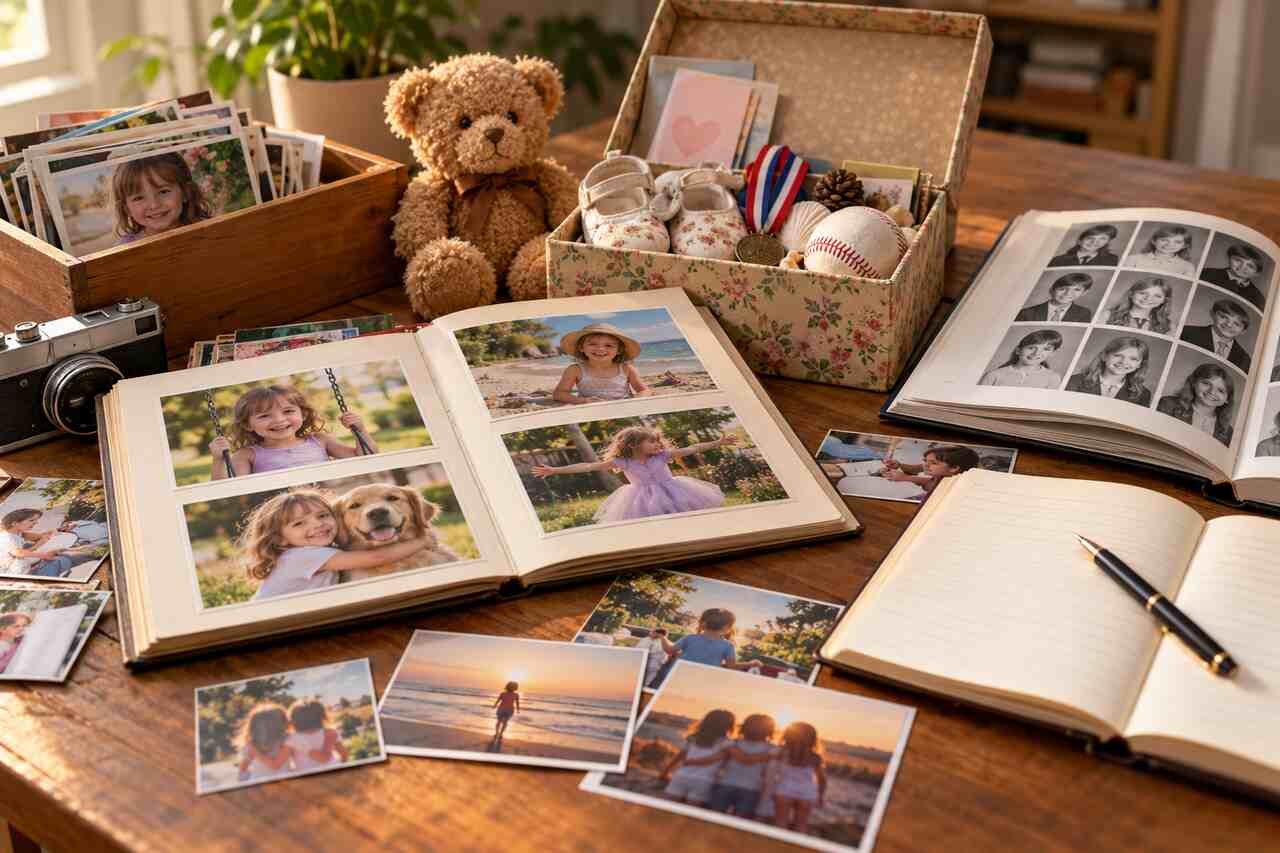
Preserving Your Childhood
Childhood can feel incredibly vivid while we are living it, yet many of its smaller details gradually disappear with time. The names of classmates, favorite playground games, family routines, and even the layout of a childhood bedroom can become harder to recall. Photographs, yearbooks, letters, and other keepsakes provide valuable reminders of those years.
Preserving these items is not simply about holding onto possessions. Creating an organized record of childhood can help keep memories accessible while giving future generations a more personal understanding of family history.
Start with Photographs and Keepsakes
Old photographs are an obvious place to begin. Instead of leaving prints scattered across boxes and albums, consider organizing them by approximate year, location, or event. Write down the names of people pictured while you can still identify them.
Other objects can be equally meaningful. School reports, certificates, handwritten notes, childhood artwork, postcards, and letters can reveal details that photographs cannot. Even seemingly ordinary objects may become more significant over time. In fact, many school memories become more meaningful with age, particularly once enough time has passed to view childhood experiences from a different perspective.
Protect and Digitize Old Yearbooks
Yearbooks deserve particular attention because they bring so many parts of school life together in one place. Beyond formal portraits, they may contain class photographs, clubs, sports teams, events, teacher pictures, and handwritten messages from friends.
If you have an old book that you want to preserve digitally, a yearbook scanning service can provide a practical way to safeguard its contents. Classmates offers information about scanning eligible yearbooks, helping turn physical school memories into a digital resource that can be accessed without repeatedly handling an aging original.
Digital copies are also easier to share with relatives or old friends who may remember the same people and events.
Record The Stories Behind Your Belongings
A photograph becomes much more useful when future generations know who is in it and why the moment mattered. Whenever possible, add names, dates, locations, and short descriptions to digital files. The same principle applies to physical keepsakes. Adding a short note explaining why an item mattered can prevent its significance from being lost later.
You may find it useful to talk to siblings, parents, childhood friends, and others who shared those experiences, as they can also fill gaps in your memory. They may remember details or stories very differently from you.
Revisit Familiar Experiences
Preserving childhood is not limited to collecting physical objects. Revisiting the places, music, activities, and friendships associated with your early years can also bring forgotten memories back into focus. There can be genuine value in revisiting your school years for a new perspective. Experiences that seemed unimportant as a child may look completely different when considered from adulthood.
Keep Digital Memories Organized
Digitization is most valuable when files can actually be found. Create clearly named folders for different years, schools, family events, and people rather than leaving hundreds of scans with generic filenames. Keep more than one copy of important digital files, ideally using separate storage locations. If you intend to keep physical photographs and documents, make sure these are kept somewhere dry, stable, and away from direct sunlight. Preserving your childhood does not require saving every object you ever owned. A carefully selected collection of photographs, yearbooks, documents, and stories can be enough to keep important memories alive and create a personal record that remains meaningful for years to come.
For more informative articles please visit YourBusinessBureau.
