

Introduction
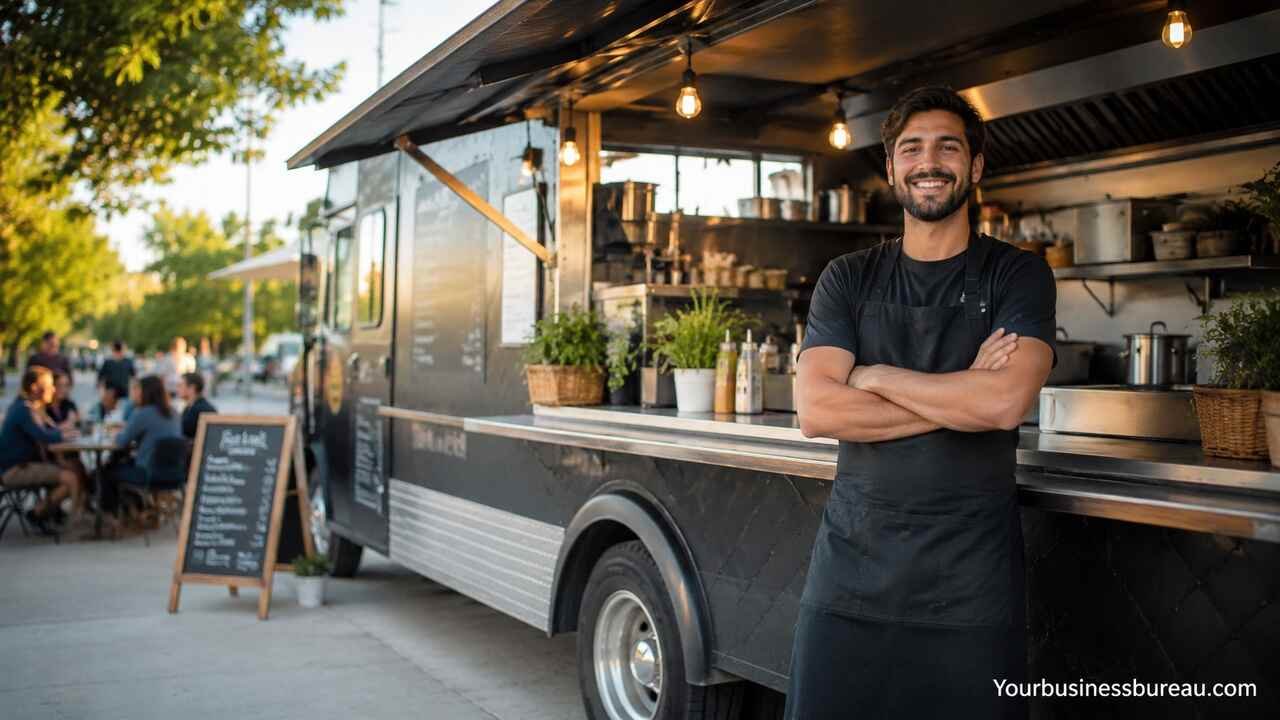
A food truck business plan serves as the foundation for launching and operating a successful mobile food venture. Whether you plan to sell gourmet burgers, tacos, barbecue, coffee, desserts, or specialty cuisine, a structured plan helps transform an idea into a sustainable business. A well-developed plan outlines your concept, target market, operational strategy, financial projections, equipment requirements, and growth objectives.
The food truck industry continues to attract entrepreneurs because it offers lower startup costs than traditional restaurants while providing flexibility in location, branding, and customer engagement. However, success depends on more than serving great food. Owners must manage permits, inventory, staffing, marketing, and cash flow while adapting to changing customer demand. This guide provides a comprehensive framework for creating a food truck business plan that supports long-term profitability and growth.
Define Your Food Truck Concept and Brand
The first step in building a food truck business plan is establishing a clear concept. Your concept determines your menu, target audience, pricing strategy, vehicle design, and marketing approach. Customers are more likely to remember a food truck that offers a focused and recognizable experience rather than an overly broad menu.
Consider the type of cuisine you want to serve and how it differs from competitors. A truck specializing in gourmet grilled cheese sandwiches, authentic street tacos, artisanal coffee, or fusion cuisine creates a stronger identity than a general food service operation. Your menu should reflect a unique selling proposition that attracts repeat customers.
Branding should support the concept. Your truck name, logo, color scheme, packaging, and social media presence should communicate a consistent message. A memorable brand increases customer recognition and helps establish trust in crowded markets, festivals, and public events.
Research Your Target Market and Customer Demand
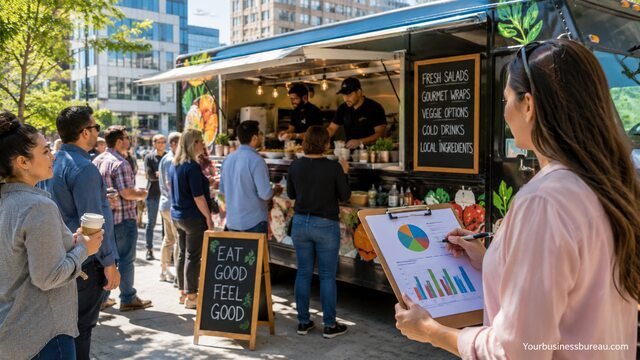
A successful food truck business relies on understanding customer preferences and purchasing behavior. Market research helps identify opportunities, avoid oversaturated locations, and develop products customers actually want.
Start by analyzing demographics in your service area. Consider age groups, income levels, occupation types, lifestyle trends, and dining habits. Office workers may prefer quick lunch options, while festival attendees often seek novelty foods and indulgent treats. College students may prioritize affordability and convenience.
Evaluate competitors operating within your region. Examine their menus, pricing, customer reviews, service hours, and locations. Identifying gaps in the market allows you to position your truck more effectively. For example, if several burger trucks operate in the area but few offer healthy meal options, a health-focused concept may gain traction.
Customer demand also changes throughout the year. Weather conditions, tourism patterns, school schedules, and local events can influence sales volume. Understanding these factors enables more accurate forecasting and scheduling decisions.
Select Strategic Locations and Service Areas
Location selection significantly affects food truck revenue. Unlike traditional restaurants, food trucks can move between locations, making site planning a critical component of the business strategy.
Identify areas with strong foot traffic and favorable demographics. Business districts, industrial zones, university campuses, parks, sporting venues, and entertainment districts often generate consistent demand. Analyze traffic patterns to determine peak operating times and customer flow.
Develop a schedule that balances regular locations with special events. Daily routes create consistency for loyal customers, while festivals, concerts, and private catering opportunities can generate substantial revenue. Diversifying service locations reduces dependence on a single market segment.
Local regulations often determine where food trucks can operate. Some municipalities restrict parking duration, proximity to restaurants, or vending hours. Incorporating these restrictions into your business plan helps avoid operational disruptions.
Location Comparison
| Location Type | Customer Volume | Revenue Potential | Competition Level | Operating Flexibility |
| Business District | High | High | Medium | Moderate |
| University Campus | High | Medium | Medium | Moderate |
| Festivals and Events | Very High | Very High | High | High |
| Parks and Recreation Areas | Medium | Medium | Low | High |
| Industrial Areas | Medium | Medium | Low | Moderate |
| Private Catering Events | Variable | High | Low | High |
Develop a Menu That Maximizes Profitability
The menu is one of the most important elements of a food truck business plan. A carefully designed menu improves operational efficiency, reduces waste, and increases profit margins.
Focus on a manageable number of items that can be prepared quickly and consistently. Food trucks operate within limited space, making menu simplicity a significant advantage. Offering too many options increases inventory costs, preparation complexity, and service times.
Analyze ingredient overlap whenever possible. Shared ingredients reduce storage requirements and minimize spoilage. For example, proteins, sauces, vegetables, and toppings can be utilized across multiple menu items while maintaining variety.
Pricing should account for food costs, labor expenses, packaging, fuel, permits, and overhead. Establish target profit margins while remaining competitive within your market. Regular menu reviews help identify best-selling items and eliminate underperforming products.
Acquire the Right Food Truck and Equipment
Selecting the appropriate vehicle and equipment directly impacts operational efficiency. The truck must support menu requirements while complying with health and safety regulations.
Evaluate whether purchasing a new truck, buying a used truck, or converting a vehicle offers the best return on investment. New trucks generally require less maintenance but involve higher upfront costs. Used trucks may reduce startup expenses but could require repairs and upgrades.
Essential equipment often includes grills, fryers, refrigerators, freezers, prep stations, sinks, ventilation systems, generators, point-of-sale systems, and storage units. Equipment selection should align with menu complexity and projected customer volume.
Maintenance planning should be included in the business plan. Vehicle breakdowns and equipment failures can interrupt operations and reduce revenue. Budgeting for preventative maintenance helps maintain consistent service.
Secure Licenses, Permits, and Regulatory Approval
Food truck operators must comply with various local, regional, and national regulations. Obtaining required permits before launch prevents legal issues and operational delays.
Common requirements include business licenses, food service permits, health department inspections, fire safety certifications, parking permits, and vendor licenses. Some jurisdictions may also require commissary kitchen agreements and specialized mobile vending permits.
Health and safety compliance remains essential throughout business operations. Proper food handling, storage procedures, sanitation practices, and employee training protect customers and maintain regulatory approval.
Regulations vary significantly by location. Researching legal requirements early allows sufficient time for applications, inspections, and approvals before launch.
Create an Efficient Operations Plan
An operations plan outlines how daily activities will function. This section demonstrates that the business can consistently deliver products and services while maintaining quality standards.
Document food preparation procedures, inventory management processes, staffing responsibilities, and customer service protocols. Standardized systems improve efficiency and reduce operational errors.
Supply chain management is another critical component. Identify reliable suppliers for food ingredients, packaging materials, beverages, cleaning products, and fuel. Establishing relationships with multiple vendors helps reduce risk if one supplier experiences shortages.
Scheduling should address preparation time, travel requirements, service hours, cleanup procedures, and maintenance activities. Efficient workflows increase productivity and customer satisfaction.
Build a Strong Staffing and Management Structure
Even small food truck businesses benefit from clear organizational planning. Defining roles and responsibilities helps ensure smooth operations during busy service periods.
Many startups begin with an owner-operator model. As the business grows, additional staff may be needed for cooking, food preparation, customer service, event management, and administrative functions.
Training programs should focus on food safety, customer service, cash handling, equipment operation, and emergency procedures. Well-trained employees contribute to operational consistency and positive customer experiences.
Management systems should also include performance evaluation methods, communication procedures, and scheduling practices. Strong leadership supports growth and employee retention.
Develop a Comprehensive Marketing Strategy

Marketing plays a crucial role in attracting customers and building brand awareness. Since food trucks frequently change locations, effective communication helps customers find and engage with the business.
Social media platforms are particularly valuable for food truck marketing. Daily updates about locations, menu specials, event appearances, and promotions encourage customer engagement. Consistent posting increases visibility and strengthens brand recognition.
Email marketing, loyalty programs, online ordering, and mobile payment options can further enhance customer retention. Collecting customer data enables targeted promotions and personalized communication.
Community involvement also strengthens brand presence. Participating in local events, charity initiatives, farmers markets, and festivals helps establish credibility and expand customer reach.
Marketing Channel Comparison
| Marketing Channel | Cost Level | Audience Reach | Customer Engagement | Best Use |
| Social Media | Low | High | High | Daily updates |
| Email Marketing | Low | Medium | High | Promotions |
| Local Events | Medium | High | High | Brand exposure |
| Loyalty Programs | Low | Medium | Very High | Retention |
| Online Advertising | Medium | High | Medium | Lead generation |
| Partnerships | Low | Medium | High | Community growth |
Establish Supplier and Inventory Management Systems
Inventory management directly affects profitability. Excess inventory increases waste, while insufficient inventory can result in lost sales opportunities.
Develop forecasting systems based on historical sales data, seasonal trends, and event schedules. Accurate forecasting supports purchasing decisions and inventory control.
Supplier relationships should emphasize reliability, quality, and competitive pricing. Consider multiple vendors for key ingredients to reduce supply chain disruptions.
Inventory tracking systems help monitor usage patterns, identify waste sources, and optimize ordering processes. Consistent inventory control contributes to stronger profit margins and improved operational efficiency.
Prepare Detailed Startup Cost Estimates
Financial planning is a core component of every food truck business plan. Startup cost estimates provide a realistic understanding of capital requirements.
Typical startup expenses include vehicle acquisition, equipment purchases, permits, licenses, branding, inventory, insurance, marketing, and working capital. Costs vary based on location, truck condition, and business scale.
Many entrepreneurs underestimate operational expenses during the early stages. Fuel, maintenance, payroll, packaging, food supplies, and event fees can significantly impact cash flow.
Creating detailed cost projections improves budgeting accuracy and supports financing applications.
Example Startup Budget
| Expense Category | Estimated Cost |
| Food Truck Purchase | $40,000 – $120,000 |
| Kitchen Equipment | $10,000 – $30,000 |
| Permits and Licenses | $1,000 – $5,000 |
| Initial Inventory | $2,000 – $8,000 |
| Branding and Design | $1,000 – $10,000 |
| Insurance | $2,000 – $8,000 |
| Marketing | $1,000 – $5,000 |
| Working Capital | $5,000 – $25,000 |
Create Revenue Projections and Financial Forecasts
Revenue forecasting demonstrates the financial viability of the business. Investors and lenders often evaluate projections to assess growth potential and repayment capability.
Estimate daily sales based on customer volume, average transaction value, operating days, and seasonal fluctuations. Include conservative, moderate, and optimistic scenarios to account for uncertainty.
Expense projections should cover food costs, labor expenses, fuel, maintenance, insurance, marketing, rent for commissary kitchens, and administrative costs. Monitoring key financial metrics helps maintain profitability.
Cash flow forecasting is equally important. Even profitable businesses can encounter challenges if cash inflows and outflows are poorly managed. Maintaining adequate reserves helps support ongoing operations.
Obtain Funding and Financing Support
Many food truck businesses require external funding during startup. A detailed business plan increases credibility and improves financing opportunities.
Potential funding sources include personal savings, bank loans, small business loans, investors, crowdfunding campaigns, and equipment financing programs. Each option carries different costs, risks, and ownership implications.
When approaching lenders or investors, present clear financial projections, market analysis, operational plans, and growth strategies. Demonstrating thorough preparation increases confidence in the business model.
Funding should align with realistic capital requirements rather than overly optimistic expansion goals. Maintaining manageable debt levels supports long-term sustainability.
Implement Technology and Payment Systems
Technology enhances efficiency and improves customer experiences. Modern food truck operations increasingly rely on digital tools for transactions, inventory tracking, scheduling, and marketing.
A reliable point-of-sale system enables secure payment processing and detailed sales reporting. Mobile payment acceptance has become a customer expectation in many markets.
Inventory management software helps track stock levels and identify purchasing trends. Scheduling applications improve workforce management, while analytics platforms provide insights into sales performance.
Online ordering systems can further increase revenue by reducing wait times and expanding customer convenience. Integrating technology throughout operations supports scalability and operational consistency.
Expand Through Catering and Event Opportunities
Many successful food truck businesses generate substantial revenue through catering and private events. Corporate functions, weddings, birthdays, festivals, and community gatherings often produce higher sales than traditional street service.
Develop dedicated catering packages with flexible menu options and pricing structures. Clear packages simplify customer decision-making and improve sales efficiency.
Building relationships with event organizers creates recurring opportunities. Strong event performance often leads to referrals and repeat bookings.
Diversification through catering also helps reduce seasonal revenue fluctuations and supports business stability throughout the year.
Monitor Performance and Optimize Growth Strategies
Business growth requires ongoing evaluation and continuous improvement. Establish key performance indicators that measure operational efficiency, customer satisfaction, and financial performance.
Monitor metrics such as daily sales, average order value, food cost percentage, labor cost percentage, customer retention rate, and profit margins. Regular analysis identifies strengths and improvement opportunities.
Customer feedback should inform menu adjustments, service improvements, and marketing initiatives. Listening to customer preferences helps maintain relevance in competitive markets.
Growth opportunities may include adding additional trucks, expanding catering services, introducing packaged products, or developing permanent locations. Strategic expansion should be guided by proven performance data and financial readiness.
Conclusion
A food truck business plan provides the roadmap necessary to launch, operate, and expand a successful mobile food enterprise. From defining a unique concept and researching customer demand to selecting locations, managing operations, and forecasting finances, every component contributes to long-term profitability. A detailed plan reduces uncertainty, improves decision-making, and strengthens credibility with lenders, investors, suppliers, and customers. By combining strong branding, efficient operations, effective marketing, and disciplined financial management, entrepreneurs can build a food truck business that grows sustainably and remains competitive in an evolving food service market.
FAQ’s
Startup costs typically range from $60,000 to $200,000 or more, depending on vehicle condition, equipment requirements, permits, branding, and working capital needs.
Food trucks often have lower overhead costs than traditional restaurants, which can improve profit margins. However, profitability depends on location strategy, menu pricing, operational efficiency, and customer demand.
A comprehensive food truck business plan generally ranges from 15 to 30 pages and includes market analysis, operations, marketing, financial forecasts, and funding requirements.
Requirements vary by location but commonly include business licenses, food service permits, health inspections, fire safety certifications, and mobile vending permits.
Consistent branding, active social media marketing, participation in local events, loyalty programs, online ordering, and excellent customer service can significantly increase customer traffic.
Yes. Many successful operators expand by adding additional trucks, increasing catering services, partnering with event organizers, or opening permanent restaurant locations after establishing a strong customer base.
