

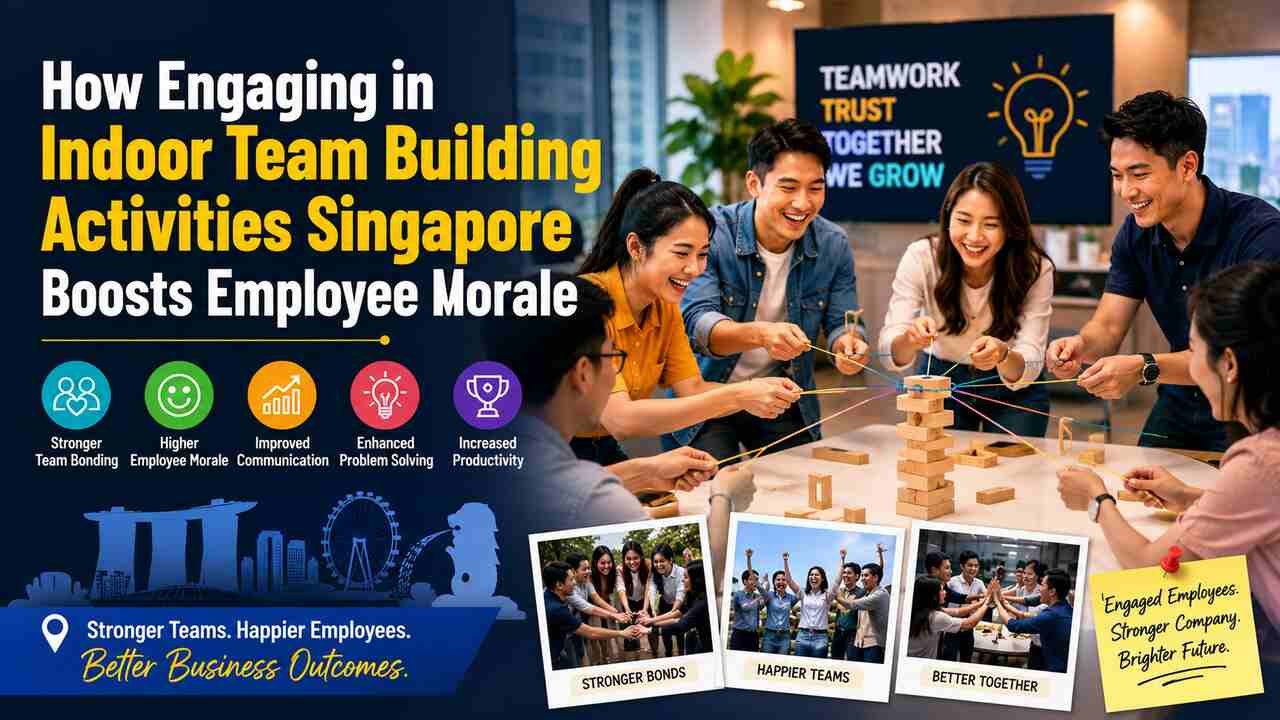
In the corporate world, the importance of a motivated workforce cannot be overstated. Employee morale is a critical component that directly impacts productivity, job satisfaction, and overall workplace harmony. One effective strategy to enhance morale is through engaging in Indoor Team Building Activities Singapore. These activities offer a unique opportunity to improve collaboration, encourage creativity, and strengthen employee relationships. This article explores how indoor team building can serve as a catalyst for boosting employee morale, delving into various aspects of team dynamics and workplace culture.
Enhancing Workplace Collaboration Through Indoor Team Building Activities
Indoor team building activities are designed to promote collaboration among employees. These exercises often mimic real-world scenarios where team members must work together to achieve a common goal. For example, activities that simulate a Regulatory Compliance Audit require participants to communicate effectively and allocate tasks based on individual strengths. This collaborative effort not only enhances teamwork but also improves communication skills and understanding of each other’s roles, much like an Agile Scrum Master coordinates a team in a software development project.
One popular activity is a mock CSI investigation, which encourages participants to work in cross-functional teams, similar to teams using a Kanban Board to manage tasks. This setup allows employees to learn about different perspectives and problem-solving approaches. As a result, teams often emerge with a stronger sense of unity and an appreciation for diverse skill sets, fostering a more cohesive work environment.
Fostering Creativity and Problem-Solving Skills in a Fun Environment
Creativity and problem-solving are essential skills in any workplace. Indoor team building activities provide a safe and fun environment for employees to exercise these skills. For instance, activities that require teams to develop a Minimum Viable Product (MVP) challenge participants to think outside the box and come up with innovative solutions under time constraints. This mirrors the creativity needed in the Software Development Life Cycle (SDLC) when launching new products.
Moreover, these activities often incorporate elements of a Continuous Integration/Continuous Deployment (CI/CD) process, where quick iterations and feedback cycles are encouraged. This approach not only enhances creative thinking but also helps employees to adapt to changing situations quickly, which is invaluable in dynamic work environments. Such experiences can lead to better problem-solving capabilities back in the office.
Strengthening Interpersonal Relationships Among Employees
Strong interpersonal relationships are foundational to a positive work atmosphere. Indoor team building activities provide a platform for employees to interact outside of their usual work context, allowing them to build rapport and trust. Engaging in activities that require teamwork, like a simulated Incident Response Plan, encourages participants to rely on each other’s strengths and communicate openly.
Such interactions break down barriers and foster a sense of camaraderie among colleagues. Employees who feel more connected to their peers are more likely to collaborate effectively on projects, leading to improved job performance and satisfaction. These strengthened relationships contribute to lower turnover rates and a more stable workforce.
Creating a Positive Work Culture with Engaging Team Experiences
A positive work culture is crucial for sustaining employee morale and productivity. Engaging team experiences, like those offered in indoor team building activities, play a significant role in shaping this culture. By participating in these activities, employees experience a break from routine tasks and engage in meaningful interactions that highlight the company’s commitment to their well-being.
For example, activities that incorporate a Risk Assessment Matrix model provide insight into strategic planning and decision-making. Employees learn to manage risks collaboratively while having fun, which can translate into a more proactive and engaged workforce. These experiences reinforce a culture of continuous improvement and resilience.
Conclusion
Indoor team building activities in Singapore present a dynamic way to boost employee morale by enhancing collaboration, fostering creativity, strengthening relationships, and nurturing a positive work culture. These engaging experiences not only contribute to personal and professional growth but also align with organizational goals by creating a motivated and cohesive workforce. For companies looking to invest in their employees’ morale, indoor team building is a strategic and effective choice.
