

Introduction
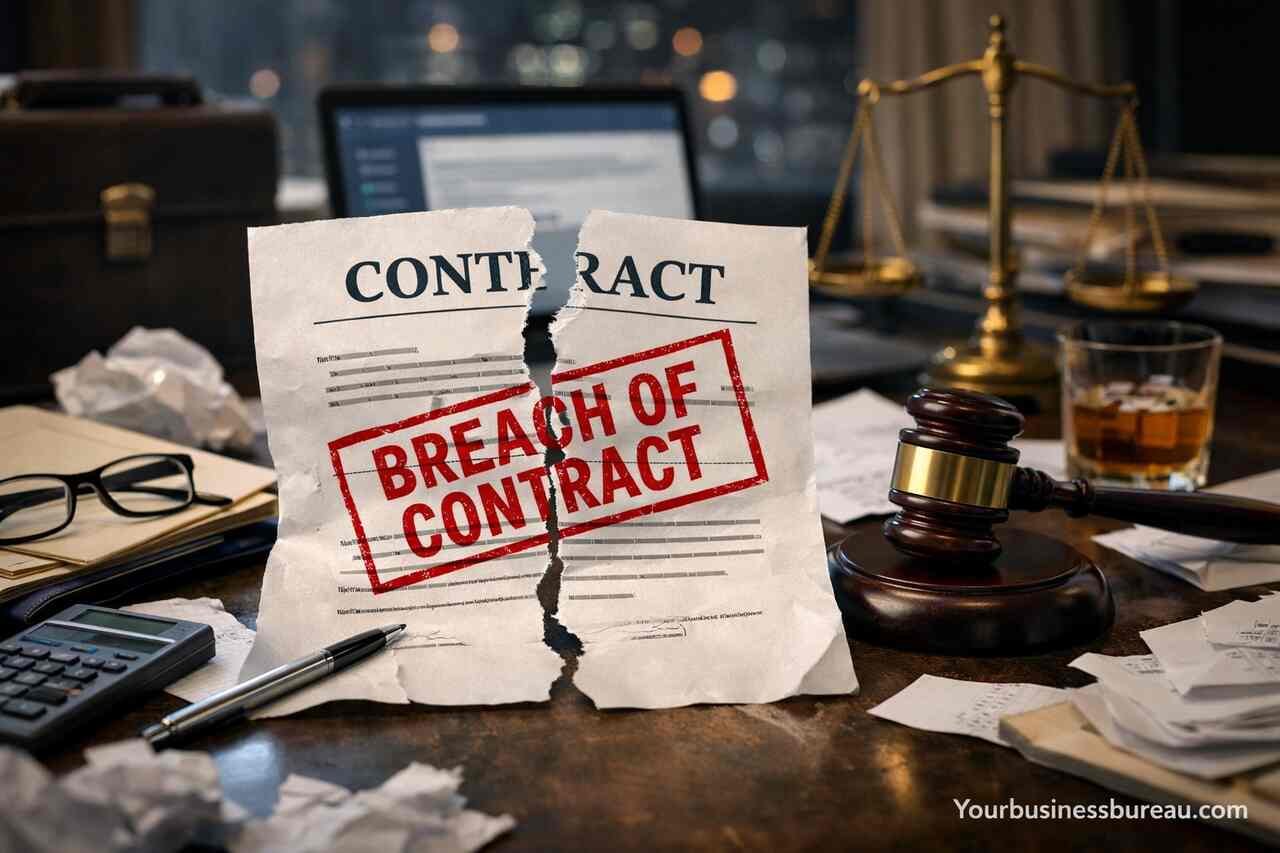
In business, contracts are more than just formalities; they are legally binding agreements that define responsibilities, expectations, and protections for all parties involved. Yet, many businesses make a critical mistake: they ignore a breach, hoping it will resolve itself or seem too minor to pursue.
This approach can be dangerously short-sighted. Ignoring a breached business contract doesn’t make the problem disappear; it often amplifies the risks, leading to financial losses, legal disputes, and long-term damage to your reputation.
In this article, we’ll explore the real consequences of overlooking contract violations, why timely action matters, and how businesses can protect themselves effectively.
Understanding a Breach of Contract
A breach of contract occurs when one party fails to fulfill their obligations as outlined in a legally binding agreement. This could include:
- Failure to deliver goods or services
- Missing deadlines
- Providing substandard work
- Violating confidentiality or exclusivity clauses
Breaches can be minor (partial) or material (significant enough to undermine the contract’s purpose). Regardless of severity, ignoring them can lead to escalating consequences.
Financial Consequences of Ignoring a Breach

Accumulating Losses
When a breach goes unaddressed, financial damage rarely stays contained. For example:
- A supplier failing to deliver on time can disrupt your operations
- Poor-quality services may require costly rework
- Missed payments can affect cash flow
Over time, these losses compound and can significantly impact your bottom line.
Loss of Legal Compensation
One of the biggest risks of inaction is losing your right to claim damages. Legal systems often expect the injured party to:
- Act within a reasonable timeframe
- Mitigate losses
- Formally notify the breaching party
If you delay too long, you may weaken your legal position or even lose the ability to recover compensation entirely.
Legal Risks and Escalation
Waiver of Rights
Ignoring a breach can be interpreted as accepting the violation. In legal terms, this may be seen as a waiver, meaning you’ve given up your right to enforce that part of the contract.
For example, if you consistently accept late deliveries without objection, it may become difficult to enforce strict deadlines later.
Increased Litigation Complexity
What starts as a small issue can evolve into a complex legal dispute. Delays can:
- Blur evidence
- Complicate timelines
- Increase legal costs
Consulting an attorney for business contract violations early can help prevent minor breaches from turning into major legal battles.
Damage to Business Relationships
Erosion of Trust
Contracts are built on trust and accountability. When a breach is ignored:
- The breaching party may assume their behavior is acceptable
- Standards begin to slip
- Professional boundaries weaken
This can lead to ongoing issues and a breakdown in the relationship.
Encouraging Repeated Violations
Failing to address one breach often opens the door to more. Vendors, partners, or clients may:
- Continue missing deadlines
- Deliver subpar work
- Disregard contractual obligations
In effect, ignoring a breach sets a precedent that can harm your business long-term.
Operational Disruptions
Workflow Interruptions
A breached contract can disrupt your internal processes, especially if it involves:
- Supply chain failures
- Outsourced services
- Technology or infrastructure agreements
Ignoring the issue prolongs these disruptions and can affect overall productivity.
Impact on Customer Satisfaction
If your business fails to deliver due to a third-party breach, your customers may:
- Experience delays
- Receive poor-quality products
- Lose confidence in your brand
Ultimately, your reputation, not the breaching party’s, takes the hit.
Reputational Damage
Perception of Weak Enforcement
Businesses that fail to enforce contracts may be perceived as:
- Disorganized
- Lenient
- Easy to exploit
This perception can spread quickly, especially in competitive industries.
Loss of Future Opportunities
Potential partners and investors often evaluate how a business handles disputes. Ignoring breaches can signal:
- Poor risk management
- Lack of legal awareness
- Weakness of operational control
This can reduce your credibility and limit future growth opportunities.
Compliance and Regulatory Risks
In some industries, contracts are tied to regulatory requirements. Ignoring a breach could result in:
- Non-compliance penalties
- Fines or sanctions
- Legal liability
For example, failing to enforce data protection clauses could expose your business to serious consequences under privacy laws.
How to Respond to a Contract Breach

Review the Contract Carefully
Start by analyzing:
- The exact terms violated
- Remedies outlined in the agreement
- Notice requirements
Understanding your rights is the first step toward effective action.
Document Everything
Maintain clear records of:
- Communications
- Missed obligations
- Financial impact
This documentation is crucial if the issue escalates legally.
Communicate Promptly
Notify the breaching party in writing:
- Clearly identify the breach
- Reference relevant contract clauses
- Request corrective action
Timely communication demonstrates seriousness and preserves your legal position.
Seek Legal Guidance
An experienced legal professional can help you:
- Assess the severity of the breach
- Determine the best course of action
- Negotiate or pursue legal remedies
Early intervention often leads to faster and more favorable outcomes.
Can Ignoring a Breach Ever Be Strategic?
In rare cases, businesses may choose not to enforce a breach immediately for example:
- When the breach is minor and temporary
- When maintaining the relationship is more valuable
- When renegotiation is possible
However, even in these situations, it’s important to:
- Formally acknowledge the breach
- Reserve your rights in writing
- Monitor future compliance
Strategic tolerance should never be confused with neglect.
Featured Snippet: What Happens If You Ignore a Breach of Contract?
Ignoring a breach of contract can lead to financial losses, weakened legal rights, and damage to business relationships. It may also be interpreted as accepting the breach, making it harder to enforce the contract later.
Featured Snippet: Can You Lose Legal Rights by Not Acting?
Yes, failing to act on a contract breach can result in a waiver of rights. Courts may view inaction as acceptance, limiting your ability to claim damages or enforce the agreement in the future.
Conclusion
Ignoring a breached business contract might seem like the easiest option in the moment but it often leads to far greater complications down the line. From financial losses and legal risks to reputational damage and operational disruptions, the consequences can be severe and long-lasting.
Businesses that take a proactive approach by addressing breaches promptly, documenting issues, and seeking expert guidance are far better positioned to protect their interests and maintain strong professional relationships.
If you want to explore how we help businesses grow from the ground up, you can visit yourbusinessbureau.com to see what we offer.
