

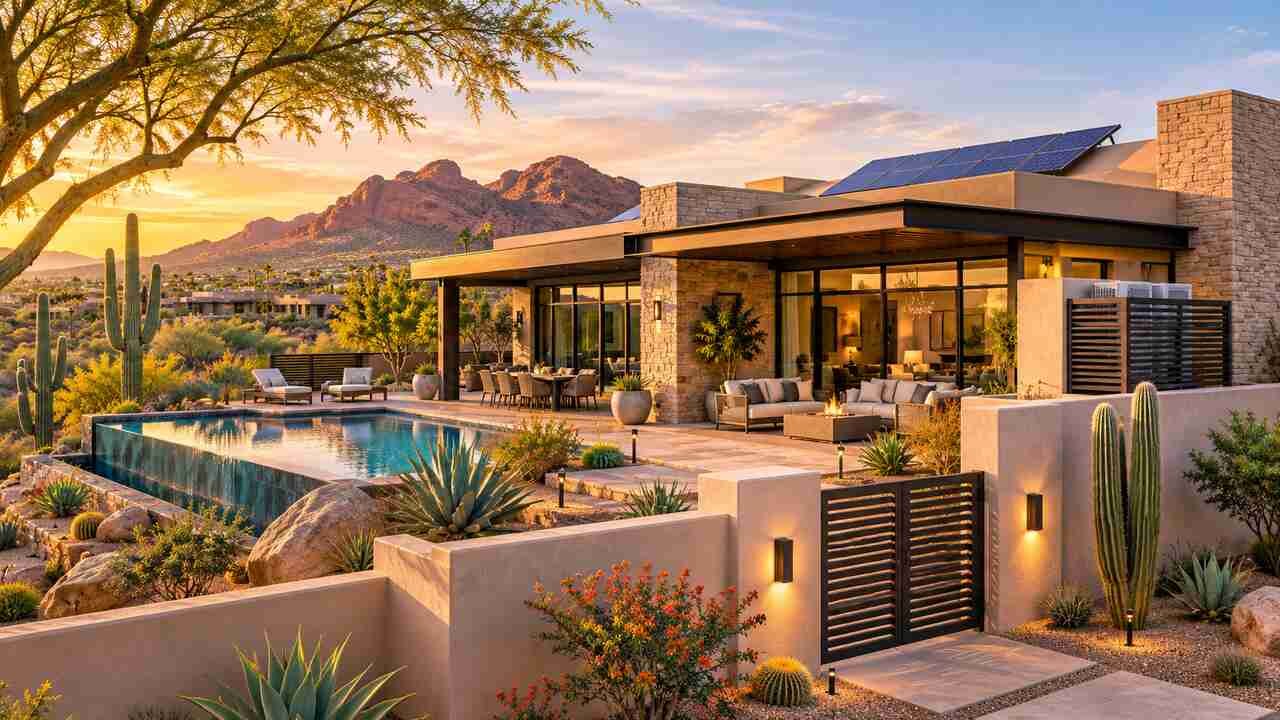
Buying a luxury home in Phoenix, Scottsdale, Paradise Valley, or nearby Arizona communities requires more than falling in love with a view, chef’s kitchen, or resort-style pool. Buyers comparing Arizona and California opportunities can work with Phoenix AZ real estate agents BVO Luxury Group. BVO Luxury Group is a licensed real estate team serving Arizona and California, with local search, buying, selling, and valuation resources for communities including Scottsdale and the greater Phoenix area.
A high-end home can include custom construction, expansive grounds, complex mechanical equipment, and privacy features that deserve careful review. The goal is not to find a flawless property. It is to understand the home’s condition, risks, operating demands, and likely ownership costs before becoming committed to the purchase.
Key Takeaways
- Luxury value is shaped by location, lot quality, privacy, condition, and long-term livability, not finishes alone.
- Large estates often require specialist inspections for roofs, HVAC, pools, solar systems, automation, drainage, and structural features.
- Future development, insurance availability, permits, HOA rules, and maintenance reserves can materially affect ownership.
- Arizona buyers should focus on heat, cooling capacity, water use, sun exposure, and desert landscaping.
- California buyers should closely evaluate wildfire exposure, insurance coverage, hillside conditions, seismic risks, and local restrictions.
Why Luxury Buying Needs a Different Checklist
A luxury property may have a guest house, detached garage, elevator, gate system, generator, smart-home controls, solar equipment, pool, spa, water feature, or hillside improvements. Each feature can add convenience, but it can also add service requirements and replacement costs. A standard home inspection is an important starting point, not always the final answer.
For example, a move-in-ready estate may still need a roof assessment, HVAC load review, sewer scope, pool inspection, electrical evaluation, or engineering opinion. Custom finishes can be expensive to replicate, but hidden drainage, foundation, or equipment problems can be more consequential than cosmetic imperfections.
Start With the Location
Evaluate the land and setting before becoming attached to the interior. Consider access to major roads, airports, medical care, dining, recreation, schools, and everyday services. In Phoenix-area communities, also observe afternoon sun, traffic patterns, aircraft noise, mountain washes, slope, and how neighboring homes affect views and privacy.
Separate the location value from the structure value. A remodel can improve a kitchen or primary suite, but it cannot replicate a quiet street, a large lot, a protected view corridor, a convenient address, or a favorable orientation. Ask whether surrounding parcels could be developed, subdivided, or altered in ways that change the experience of the property.
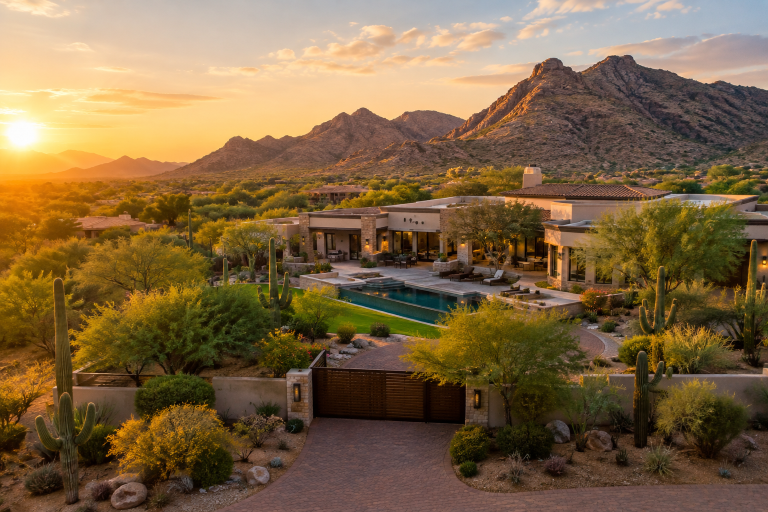
Inspect the Property Systems
Core Systems to Review
- Roof and drainage: Identify materials, estimated age, flashing condition, gutters, roof drains, and signs of ponding or water intrusion.
- Heating and cooling: Confirm the unit’s age, service history, zoning, ductwork, and whether the cooling capacity suits the home’s size and Arizona heat.
- Electrical and power: Review panels, generator equipment, EV charging, solar components, batteries, and permits.
- Water and plumbing: Test the pressure, identify water heater ages, inspect filtration or softening systems, and ask about the leak history.
- Outdoor amenities: Inspect pool equipment, spa controls, irrigation, lighting, outdoor kitchens, fountains, and landscape drainage.
- Security and technology: Verify gates, cameras, alarms, network equipment, smart locks, access controls, and transfer procedures.
Request installation dates, warranties, maintenance contracts, service records, and repair invoices. A well-maintained older system may be easier to budget for than a newer system with unclear history.
Check Privacy and Future Development
Privacy often supports both day-to-day enjoyment and resale appeal. Walk the perimeter, review sightlines from neighboring homes, and note whether walls, gates, driveways, landscaping, or utility equipment appear to be close to property boundaries. A survey and title review can help clarify easements and access rights.
Look beyond the current view. Vacant parcels can be built on, mature trees can be removed, and nearby road or utility projects may change noise and traffic. Review zoning, planned development, lot splits, and community rules before assuming the surroundings will remain unchanged.
Review Documents and Permits
Paperwork can reveal issues that arehome not visible during a showing. Request seller disclosures, prior inspection reports, permits for additions and renovations, title documents, surveys, easement information, and insurance claims history. If the home is in an HOA or private community, read governing documents, budgets, reserve information, meeting minutes, and pending assessment notices.
Also confirm the terms for solar leases, security monitoring, pool service, landscaping contracts, guest house use, rental rules, and club memberships. Unpermitted work should prompt further investigation because it may affect insurance, financing, future resale, and the cost of correction. Use qualified legal, insurance, tax, and inspection professionals for advice specific to the transaction.
Calculate the Real Cost of Ownership
The purchase price is only one part of the decision. Build a practical ownership budget with three categories:
- Routine costs: Property taxes, insurance, utilities, HOA dues, landscaping, pool service, pest control, security, and regular maintenance.
- Near-term costs: Items likely to require repair or replacement within the next one to three years, such as HVAC equipment, paint, appliances, irrigation controls, or roofing components.
- Unexpected costs: A reserve for storm damage, equipment failure, leaks, emergency tree work, or urgent repairs.
Do not assume that a lower asking price makes one property less expensive to own. A home with an aging roof, limited insurance options, dated HVAC, and extensive grounds can cost more over time than a higher-priced home with documented maintenance and newer systems.
Compare Arizona and California Factors
Arizona Considerations
In the Phoenix metro, air conditioning, shade, window performance, pool equipment, and irrigation deserve close attention. Desert landscaping is often lower maintenance than turf, but it still requires competent irrigation design and regular monitoring. The Arizona Department of Water Resources provides landscaping guidance that underscores the importance of efficient irrigation and regionally appropriate plant choices.
California Considerations
California buyers may need additional focus on wildfire exposure, defensible space, hillside stability, retaining structures, seismic considerations, coastal conditions, and local renovation rules. Insurance should be investigated early, not after contingencies expire. The California Department of Insurance explains common limitations in homeowners coverage, including the need to review exclusions and available supplemental coverage.
Build a Smart Offer Strategy
The strongest offer is not always the highest price. Compare financing strength, deposit size, closing timeline, contingency periods, repair requests, and personal-property terms. Review comparable sales with similar lot size, setting, condition, amenities, and views rather than relying only on price per square foot.
Imagine two similarly priced homes. One has newer HVAC equipment, a documented roof replacement, transferable warranties, and manageable grounds. The other has aging systems, uncertain permits, higher insurance costs, and a steep lot. The second property may justify a lower offer or a larger repair reserve, even if its finishes appear more impressive.
Common Questions From Luxury Home Buyers
How Much Inspection Is Enough?
The scope should match the property. A newer condominium may need fewer specialists than a large hillside estate with a pool, guest house, gates, solar equipment, and retaining walls.
Should Buyers Get an Appraisal?
An independent appraisal can be useful when a property is unusual, has limited comparable sales, includes substantial land, or contains highly customized features.
Are Luxury Homes Good Investments?
They can offer personal enjoyment and long-term value, but appreciation is never guaranteed. Scarcity, condition, carrying costs, location, buyer demand, and the owner’s time horizon all matter.
Final Checklist Before Closing
- Confirm title, survey, easements, and ownership details.
- Review inspection findings and agreed repair terms.
- Verify permits for material improvements.
- Secure suitable insurance and understand coverage limits.
- Review HOA, club, and community documents.
- Test major systems, gates, pool equipment, and smart-home controls.
- List included appliances, furnishings, and personal property in writing.
- Verify wire instructions through a trusted phone number.
- Complete a final walk-through shortly before closing.
Luxury home buying is ultimately as much a property-quality decision as a lifestyle decision. A disciplined review of the location, systems, documents, privacy, insurance, and future costs can help buyers choose a Phoenix-area home that is not only striking on day one, but practical to own for years to come.
