


Cleaning business insurance helps protect your company from unexpected financial losses caused by property damage, customer injuries, employee accidents, and other workplace risks. Whether you run a small residential cleaning service or a commercial cleaning company, having the right coverage can protect your finances and build customer trust.
What Is Cleaning Business Insurance and Why Do You Need It?
Cleaning business insurance protects cleaning companies against certain financial risks that can arise during everyday operations. It isn’t a single policy that automatically covers every situation. Instead, you can combine different insurance policies based on the services you provide, the number of employees you have, and the properties you clean. A solo house cleaner may need different protection than a commercial cleaning company with several employees and vehicles.
Think about what could happen during a routine cleaning appointment. You might accidentally spill a chemical on an expensive carpet, knock over a valuable decoration, or leave a floor slippery enough to cause an injury. Without appropriate insurance, you could be responsible for paying repair costs, medical expenses, or legal fees yourself. A relatively small accident could become a significant financial problem, particularly for a new business with limited savings.
Insurance can also make your cleaning company more attractive to potential customers. Many commercial property managers, office owners, and larger clients request proof of insurance before allowing a cleaning contractor to begin work. However, insurance doesn’t guarantee that every accident will be covered. You still need to understand your policy limits, exclusions, deductibles, and contractual responsibilities before accepting a job.
How Does Cleaning Business Insurance Protect Your Company?
Cleaning business insurance can help cover eligible claims involving accidental property damage, third-party injuries, business equipment, and other insured risks. For example, if an employee accidentally damages a customer’s flooring, a suitable liability policy may help pay for the damage, subject to its terms and exclusions. Insurance can also provide access to claim handling and legal defense when a covered incident results in a lawsuit.
Is Cleaning Business Insurance Legally Required?
Insurance requirements depend on your location, business structure, employees, and the services you offer. General liability insurance is not universally required for every cleaning business, although customers and commercial contracts may demand it. Workers’ compensation and commercial vehicle insurance can be legally required in certain circumstances. Before operating, check the rules that apply in your state, province, or country rather than assuming one insurance requirement applies everywhere.
What Types of Insurance Does a Cleaning Business Need?
The right insurance package depends on how your cleaning company operates. General liability insurance is often the starting point because cleaning professionals regularly work on other people’s property. However, liability coverage alone may leave important gaps, especially if you employ workers, drive business vehicles, or own expensive cleaning equipment. Choosing coverage based on your actual risks is more useful than purchasing every available policy.
For example, a residential cleaner working independently may prioritize general liability, equipment protection, and coverage for customer property in their care. A commercial cleaning company with multiple employees may also need workers’ compensation, commercial auto insurance, and protection against employee dishonesty. If you provide specialized services such as carpet cleaning, pressure washing, or industrial cleaning, you should confirm that your policy covers those specific activities.
The following table explains common insurance options and the situations where they may help.
| Insurance type | What it generally covers | Example |
| General liability | Covered third-party injuries and property damage | A customer slips on a wet floor |
| Workers’ compensation | Eligible work-related employee injuries and illnesses | An employee injures their back |
| Commercial auto | Covered accidents involving insured business vehicles | A company van damages another vehicle |
| Business property | Covered damage to insured business property | Equipment is damaged in a covered fire |
| Tools and equipment | Covered loss or damage to eligible equipment, including certain off-site risks | A carpet extractor is stolen |
| Janitorial dishonesty bond | Certain theft losses involving covered dishonest acts | An employee steals customer property |
| Professional liability | Certain claims arising from covered professional mistakes or service failures | A qualifying service error causes a financial loss |
What Does General Liability Insurance Cover for Cleaners?
General liability insurance typically covers eligible third-party bodily injury, property damage, and associated legal defense costs. Suppose you’re cleaning an office and accidentally damage a customer’s computer. Your policy may help with the resulting claim if the incident falls within its coverage. However, some policies restrict damage to property in your care, custody, or control, so you should specifically ask how customer belongings are treated.
Do Cleaning Businesses Need Workers’ Compensation Insurance?
If you hire employees, workers’ compensation insurance may be required by law. It generally provides benefits for eligible workplace injuries or occupational illnesses, such as medical treatment and partial wage replacement. Cleaning employees may face risks involving slippery surfaces, repetitive movements, heavy equipment, and chemical exposure. Even when coverage is not mandatory, understanding employee injury risks is necessary for responsible business planning.
How Much Does Cleaning Business Insurance Cost?
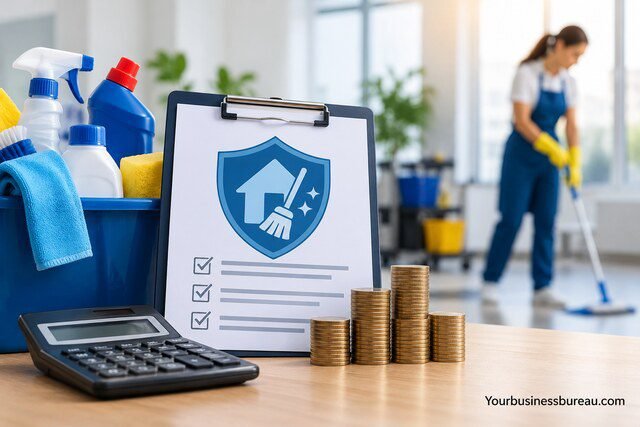
The cost of cleaning business insurance varies according to your business size, location, services, revenue, payroll, coverage limits, and claims history. A solo residential cleaner with basic equipment will generally have a different risk profile from a large commercial cleaning contractor employing multiple crews. Insurers evaluate these details before calculating a premium, which explains why two cleaning businesses may receive very different quotes for similar coverage.
To illustrate how insurance costs affect your budget, imagine a hypothetical general liability premium of $45 per month. That would equal $540 per year. If you added another policy costing $65 per month, your combined insurance expense would increase to $1,320 annually. These figures are budgeting examples, not verified market averages or guaranteed prices. Your actual premium could be higher or lower depending on the insurer and policy terms.
When comparing costs, avoid choosing a policy solely because it has the lowest monthly payment. A cheaper plan might have a higher deductible, lower coverage limits, or exclusions that matter to your business. Ask for quotes based on the same coverage amounts and business details so you can compare them fairly. Also check whether the insurer charges administrative fees, offers installment payments, or adjusts premiums after reviewing your annual payroll or revenue.
What Factors Affect Cleaning Business Insurance Rates?
Insurance companies commonly consider your location, annual revenue, payroll, number of employees, cleaning activities, previous claims, and requested coverage limits. Specialized cleaning services involving hazardous materials, elevated work, or expensive customer property may carry additional risks. Insurers may also consider safety procedures, employee training, and how frequently your business handles claims. Providing accurate information helps you receive a quote that reflects your actual operations.
Can You Get Affordable Insurance for a Small Cleaning Business?
Yes, small cleaning businesses can often find insurance packages tailored to their operations. You can improve affordability by comparing several insurers, selecting appropriate deductibles, maintaining a strong safety record, and avoiding unnecessary coverage. Some insurers offer business owners policies that combine general liability and commercial property protection. Bundling can be convenient, but you should compare the total cost and coverage with purchasing separate policies before deciding.
How Do You Choose the Best Cleaning Business Insurance?
Choosing the best cleaning business insurance begins with understanding what could realistically go wrong while you’re working. Start by identifying the properties you clean, the products and equipment you use, whether you employ staff, and how you transport supplies. A company cleaning private homes faces different exposures than a contractor maintaining medical offices, warehouses, or large commercial buildings. Your insurance should match the work you actually perform.
Next, review the coverage limits and exclusions in each policy. General liability policies commonly include a per-occurrence limit and an aggregate limit, which determine how much the insurer may pay for covered claims. For example, a policy with a $1 million per-occurrence limit and a $2 million general aggregate limit may appear substantial, but those figures do not mean every loss is covered. Exclusions, sublimits, deductibles, and policy conditions still apply.
I would approach the comparison by asking one practical question: If something goes wrong during your most expensive or riskiest cleaning job, which policy would respond? Consider a hypothetical situation where a cleaning chemical damages custom flooring in a commercial building. Before buying insurance, ask the insurer whether that type of damage is covered and whether any special exclusions apply. This simple exercise can reveal coverage gaps that a premium comparison alone might miss.
What Should You Check Before Buying an Insurance Policy?
Review the coverage limits, deductible, exclusions, effective dates, cancellation conditions, and claim reporting procedures. Confirm that the policy accurately describes your cleaning services and includes any additional protection required by customer contracts. You should also ask whether subcontractors are covered and whether your insurer can provide certificates of insurance. If a policy contains unfamiliar wording, request an explanation before signing.
Should You Buy Insurance Online or Through an Agent?
Buying insurance online can be convenient when your business has straightforward operations and you understand the coverage being offered. An insurance agent or broker may be more helpful when you have employees, subcontractors, specialized cleaning equipment, or complicated commercial contracts. Either option can work, but you should prioritize clear policy explanations, suitable protection, and reliable claims support over purchasing speed.
What Does Cleaning Business Insurance Cover and Exclude?
Cleaning business insurance can cover a wide range of accidents, but the exact protection depends on your individual policies. General liability insurance may respond when your business accidentally injures someone or damages third-party property during covered operations. Other policies may address employee injuries, vehicle accidents, equipment losses, or certain dishonest acts. Understanding these differences helps you avoid expecting one policy to handle every possible claim.
Suppose you accidentally knock over a customer’s television while cleaning their living room. Depending on the circumstances and policy wording, general liability insurance may cover the damage. Now imagine the television stops working because of faulty internal wiring unrelated to your cleaning. That situation would generally not become your insurer’s responsibility simply because you were present. The cause of the loss and your legal responsibility matter when an insurer evaluates a claim.
Certain losses are commonly excluded or require separate coverage. These may include intentional damage, ordinary wear and tear, some pollution or chemical incidents, employee injuries under general liability policies, and damage involving property under your direct control. Contractual promises can also create responsibilities beyond what insurance covers. This is why reviewing exclusions is just as important as reading the list of covered incidents.
Does Cleaning Business Insurance Cover Accidental Property Damage?
It may cover accidental damage to customer property when the incident meets the terms of your liability policy. For example, spilling a cleaning solution onto an expensive rug might result in a covered claim, but damage to property being actively cleaned can trigger special exclusions. You should ask about coverage for property in your care, custody, or control and whether any endorsements can address gaps related to your cleaning activities.
Does Insurance Cover Theft by Cleaning Employees?
Standard general liability insurance typically does not cover intentional theft committed by employees. A janitorial dishonesty bond or appropriate employee dishonesty coverage may provide protection for certain covered theft losses. These products have specific conditions, limits, and exclusions, and they are not interchangeable with general liability insurance. If your employees regularly enter homes or offices without direct supervision, ask about this protection.
How Can You Get Cleaning Business Insurance Step by Step?
Getting cleaning business insurance is usually straightforward once you have accurate information about your company. Begin by gathering your business name, operating address, estimated annual revenue, payroll, employee count, cleaning services, and previous insurance history. Insurers may also ask about your equipment, vehicles, subcontractors, and the types of properties you service. Having these details ready makes the application process easier and reduces the chance of inaccurate quotes.
After preparing your information, request quotes from multiple insurers that cover cleaning contractors. Compare not only premiums but also policy limits, deductibles, exclusions, and optional protections. If you have a commercial customer requiring specific insurance limits or additional insured status, share those requirements before purchasing. This helps ensure that the policy you select can satisfy the contract rather than discovering a problem when you’re ready to begin work.
Once you choose a policy, review the final documents, confirm the effective date, and arrange payment. You may then request a certificate of insurance to provide evidence of coverage to customers. Keep your policy documents accessible and update your insurer when your operations change. Hiring employees, adding new services, purchasing vehicles, or expanding into larger commercial properties can affect your insurance needs.
What Documents Do You Need to Apply for Cleaning Business Insurance?
Insurers typically request basic business information, estimated revenue, payroll details, employee numbers, service descriptions, and previous claims history. Depending on your operations, they may also request vehicle information, equipment values, subcontractor details, or copies of customer contracts. Requirements vary by insurer, so you may not need every document for a simple policy. Accurate records help the insurer assess your business correctly.
How Quickly Can You Get Proof of Insurance?
Some insurers can issue coverage and provide a certificate of insurance shortly after an application is approved and payment requirements are satisfied. More complicated businesses may need additional underwriting review, which can take longer. A certificate confirms certain policy information but does not replace the actual insurance contract. Always verify that coverage is active before starting work that requires insurance.
How Can You Reduce Insurance Risks and Avoid Costly Mistakes?
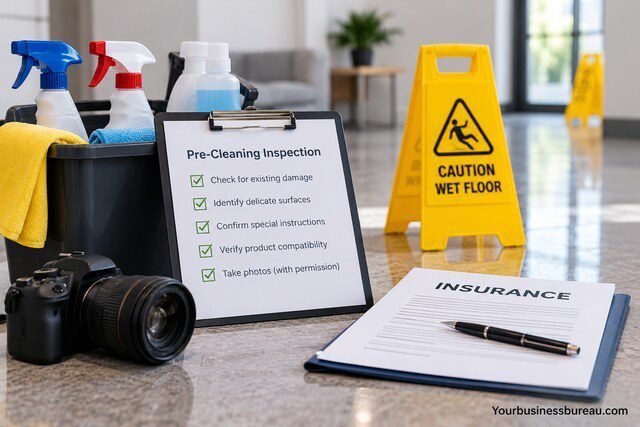
Buying insurance is only one part of protecting your cleaning business. Good safety procedures can reduce accidents, support smoother operations, and potentially improve your long-term insurance record. Train employees to use cleaning chemicals correctly, follow manufacturer instructions, place warning signs around wet floors, and handle customer belongings carefully. Consistent safety practices are particularly valuable when your team works at several customer locations each day.
One useful approach is to create a simple pre-cleaning inspection routine. Before beginning work, note existing damage, identify delicate surfaces, and confirm whether customers have special cleaning instructions. For example, if a client has natural stone countertops, using an unsuitable acidic cleaner could cause damage. Checking the surface and product compatibility beforehand may prevent a claim entirely. Photographs can also help document pre-existing conditions when taken with the customer’s permission.
Another common mistake is failing to update insurance as the business grows. A policy purchased when you worked alone may no longer suit a company with ten employees, multiple vehicles, and larger commercial contracts. Review your insurance at least annually and whenever you make significant operational changes. You should also maintain accurate records of incidents, communicate promptly with your insurer, and avoid admitting legal liability or promising reimbursement before obtaining appropriate guidance.
What Should You Do If a Customer Files an Insurance Claim?
If a customer reports an accident or damage, respond professionally and document what happened. Record the date, location, people involved, photographs where appropriate, and any relevant witness information. Take reasonable steps to prevent additional damage or injury, then notify your insurer promptly according to your policy requirements. Avoid making assumptions about whether the claim will be covered. The insurer will assess the circumstances and applicable policy terms.
How Often Should You Review Your Cleaning Business Insurance?
Review your insurance at least once a year and whenever your company experiences meaningful changes. Hiring staff, adding commercial customers, purchasing expensive equipment, or offering specialized cleaning services can create new risks. You should also review coverage before signing contracts with unusual insurance requirements. Regular reviews help ensure your policy continues to reflect how your cleaning business actually operates.
Conclusion
Cleaning business insurance helps protect your cleaning company from financial risks that can arise while serving residential and commercial customers. General liability coverage is often a sensible starting point, but workers’ compensation, commercial auto insurance, equipment protection, and janitorial dishonesty coverage may also be relevant depending on your operations.
The best approach is to identify your actual risks, compare policies carefully, and understand what each insurer will and will not cover. Before purchasing, review your customer contracts, confirm any legal insurance requirements, and request quotes that reflect the services you provide. With appropriate coverage and consistent safety practices, you can focus more confidently on growing your cleaning business while reducing your exposure to unexpected losses.
FAQ’s
Some insurers may offer coverage before a business has completed every licensing or registration step, but eligibility depends on the insurer and local requirements. Insurance does not replace any license, permit, or registration required to operate legally. Check your local rules and provide truthful information about your business status when applying.
A self-employed house cleaner can benefit from general liability insurance even when it is not legally required. Working inside customers’ homes creates potential exposure to accidental property damage and injuries. Insurance can help protect personal business finances against covered claims, although the appropriate policies depend on how the cleaner operates.
No. A janitorial dishonesty bond generally addresses certain theft losses involving covered dishonest acts, while general liability insurance focuses on covered third-party injuries and property damage. They serve different purposes and may be purchased together. Check the bond’s wording carefully because not every theft or disappearance of property qualifies for reimbursement.
Coverage for subcontractors varies significantly by policy. Some policies may provide limited protection for certain liabilities arising from subcontracted work, while others exclude subcontractors or require them to carry separate insurance. Before hiring independent cleaners, ask your insurer about subcontractor conditions and obtain appropriate proof of their insurance when necessary.
Operating without insurance can expose your business to substantial out-of-pocket expenses if an accident leads to a claim or lawsuit. You may also lose commercial opportunities when customers require proof of coverage. Depending on your location and business activities, failing to carry legally required insurance can lead to penalties or other consequences.
