





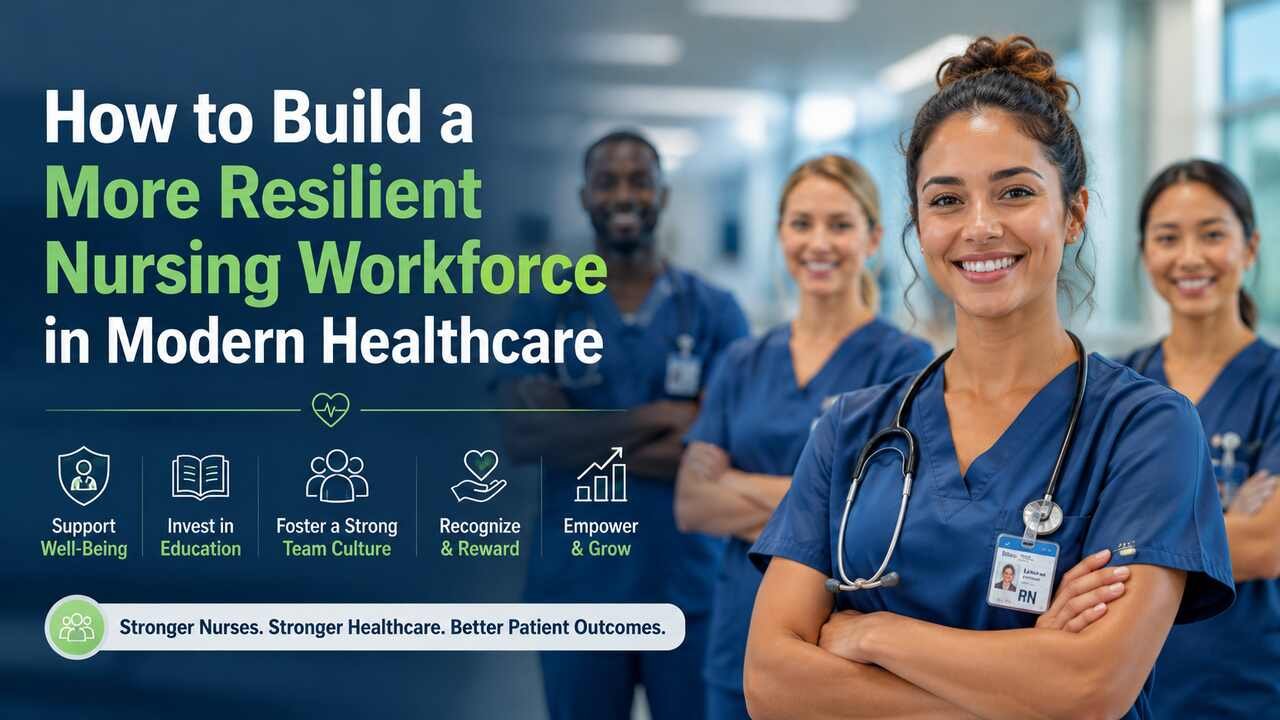
Hospitals everywhere are still trying to tackle nurse burnout by telling their employees to take better care of themselves or by doling out wellness stipends. But those are solutions that treat the symptoms of the problem, rather than the cause. A nursing workforce doesn’t become more resilient because people across it are breathing differently. It becomes resilient because the organization is built to support them.
That’s where leaders need to get.
Stop Scheduling People Into the Ground
Burnout is mostly caused by the relentless hard work. The structure of the work, however, can make it more manageable. Staffing levels are a huge piece of this, but so are things like schedule predictability, self-scheduling technologies, fatigue monitoring, and shift length.
Build the Internal Capacity Before the Crisis Hits
Float pools are an asset that goes unused in many hospital systems because they’re treated as a break-glass-in-case-of-emergency solution, rather than being integrated as part of the architecture. An in-house float pool that’s well funded, with the understanding that the flexibility it provides is worth the premium pay that float-pool nurses require, can proactively minimize the use of agency staff and shield unit nurses from the dangerous practice of shouldering surge demand in addition to their regular patients.
That kind of more expensive staffing solution is appropriate, in the short term. However, we have seen how easy it is to make it the default, which ultimately just outsources the crisis instead of addressing the underlying conditions that created it.
Float pools are a good example of how the choices health systems make today, like building sustainable nurse-retention-strategies into their workforce infrastructure, will make a big difference in how ably they can steer through the coming years of severe nurse shortages.
Give Nurses a Real Voice in How Units Operate
Shared governance may seem like a bureaucratic term, but in living form, it’s quite simple: bedside nurses are present on clinical committees, and vote on things like shift schedules, what equipment to purchase, and changes to protocols. They don’t advise. They decide.
When a nurse has no mechanism to influence the operations of the unit, they check out. They’re not going to be the one to raise their hand when some random thing isn’t safe. The unit is not psychologically safe and that psychic burden doesn’t stay with the nurse, it spreads like bramble to every member of the team. This is why I say psychological safety is not a culture initiative. It’s just an environment where staff believe it’s worthwhile to speak up.
The AACN’s Healthy Work Environment standards identify skilled communication and true collaboration as 2 of the 6 key requirements for creating processes that will increase engagement and retain nurses. That’s not fluff. That’s showing up to unit council meetings and knowing CNA reps on a first-name basis. That’s directors being able to provide transparent records of changes bedside nurse feedback has influenced in the last year.
It’s an institution that can clearly respond to crisis staffing with documentation of training and how staff was informed of the change. When proper safety feedback loops exist, there’s always a record. When a director says “I’m unaware of any complaints”, there’s also a record of that, a paper one. Because you don’t have a feedback loop and that is a complaint.
Protect New Nurses From Early-Career Attrition
Losing first-year employees is costly and unnecessary, especially when we know how to mitigate it. Residency programs work because the better that first year goes, the more likely nurses are to stick around.
Beyond residency programs, the structure of that first year matters just as much as the program itself. New nurses need consistent access to experienced mentors, not just during formal orientation but throughout those early months when the gap between classroom training and clinical reality becomes most apparent. Units that pair new graduates with dedicated preceptors, reduce patient loads during the transition period, and build in regular check-ins to identify early signs of struggle retain significantly more first-year nurses than those that don’t. The investment is modest compared to the cost of replacing someone who leaves at month eight.
Career Pathways Change the Calculus For Long-Term Staff
Experienced nurses typically leave because they’re exhausted, or because they can see no path forward that doesn’t require leaving the bedside entirely. Clinical ladder programs address the second problem directly.
A structured ladder allows nurses to advance in pay and recognition while staying in direct patient care. It signals that expertise at the bedside is worth investing in. For a mid-career nurse who loves clinical work but doesn’t want to go into management, that signal matters. Workforce resilience isn’t something leadership can declare into existence. It’s built incrementally, through scheduling systems that don’t grind people down, governance structures that actually listen, and career pathways that make staying the obvious choice.
Read Also: 5 Simple Office Optimization Strategies That Improve Business Efficiency


