





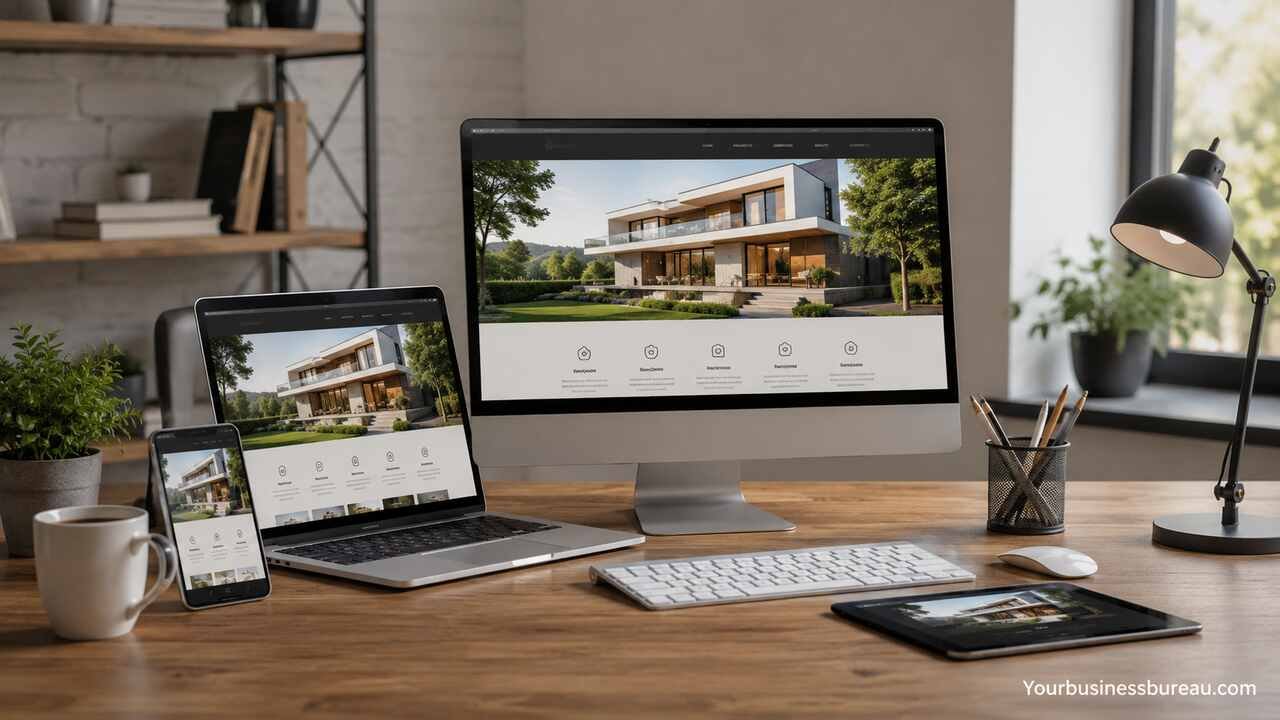
A small business website is often the first place customers judge a company’s credibility, services, pricing, location, and professionalism. Strong small business website design services help owners turn that first impression into trust, inquiries, bookings, sales, and repeat visits. A well-built website does more than look attractive. It organizes information, supports search visibility, loads quickly, works on mobile devices, and guides visitors toward a clear next action.
For local shops, consultants, contractors, clinics, restaurants, agencies, and online sellers, website design affects how people find the business and how confidently they choose it. The right design service creates a site that matches the brand, explains the offer, removes friction, and supports long-term marketing. A small business does not always need a huge website, but it does need a focused, professional, and conversion-ready one.
Define Your Website Goals Before Hiring a Design Service
A small business should begin by defining the main purpose of its website. The website may need to generate phone calls, collect quote requests, sell products, book appointments, promote local services, or present a professional company profile. Clear goals help the designer create the right structure, page layout, content flow, and calls to action.
The business owner should list the most important actions a visitor should take. A service company may want users to request an estimate. A medical clinic may want patients to schedule appointments. A restaurant may want customers to view the menu, order online, or find directions. An ecommerce business may want product sales, newsletter signups, and abandoned cart recovery. These goals shape the homepage, navigation, service pages, forms, and conversion paths.
Goal setting also prevents wasted spending. A simple brochure website has different requirements than a booking website, membership website, or online store. When goals are clear, the website design service can recommend the right platform, features, timeline, and budget.
| Website Goal | Best Website Feature | Business Benefit |
| Generate leads | Contact forms, quote buttons, service pages | More inquiries |
| Book appointments | Calendar integration, booking forms | Easier scheduling |
| Sell products | Ecommerce store, payment gateway | Direct online revenue |
| Build trust | Reviews, case studies, team page | Higher credibility |
| Improve local visibility | Location pages, map, local SEO setup | More nearby customers |
Choose the Right Website Design Platform
A small business should choose a website platform that fits its budget, technical ability, growth plans, and marketing needs. Common options include WordPress, Shopify, Wix, Squarespace, and custom-coded websites. Each platform has different strengths, and the best choice depends on the business model.
WordPress works well for service businesses, blogs, local companies, and content-heavy websites because it offers flexibility, plugins, and strong SEO control. Shopify works well for ecommerce businesses because it supports product management, payments, shipping, discounts, and inventory. Wix and Squarespace suit smaller websites that need faster setup and simpler management. Custom websites fit businesses with unique workflows, advanced integrations, or highly specific performance needs.
The platform should support mobile responsiveness, fast loading, search optimization, analytics, security, and easy content updates. A small business should avoid platforms that limit ownership, slow down performance, or make future changes expensive. The design service should explain platform costs, hosting requirements, maintenance needs, and upgrade options before development begins.
Plan a Clear Website Structure
A strong website structure helps visitors find information quickly. A small business website usually needs a homepage, about page, service pages, contact page, testimonials, blog, and location page. Ecommerce websites also need category pages, product pages, cart pages, checkout pages, refund policies, and shipping information.
The homepage should introduce the business, state the main offer, highlight customer benefits, show trust signals, and direct visitors to the next step. Service pages should explain each service separately instead of combining everything into one vague page. A plumber, for example, benefits from individual pages for emergency plumbing, drain cleaning, water heater repair, and leak detection. Each page can target a specific customer need.
Website structure also affects search performance. Search engines understand a website better when pages are grouped logically and linked clearly. Internal links connect related pages, improve navigation, and help visitors move from general information to specific service details. A design service should create a structure that supports both user experience and organic visibility.
Create a Professional Brand Presentation
A small business website should present the brand with consistency. The logo, colors, typography, photography, icons, spacing, and tone should work together. A clean brand presentation makes the company look organized, trustworthy, and established.
The designer should use colors that match the business personality. A financial consultant may need a calm and professional color palette. A children’s activity center may need brighter and warmer colors. A luxury service provider may need elegant typography, refined spacing, and polished imagery. The website should not feel generic because customers compare businesses quickly.
Brand presentation also includes messaging. The headline should say what the business does and who it helps. The supporting text should explain the value without forcing visitors to guess. Good design combines visuals and words so the visitor understands the offer within seconds.
Write Service Pages That Convert Visitors
Service pages should describe the service, explain the process, show benefits, answer objections, and encourage action. A small business often loses leads when service pages are too short, vague, or focused only on the company instead of the customer’s problem.
Each service page should include a clear headline, a short introduction, core benefits, service details, pricing guidance if appropriate, FAQs, testimonials, and a strong contact button. The content should explain who the service is for, what is included, how long it takes, and what the customer should expect. Specific details build confidence.
A design service may also help create page templates for future services. This keeps the website consistent as the business grows. Strong service pages support search rankings, paid ads, local traffic, and sales conversations because they provide information customers already want before contacting the business.
Optimize the Website for Mobile Users


A small business website must work smoothly on mobile devices. Many customers search for local services, restaurants, stores, and professional help from phones. If the website is hard to read, slow to load, or difficult to navigate, visitors leave quickly.
Mobile design should use readable text, easy buttons, simple menus, compressed images, and forms that are easy to complete. Phone numbers should be clickable. Directions should open easily. Booking buttons and contact forms should stay visible without overwhelming the screen. The mobile layout should prioritize the most important information first.
Mobile usability also affects search visibility and conversion rates. A website that looks good on desktop but performs poorly on phones can lose both rankings and leads. A professional small business website design service should test layouts across screen sizes before launch.
Improve Website Speed and Technical Performance
Website speed affects user experience, search performance, and conversions. A slow website frustrates visitors, especially on mobile connections. Small business websites often become slow because of oversized images, poor hosting, bloated themes, too many plugins, or unoptimized code.
A design service should compress images, use efficient layouts, reduce unnecessary scripts, set up caching, and choose reliable hosting. The website should load quickly on important pages such as the homepage, service pages, product pages, and contact page. Speed testing should happen before and after launch.
Technical performance also includes clean code, secure connections, working forms, browser compatibility, and error-free navigation. These details may be invisible to visitors when everything works, but they become obvious when something breaks. A reliable design service should build the website so it performs consistently.
Add Local SEO Features for Nearby Customers

Small business website design services should include local SEO planning when the company serves a specific area. Local SEO helps customers find the business when they search for nearby services. A local business should include its name, address, phone number, service areas, business hours, map, reviews, and location-specific pages.
The website should connect naturally with the company’s Google Business Profile and other local listings. Contact information should remain consistent across the website and directories. Location pages should describe real service areas instead of repeating city names without useful information.
Local SEO also benefits from customer reviews, project photos, local testimonials, driving directions, and community references. A contractor can show completed projects in nearby neighborhoods. A dental clinic can explain services available at its city location. A restaurant can highlight menu, parking, reservations, and local delivery options.
Build Trust With Reviews, Proof, and Case Studies
Trust-building sections help visitors feel confident before contacting a business. A small business website should include reviews, testimonials, certifications, awards, guarantees, project examples, media mentions, client logos, and before-and-after results where relevant.
Reviews work best when they appear near decision points. A testimonial on a service page can support the visitor right before a contact button. Case studies work well for consultants, agencies, contractors, designers, and B2B service providers because they show the problem, solution, and result.
Proof should be specific. “Great service” is helpful, but “completed the website redesign in three weeks and increased quote requests” is stronger. A design service should place trust signals throughout the website instead of hiding them on one page.
Design Strong Calls to Action
A call to action tells the visitor what to do next. Small business websites should use clear actions such as “Request a Quote,” “Book an Appointment,” “Call Now,” “View Services,” “Order Online,” or “Schedule a Consultation.” The wording should match the business goal.
Calls to action should appear on the homepage, service pages, header, footer, and key content sections. They should stand out visually but not feel aggressive. A local emergency service may need a prominent phone button. A consultant may need a consultation form. A restaurant may need reservation and order buttons.
Good calls to action reduce confusion. Visitors should not have to search for the next step. The website should guide them from interest to action with simple buttons, short forms, and reassuring support text.
Include Essential Website Features
A small business website needs practical features that support usability and business operations. The exact features depend on the industry, but most websites need contact forms, analytics, security, legal pages, social links, image galleries, and content management access.
Some businesses need advanced features. A salon may need appointment booking. A gym may need class schedules. A real estate agency may need listing integrations. A restaurant may need menu management. A retailer may need ecommerce checkout. A professional firm may need downloadable resources and lead forms.
| Feature | Best For | Main Purpose |
| Contact form | Service businesses | Collect inquiries |
| Booking calendar | Clinics, salons, consultants | Schedule appointments |
| Ecommerce checkout | Retailers | Sell online |
| Blog section | Local and professional services | Publish helpful content |
| Gallery | Contractors, venues, creatives | Show work quality |
| Live chat | Support-heavy businesses | Answer quick questions |
| Analytics | All businesses | Track performance |
Set Up Analytics and Conversion Tracking
A website should measure results after launch. Analytics show where visitors come from, which pages they view, how long they stay, and which actions they complete. Without tracking, a business cannot know whether the website is generating value.
Conversion tracking should measure form submissions, phone clicks, appointment bookings, purchases, downloads, and email signups. These actions show whether visitors are becoming leads or customers. A design service should set up tracking tools and confirm that data is recording correctly.
Tracking also supports future improvements. If many visitors view a service page but do not contact the business, the page may need better proof, clearer pricing, stronger calls to action, or a simpler form. Analytics turns website design into an ongoing business asset instead of a one-time project.
Prepare Website Content and Images
A small business should prepare content before or during the design process. Required content usually includes business description, service details, team information, pricing guidance, testimonials, photos, contact information, and frequently asked questions.
Professional images improve trust. Real photos of the team, location, products, projects, or service process often perform better than generic stock images. A restaurant should show food and atmosphere. A contractor should show completed projects. A clinic should show the office and staff. A consultant should use professional headshots and client-friendly visuals.
Content should be clear, accurate, and customer-focused. The website should explain problems the business solves, benefits customers receive, and steps customers can take. Design attracts attention, but content drives understanding and action.
Review Pricing and Service Packages
Small business website design services can vary widely in cost. Pricing depends on page count, platform, custom design, ecommerce needs, copywriting, SEO, booking systems, integrations, and ongoing support. A simple website usually costs less than a custom ecommerce or lead generation website.
A business should compare packages carefully. A low-cost package may include only basic design and limited revisions. A higher-value package may include strategy, copywriting, SEO setup, speed optimization, analytics, training, and maintenance. The cheapest option may become expensive later if the website needs major fixes.
The proposal should clearly state deliverables, timeline, revision rounds, platform fees, hosting fees, content responsibilities, ownership rights, and post-launch support. Clear pricing protects both the business and the design provider.
Launch the Website With a Quality Checklist
Before launch, the website should go through a complete review. The design service should test links, forms, mobile layouts, page speed, spelling, images, tracking codes, security settings, redirects, and browser compatibility. A small error can cost leads after launch.
The business owner should review every page for accuracy. Contact details, service descriptions, business hours, pricing, policies, and location information must be correct. Forms should send messages to the right email address. Phone numbers should work when tapped on mobile devices.
The launch process should also include backups, search engine settings, sitemap submission, and analytics verification. A careful launch reduces technical problems and helps the website start performing from day one.
Maintain and Improve the Website After Launch
A small business website needs ongoing care. Updates protect security, improve performance, and keep information accurate. A website that is ignored for years may become outdated, slow, vulnerable, or less effective.
Maintenance may include software updates, backups, security monitoring, content updates, broken link checks, speed improvements, and design refinements. Businesses should update photos, services, team members, pricing, promotions, and testimonials when changes happen.
Improvement should also be based on data. A website can gain better results through new service pages, stronger calls to action, blog content, improved local pages, better reviews, and conversion testing. A good design service can provide ongoing support so the website keeps growing with the business.
Conclusion
Small business website design services help companies create a professional online presence that builds trust, attracts visitors, and turns interest into action. A successful website needs clear goals, strong structure, mobile-friendly design, fast performance, local SEO, persuasive content, trust signals, analytics, and ongoing maintenance. When these parts work together, the website becomes more than a digital brochure. It becomes a reliable growth tool for leads, bookings, sales, and customer confidence.
FAQ’s
Costs vary based on size, features, platform, content, and custom design needs. A basic website costs less than a custom ecommerce, booking, or lead generation website.
A simple website may take a few weeks, while larger websites with custom features, copywriting, ecommerce, or integrations may take longer.
WordPress is strong for service and content websites, Shopify is strong for ecommerce, and Wix or Squarespace can work for simpler websites.
Yes. SEO helps customers find the website through search engines, especially when the business depends on local traffic or service-based searches.
A professional designer can improve layout, branding, speed, mobile usability, SEO setup, and conversion paths, which often produces better long-term results.
Yes. Many platforms allow business owners to update text, images, blog posts, products, and basic pages after proper setup and training.


