








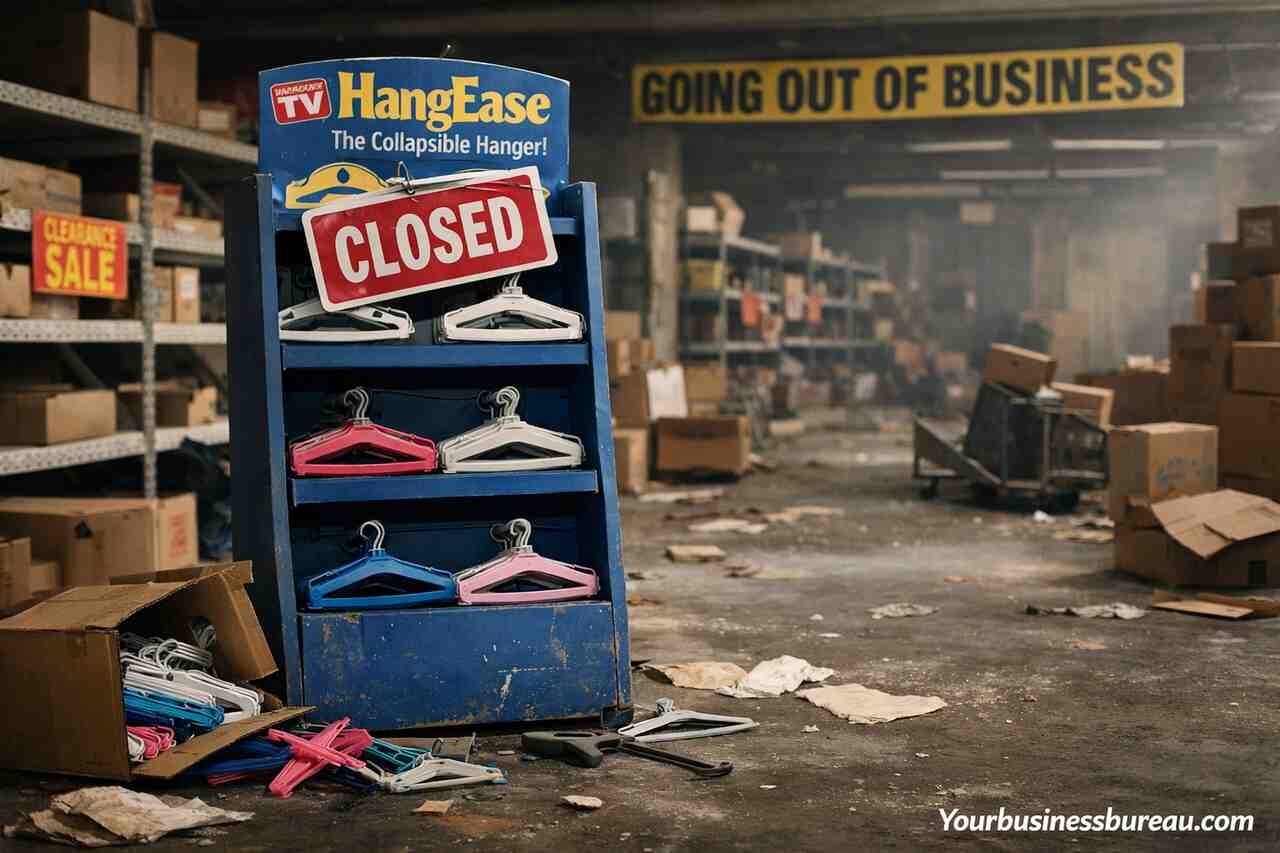
Highlights
- Hang Ease started as a simple solution to a common problem. You probably saw the appeal instantly because saving closet space feels practical and necessary in everyday life.
- Early success came from clear demonstrations. You could easily understand how the product worked, and that clarity likely made you or others trust the brand quickly.
- Financial pressure built over time. You might not notice this as a buyer, but behind the scenes, limited product variety made it hard for the company to keep earning consistently.
- Competition quietly took over. While Hang Ease stayed focused on one idea, other brands offered cheaper and more advanced storage options, giving you better choices.
- Consumer needs evolved. You likely started looking for products that do more than one job, and that shift reduced interest in single-purpose hangers.
- Marketing lost its impact. What once looked innovative began to feel repetitive, and you may have stopped paying attention to similar ads.
- The business could not adapt fast enough. While the market moved forward, Hang Ease stayed almost the same, which created a gap between what you needed and what the brand offered.
- Final outcome became inevitable. Lower demand, rising costs, and stronger competition combined to push the company out of the market.
Hang Ease went out of business due to a combination of financial instability, increasing competition, and changing consumer behavior that favored more versatile storage solutions. The brand initially gained attention by offering space-saving hanger designs that solved common closet organization problems, but long-term sustainability required more than a single innovative idea. Market dynamics shifted as larger brands introduced cheaper and more multifunctional alternatives, which reduced Hang Ease’s relevance. At the same time, operational challenges and limited product diversification weakened growth potential. As I explain throughout this article, understanding these factors will help you see how business success depends not only on innovation but also on adaptability, value creation, and alignment with evolving customer needs.
What Was Hang Ease and What Made It Popular?
Hang Ease operated as a niche brand focused on innovative hanger solutions designed to improve closet organization and garment care. Product design emphasized simplicity, space-saving functionality, and ease of use. Early adoption occurred because the product addressed a common household frustration related to cluttered closets.
Hang Ease gained traction through demonstration-based marketing. Product showcases visually explained how multiple garments could be organized efficiently. Demonstrations created a clear connection between problem and solution, which helped customers quickly understand value. That clarity encouraged initial purchases and built short-term momentum.
Popularity relied heavily on novelty rather than sustained engagement. Many customers purchased once but did not return for repeat purchases. A product solving a single problem limits long-term growth potential. That limitation gradually weakened the brand’s market presence and revenue consistency.
How Did Hang Ease Products Work?
Hang Ease products used vertical hanging systems that allowed multiple garments to be placed in a compact structure. Design reduced horizontal space usage and improved closet organization without requiring additional furniture.
Why Did Customers Initially Trust Hang Ease?
Customers trusted Hang Ease because demonstrations clearly showed functionality. Visual proof created confidence, while relatable scenarios made the product feel necessary and practical.
Why Did Hang Ease Struggle Financially?


Hang Ease faced financial challenges due to dependence on a narrow product range. Limited diversification meant revenue relied heavily on one category. Any drop in demand directly impacted total income and stability.
Cost structure also created pressure. Specialized designs increased manufacturing expenses, while competitive pricing reduced profit margins. That imbalance made it difficult to scale operations effectively. Marketing costs further strained finances, especially when customer acquisition slowed.
Cash flow issues emerged as expenses remained high while sales declined. From my experience observing similar businesses, I have noticed that companies relying on one successful product often struggle when demand stabilizes. Sustainable growth requires multiple revenue streams, and Hang Ease lacked that flexibility.
Financial Overview of Hang Ease Challenges
| Factor | Impact on Business | Result |
| Limited Product Range | Reduced revenue diversity | High financial risk |
| High Production Cost | Lower profit margins | Limited scalability |
| Marketing Expenses | Increased operational cost | Reduced profitability |
| Declining Sales | Lower cash inflow | Financial instability |
Did Pricing Affect Profitability?
Pricing affected profitability because consumers compared Hang Ease with cheaper alternatives. Higher perceived cost reduced purchase frequency and impacted revenue.
Was Poor Financial Planning a Factor?
Financial planning limitations contributed to imbalance between expenses and income. Lack of long-term strategy reduced resilience during market shifts.
How Did Market Competition Impact Hang Ease?
Market competition intensified as large retailers and global brands introduced similar products. These competitors leveraged economies of scale to offer lower prices. Hang Ease struggled to match pricing while maintaining quality.
Competitors also introduced innovation at a faster pace. Multifunctional storage systems replaced single-purpose hangers. Consumers preferred products offering broader utility, which reduced demand for Hang Ease solutions.
Brand visibility declined as competitors invested heavily in digital marketing. Online platforms increased exposure for alternative products. Hang Ease could not maintain equal visibility, which reduced customer acquisition and retention.
What Types of Competitors Affected Hang Ease?
Major retail brands and private-label manufacturers introduced affordable alternatives. These options provided similar functionality at lower cost.
Did Online Platforms Change the Market?
Online platforms enabled price comparison and increased transparency. Customers easily found better deals, which reduced brand loyalty.
Why Did Consumer Preferences Shift Away from Hang Ease?
Consumer behavior evolved toward multifunctional and versatile products. People began prioritizing storage systems that combined multiple features, such as folding, shelving, and hanging.
Minimalist lifestyle trends influenced purchasing decisions. Consumers reduced unnecessary items and focused on fewer, high-value products. Hang Ease products, being single-purpose, did not align with this shift.
Quality expectations also increased. Customers looked for durability and long-term benefits rather than convenience alone. Products needed to justify cost through multiple uses, which challenged Hang Ease positioning.
Consumer Preference Shift Overview
| Trend | Consumer Behavior | Effect on Hang Ease |
| Minimalism | Fewer purchases | Reduced demand |
| Multifunctionality | Preference for versatile products | Lower relevance |
| Price Sensitivity | Focus on affordability | Increased competition |
| Quality Focus | Demand for durability | Higher expectations |
Did Lifestyle Trends Influence Sales?
Lifestyle trends reduced demand for single-use products. Compact living encouraged smarter storage solutions with multiple functions.
Were Customers Looking for More Value?
Customers demanded higher value per purchase. Products needed to solve multiple problems to remain competitive.
What Operational Challenges Contributed to the Closure?
Operational inefficiencies likely created long-term pressure. Supply chain management issues increased costs and affected product availability. Delays in production or delivery can reduce customer satisfaction and sales.
Inventory management also played a role. Overstocking ties up capital, while understocking leads to missed sales opportunities. Balance is essential, and mismanagement can weaken financial stability.
Customer service and returns added complexity. Products requiring usability must meet expectations consistently. Negative experiences increase return rates, which impact profitability and brand reputation.
Did Supply Chain Issues Play a Role?
Supply chain inefficiencies increase operational costs and disrupt availability. Consistency is essential for maintaining customer trust.
Was Inventory Management a Problem?
Inventory imbalance creates financial strain. Effective management supports both sales growth and cost control.
How Did Branding and Marketing Limit Growth?
Branding remained focused on a single problem, which limited expansion opportunities. A broader identity could have supported diversification and growth into related product categories.
Marketing strategies relied heavily on demonstrations. While effective initially, the approach became less impactful as competitors adopted similar tactics. Differentiation became increasingly difficult.
Digital marketing transformation created additional challenges. Brands that adapted to social media and e-commerce gained visibility. Hang Ease struggled to keep pace, which reduced engagement and market reach.
Was Branding Too Narrow?
Branding limited to one function restricted growth potential. Expansion requires a broader value proposition.
Did Marketing Strategies Become Outdated?
Marketing approaches must evolve with consumer behavior. Outdated strategies reduce effectiveness and visibility.
What Lessons Can Consumers and Businesses Learn from Hang Ease?
Hang Ease demonstrates that innovation alone does not guarantee long-term success. Adaptability, diversification, and continuous improvement are essential for sustainability.
Businesses must align with changing consumer behavior. A product that solves a problem today must evolve to remain relevant tomorrow. Market awareness and flexibility support long-term growth.
From my experience, I have seen many businesses fail because they rely too heavily on one successful idea. I want to tell you directly that growth requires constant adaptation. You should always look for value, whether you are building a business or making a purchase decision.
What Should New Businesses Focus On?
New businesses should prioritize flexibility, customer feedback, and scalable strategies. Diversification reduces risk and supports growth.
How Can Consumers Make Better Buying Decisions?
Consumers should evaluate long-term value, durability, and versatility. Smart decisions reduce unnecessary spending and improve satisfaction.
Conclusion
Hang Ease went out of business due to financial challenges, strong competition, changing consumer preferences, and limited adaptability. Early success created momentum, but long-term sustainability required broader innovation and strategic evolution.
A practical takeaway for you involves understanding the importance of value and adaptability. Whether making a purchase or building a business, long-term thinking creates better outcomes. Hang Ease serves as a clear example of how market dynamics shape success and failure.
If you want to explore how we help businesses grow from the ground up, you can visit yourbusinessbureau.com to see what we offer.
FAQ’s
Hang Ease failed because usefulness alone could not sustain demand. Competition and changing preferences reduced its market relevance.
Multifunctional storage solutions replaced single-purpose hangers. These alternatives provided greater value to consumers.
Improved diversification, stronger branding, and digital adaptation could have increased survival chances.
Many brands offer improved space-saving hangers and storage systems with additional features.
Adaptability remains the key lesson. Businesses must evolve with market trends to stay competitive.


