



Highlights
- Inflation directly increases startup costs in the United States by raising expenses for rent, labor, equipment, inventory, marketing, utilities, and financing, which means founders must prepare for higher upfront capital requirements.
- Rising interest rates increase loan costs and reduce access to affordable financing, which makes cash flow management and capital efficiency more important than rapid expansion.
- Wage growth and talent competition raise payroll expenses, which forces startups to balance competitive compensation with sustainable hiring strategies.
- Supply chain volatility and fuel price increases raise inventory and logistics costs, which reduces gross margins unless pricing strategy adjusts accordingly.
- Pricing strategy becomes critical during inflation because entrepreneurs must balance cost recovery with customer demand sensitivity.
- Lean operations, diversified suppliers, flexible budgeting, and strong financial forecasting help mitigate inflation-related risks.
- Cash flow management becomes the most important financial priority during inflationary periods.
Introduction
Inflation increases startup costs in the United States by raising the price of rent, labor, inventory, technology, financing, and everyday operational expenses, which directly affects how much capital entrepreneurs need to launch and sustain a business. Rising consumer prices reduce purchasing power, while higher interest rates increase borrowing costs, forcing founders to rethink budgeting, hiring, pricing, and growth strategies. Entrepreneurs who understand how inflation influences both fixed and variable expenses can plan more accurately, protect profit margins, and build resilient business models that adapt to economic uncertainty rather than react to financial pressure.
How Does Inflation Increase Initial Startup Expenses in the United States?
Inflation increases initial startup expenses by raising the cost of physical space, equipment, technology infrastructure, and regulatory compliance. Rising consumer price levels affect supplier pricing, which then affects capital expenditure requirements. Founders must allocate more capital upfront to secure the same operational capacity.
Commercial lease rates rise when property owners adjust pricing to offset higher maintenance, insurance, and financing costs. Landlords pass cost increases to tenants, and new businesses typically lack negotiation leverage. Entrepreneurs planning retail stores, restaurants, or offices experience higher security deposits, build-out expenses, and long-term lease commitments.
Equipment and inventory costs increase when manufacturers face higher raw material and transportation expenses. Supply chain disruptions amplify price increases. Software subscriptions and cloud services also adjust pricing in inflationary periods, particularly when labor costs in technology sectors increase.
Commercial Real Estate Costs
Commercial real estate pricing responds directly to inflation because property owners face higher taxes, insurance premiums, and maintenance expenses. Property insurance premiums rise due to higher construction replacement costs. Maintenance contracts become more expensive due to wage inflation in service industries.
Entrepreneurs entering markets like New York, California, or Texas often encounter double-digit percentage increases in lease rates during inflationary cycles. Build-out costs such as electrical installation, HVAC systems, and interior construction increase due to higher material prices. Lumber, steel, and concrete prices fluctuate with inflation and global demand.
From personal conversations with retail startup founders, I have seen lease negotiations shift dramatically during inflation spikes. Landlords rarely reduce asking prices, but they may offer shorter-term concessions instead of permanent rent reductions. Founders who understand market timing negotiate more effectively.
Equipment and Technology Investment
Equipment manufacturers raise prices when raw materials such as metals, plastics, and semiconductors become more expensive. Supply chain bottlenecks add transportation surcharges, which increase landed cost. Technology hardware such as laptops, POS systems, and industrial machinery reflect these pressures.
Software vendors often adjust subscription pricing annually. Cloud service providers increase fees when data center energy costs rise. Cybersecurity services become more expensive as labor costs for skilled professionals increase.
Early-stage entrepreneurs often underestimate inflation’s compounding effect on technology budgets. When founders ask me about cost control, I suggest building a 10 to 15 percent contingency buffer into capital expenditure projections. That buffer absorbs sudden price adjustments without disrupting launch timelines.
How Does Inflation Influence Labor and Hiring Costs for Startups?


Inflation increases labor costs by reducing real wages and motivating employees to demand higher compensation. Employers compete for talent in a tighter labor market, leading to wage growth, signing bonuses, and expanded benefits packages.
Wage inflation affects both skilled and entry-level roles. Technology developers, marketing professionals, and logistics coordinators expect salary adjustments aligned with cost-of-living increases. Minimum wage adjustments at state levels also contribute to rising payroll expenses.
Payroll taxes, workers’ compensation insurance, and healthcare premiums increase alongside wage growth. Entrepreneurs must budget for total compensation, not just base salary.
Wage Growth and Talent Competition
Wage growth accelerates when inflation reduces purchasing power. Employees negotiate raises to maintain living standards. Startups competing with established corporations must offer competitive salaries despite limited cash flow.
Technology startups particularly feel pressure in hiring engineers and data analysts. Compensation packages often include equity, but inflation reduces immediate cash value for employees who prioritize financial stability.
During consulting sessions with startup founders, I often highlight the importance of flexible compensation models. Remote hiring expands talent pools and sometimes reduces salary pressure in high-cost urban areas.
Benefits and Compliance Costs
Healthcare premiums rise with medical inflation. Employers who provide group health plans experience annual premium increases. Retirement contributions and payroll taxes rise proportionally with higher wages.
Compliance costs also increase as regulatory requirements evolve. Human resource software subscriptions and legal consultation fees grow more expensive during inflationary cycles.
Entrepreneurs who adopt lean hiring strategies, including contract work and phased recruitment, often manage inflation pressure more effectively. Founders must balance growth ambitions with financial sustainability.
How Does Inflation Affect Financing and Access to Capital?
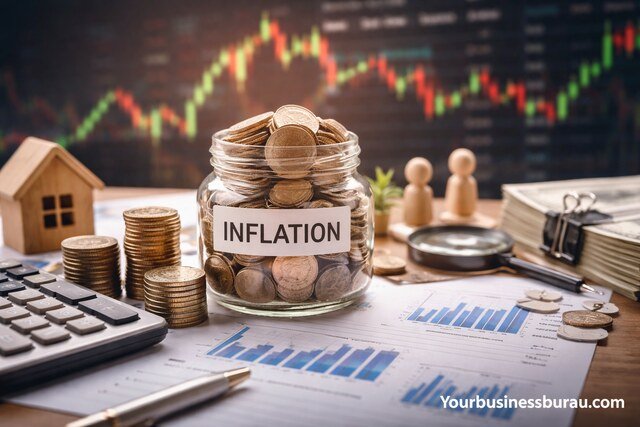
Inflation influences financing by prompting central banks to increase interest rates. Higher interest rates increase borrowing costs for startups seeking loans or credit lines. Investors also adjust risk expectations when inflation reduces future purchasing power.
The Federal Reserve raises benchmark rates to control inflation. Higher benchmark rates influence commercial bank lending rates, venture debt pricing, and credit card interest rates. Startups relying on external financing face higher monthly debt servicing obligations.
Equity investors may demand higher returns to compensate for inflation risk. Valuations adjust downward when discount rates increase.
Interest Rates and Loan Costs
Interest rate increases directly affect small business loans. Fixed-rate loans become more expensive at origination. Variable-rate loans become more expensive over time.
Credit lines used for working capital experience rate adjustments. Startups dependent on revolving credit see rising interest expenses, which reduce net income.
From my discussions with entrepreneurs seeking SBA loans, higher interest rates often delay expansion plans. Founders reconsider capital-intensive projects when debt servicing consumes projected profit margins.
Venture Capital and Valuation Shifts
Venture capital firms adjust valuation models based on inflation and interest rate expectations. Higher discount rates reduce present value of future cash flows. Startups seeking funding may face lower valuations compared to previous funding cycles.
Investors also prioritize profitability over aggressive growth during inflationary periods. Capital efficiency becomes more attractive than rapid expansion.
Founders who demonstrate strong unit economics and controlled burn rates gain investor confidence. Clear financial forecasting helps mitigate concerns about macroeconomic volatility.
How Does Inflation Impact Supply Chain and Inventory Costs?
Inflation increases supply chain costs through higher fuel prices, shipping fees, and raw material expenses. Inventory holding costs rise due to higher purchase prices and warehousing expenses.
Transportation companies adjust freight rates in response to fuel price volatility. International shipping experiences container surcharges and port congestion fees. Domestic logistics costs rise with diesel price increases.
Inventory purchased at higher costs reduces gross margin unless pricing adjustments compensate.
Raw Materials and Manufacturing Costs
Raw material prices fluctuate with global demand and currency exchange rates. Manufacturers pass increased input costs to distributors and retailers. Product-based startups experience cost-of-goods-sold increases.
Manufacturing contracts may include price adjustment clauses tied to commodity indexes. Entrepreneurs must monitor these clauses to anticipate cost changes.
I often advise product-based founders to negotiate long-term supplier contracts when possible. Predictable pricing reduces exposure to sudden inflation spikes.
Logistics and Distribution Expenses
Fuel price inflation directly impacts trucking and air freight rates. Third-party logistics providers adjust pricing models accordingly. Warehousing rent also rises during inflationary cycles.
Startups with e-commerce operations must incorporate shipping cost volatility into pricing strategy. Free shipping models become less sustainable when logistics expenses rise sharply.
Entrepreneurs who diversify suppliers and distribution channels reduce dependency on single cost centers.
How Does Inflation Influence Pricing Strategy and Customer Demand?
Inflation affects pricing strategy by increasing production costs while simultaneously reducing consumer purchasing power. Businesses must balance cost recovery with competitive positioning.
Raising prices protects margins but may reduce demand. Maintaining prices protects demand but compresses margins. Strategic pricing decisions require careful market analysis.
Consumers become price-sensitive during inflationary periods. Brand loyalty weakens when household budgets tighten.
Cost Pass-Through Strategy
Cost pass-through involves transferring increased costs to customers through price adjustments. Transparent communication helps maintain trust.
Businesses often introduce smaller price increases gradually rather than large sudden hikes. Bundling products or adjusting packaging sizes also helps manage perception.
When I discuss pricing with founders, I emphasize value communication. Customers accept price increases more readily when benefits are clearly articulated.
Demand Elasticity Considerations
Demand elasticity measures responsiveness to price changes. Essential goods experience lower elasticity. Luxury goods experience higher elasticity.
Startups must analyze target market sensitivity. Data-driven pricing experiments provide insights into optimal pricing levels.
Entrepreneurs who monitor customer feedback and sales trends adjust pricing dynamically rather than relying on static models.
How Does Inflation Affect Operational Overhead and Recurring Expenses?
Inflation increases operational overhead including utilities, insurance, marketing, and subscription services. Recurring expenses gradually accumulate, creating long-term budget pressure.
Utility costs such as electricity and natural gas fluctuate with energy markets. Insurance premiums increase with higher replacement values. Digital advertising costs rise due to competitive bidding.
Recurring software subscriptions represent hidden inflation exposure. Vendors periodically adjust pricing.
Utilities and Energy Costs
Energy prices respond to global supply and geopolitical conditions. Commercial electricity rates often increase during inflationary cycles. Heating and cooling expenses rise seasonally.
Startups operating physical facilities experience higher monthly fixed expenses. Energy-efficient equipment reduces long-term exposure.
Entrepreneurs who conduct energy audits identify inefficiencies that contribute to unnecessary expenses.
Marketing and Advertising Costs
Digital advertising platforms adjust bidding dynamics during economic shifts. Cost per click and cost per acquisition may increase when competition intensifies.
Traditional advertising channels also adjust pricing. Print, radio, and event sponsorship fees rise with inflation.
From experience advising small businesses, diversified marketing channels reduce dependency on single expensive platforms. Organic content marketing provides long-term cost efficiency.
How Can Entrepreneurs Mitigate Inflation Impact on Startup Costs?
Entrepreneurs mitigate inflation impact by adopting flexible budgeting, diversified sourcing, lean operations, and strategic financial planning. Proactive strategy reduces vulnerability to macroeconomic fluctuations.
Financial forecasting must incorporate inflation scenarios. Sensitivity analysis helps identify break-even adjustments. Contingency reserves provide stability.
Strategic partnerships and supplier negotiations strengthen cost control.
Lean Startup Approach
Lean methodology emphasizes minimal viable product development and iterative testing. Lower upfront investment reduces inflation exposure.
Bootstrapping strategies limit debt dependency. Phased expansion allows cost validation before scaling.
When mentoring founders, I encourage incremental growth. Controlled scaling prevents overextension during volatile economic periods.
Financial Resilience and Cash Management
Strong cash flow management protects against cost volatility. Maintaining emergency reserves ensures operational continuity.
Diversified revenue streams reduce dependency on single income sources. Subscription models provide predictable cash flow.
Entrepreneurs who regularly review expense categories identify inefficiencies quickly. Continuous monitoring supports agile decision-making.
Comparative Overview of Inflation-Affected Startup Cost Categories
| Cost Category | Inflation Impact Level | Risk to Startup | Mitigation Strategy |
| Commercial Rent | High | Fixed cost pressure | Negotiate lease terms, consider co-working spaces |
| Labor | High | Payroll expansion | Remote hiring, phased recruitment |
| Equipment | Medium to High | Capital strain | Lease options, bulk purchasing |
| Financing | High | Debt burden | Fixed-rate loans, equity diversification |
| Marketing | Medium | Customer acquisition cost | Organic marketing strategies |
| Utilities | Medium | Overhead growth | Energy efficiency investment |
Long-Term Outlook: Inflation and the Future of U.S. Startups
| Economic Factor | Short-Term Effect | Long-Term Adaptation |
| Interest Rates | Reduced borrowing | Improved capital discipline |
| Wage Growth | Payroll pressure | Automation and remote work |
| Supply Chain Volatility | Margin compression | Localized sourcing |
| Consumer Behavior | Price sensitivity | Value-based branding |
Conclusion
Inflation increases startup costs in the United States by affecting real estate, labor, financing, supply chains, operations, and customer demand. Entrepreneurs who anticipate cost fluctuations and adjust strategy proactively protect profitability and growth potential. Inflation creates pressure, but strategic planning transforms pressure into opportunity. Founders who prioritize flexibility, lean operations, diversified sourcing, and strong financial forecasting build resilient businesses capable of thriving in dynamic economic conditions.
If you want to explore how we help businesses grow from the ground up, you can visit yourbusinessbureau.com to see what we offer.
FAQ’s
Inflation impact varies by industry, but many startups experience 5 to 15 percent annual cost increases during high inflation periods. Real estate and labor typically show the largest increases.
Entrepreneurs should evaluate industry conditions rather than delay automatically. Inflation may create competitive gaps and market opportunities despite higher costs.
Small startups maintain agility advantage. Lean operations, niche targeting, and rapid pricing adjustments support competitive positioning.
Service-based startups experience stronger labor cost pressure, while product-based startups experience stronger supply chain and inventory cost pressure.
Cash flow becomes critical because liquidity ensures survival during cost volatility. Burn rate monitoring also becomes essential for funded startups.


