








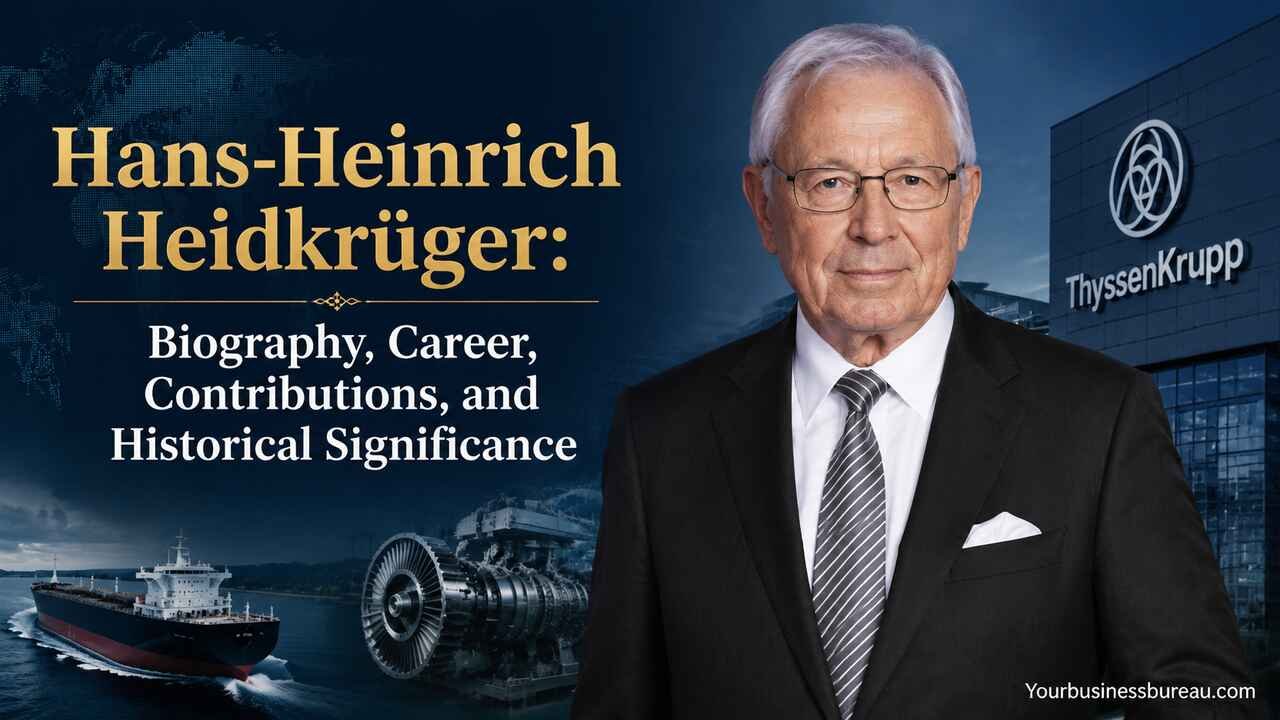
Hans-Heinrich Heidkrüger is a figure whose background, career, and contributions can be understood through historical records, professional activities, and documented achievements. Exploring his life and work provides insight into his role within German-speaking cultural, professional, and historical developments.
Research Available Historical Records About Hans-Heinrich Heidkrüger
Researching Hans-Heinrich Heidkrüger requires examining reliable biographical records, professional references, archival materials, and historical documentation. Information about individuals with specialized careers is often distributed across institutional databases, publications, libraries, and professional archives rather than being concentrated in one public biography.
The identification process includes reviewing several important elements, such as personal background, professional affiliations, educational history, publications, institutional relationships, and documented achievements. These sources help distinguish Hans-Heinrich Heidkrüger from other individuals with similar names while creating a clearer picture of his historical position.
The availability of information about a person depends on their public role, field of activity, and historical period. Researchers often rely on university archives, professional directories, newspaper collections, and specialist publications to reconstruct a detailed profile. For figures who worked outside mass media or popular culture, documentation may require deeper archival investigation.
Examine the Background and Early Development of Hans-Heinrich Heidkrüger
Understanding the background of Hans-Heinrich Heidkrüger involves examining the social, educational, and historical environment surrounding his early life. Personal development is influenced by family circumstances, regional culture, education systems, and the professional opportunities available during a particular period.
Early education often establishes the foundation for later professional specialization. Academic interests, mentors, institutions, and intellectual movements can shape the direction of an individual’s career. For Hans-Heinrich Heidkrüger, examining these formative influences provides insight into how his professional interests developed.
Historical figures are usually connected to wider networks of institutions and communities. These connections include educational organizations, professional associations, research groups, cultural circles, or public institutions that contribute to the development of expertise and professional recognition.
| Research Area | Information Considered |
| Personal background | Family environment, location, and early influences |
| Education | Schools, universities, training, and academic development |
| Professional growth | Career decisions, institutions, and specialized interests |
| Historical setting | Political, cultural, and social conditions of the period |
Analyze the Professional Career and Areas of Activity
The professional career of Hans-Heinrich Heidkrüger can be understood by examining his occupational roles, institutional connections, and areas of expertise. Professional achievements are usually reflected through positions held, projects completed, publications produced, or contributions made to a specific field.
Career development often follows several stages, including education, early employment, specialization, leadership responsibilities, and long-term influence. Each stage contributes to a broader understanding of how an individual participates in professional communities.
The importance of a professional figure is not measured only by public recognition. Specialists may influence their fields through research, administrative work, teaching, consultation, preservation efforts, or participation in important projects. These contributions can have lasting effects even when they receive limited public attention.
Explore the Main Fields Connected With Hans-Heinrich Heidkrüger
The work associated with Hans-Heinrich Heidkrüger should be viewed within the professional and historical fields connected to his activities. Specialized professionals often contribute through several overlapping areas rather than a single category.
The first important area is professional expertise. Individuals develop recognition by applying knowledge, methods, and experience within a particular discipline. Their work contributes to the advancement, organization, or preservation of knowledge.
The second area is institutional participation. Organizations, universities, research centers, and professional communities provide platforms where specialists share ideas and create lasting contributions.
The third area is cultural and historical relevance. Many professionals become important because their work reflects broader developments in society, technology, education, or public understanding.
The fourth area is documented legacy. Publications, archives, professional records, and references allow future researchers to evaluate the significance of an individual’s activities.
Review the Publications, Records, and Documented Contributions
Documented contributions provide one of the strongest ways to evaluate the significance of Hans-Heinrich Heidkrüger. Written materials, professional records, and institutional references preserve information that allows later generations to understand an individual’s work.
Publications may include academic papers, professional articles, reports, books, research materials, or contributions to collective works. Each type of publication provides evidence of expertise and participation in intellectual or professional discussions.
Archival records also play an important role. Letters, institutional documents, conference records, photographs, and organizational materials can reveal professional relationships and historical developments that are not always visible through published sources.
| Contribution Type | Historical Value |
| Publications | Demonstrate knowledge, research, and professional viewpoints |
| Institutional records | Show professional positions and affiliations |
| Archival documents | Preserve personal and organizational history |
| Professional activities | Reveal practical influence and participation |
Understand the Historical Context Surrounding His Work
The significance of Hans-Heinrich Heidkrüger becomes clearer when examined alongside the historical conditions of his period. Individuals operate within specific political, economic, technological, and cultural environments that influence their opportunities and responsibilities.
German-speaking regions experienced major transformations throughout the twentieth and twenty-first centuries, including changes in education, industry, politics, scientific development, and cultural identity. These developments affected professionals across many fields.
Historical context also explains why certain careers become important. Institutional changes, new research methods, technological developments, or social movements can create new opportunities for specialists to contribute.
Studying a person within their historical environment prevents isolated interpretation. Instead of viewing achievements separately, researchers can understand how personal work connects with larger social developments.
Evaluate the Influence and Long-Term Relevance of Hans-Heinrich Heidkrüger
Evaluating influence requires considering both direct achievements and broader effects. A person’s long-term relevance may come from original research, professional leadership, educational contributions, preservation activities, or participation in significant historical processes.
Professional influence often spreads through networks. Students, colleagues, organizations, publications, and institutions can continue carrying forward ideas introduced by influential individuals.
Legacy is also shaped by documentation. When records are preserved, future researchers can analyze contributions and place them within wider historical narratives. Without documentation, important professional achievements may become difficult to evaluate.
The relevance of Hans-Heinrich Heidkrüger depends on the availability of verified sources and the recognition of his activities within the appropriate professional communities. Historical evaluation continues as researchers discover and interpret additional materials.
Compare Personal Legacy With Broader Historical Figures
Comparing Hans-Heinrich Heidkrüger with broader historical figures requires careful consideration of different roles and fields. Not every influential individual achieves public fame, but many contribute significantly within specialized areas.
Public figures often receive attention through media coverage, while specialists may influence professional communities through expertise and practical achievements. Both forms of contribution can shape historical understanding.
The following comparison highlights different types of historical impact:
| Type of Figure | Main Source of Influence | Typical Evidence |
| Public leader | Political or social visibility | Speeches, media records, official documents |
| Academic specialist | Research and knowledge creation | Publications, studies, institutional records |
| Professional expert | Applied skills and projects | Reports, organizations, professional archives |
| Cultural contributor | Preservation and interpretation | Collections, exhibitions, cultural records |
Investigate Reliable Sources for Further Information
Finding accurate information about Hans-Heinrich Heidkrüger requires using dependable sources rather than relying on unverified online references. Historical research depends on evaluating the quality, origin, and purpose of each source.
Useful research locations include national libraries, university archives, professional databases, historical collections, and institutional websites. These resources often provide stronger evidence than informal biographies or user-generated pages.
Researchers should compare multiple sources to confirm details such as dates, career positions, publications, and professional activities. Cross-referencing information improves accuracy and prevents confusion caused by incomplete records.
Conclusion
Hans-Heinrich Heidkrüger represents the type of specialized historical figure whose significance is understood through careful examination of professional records, documented contributions, and historical context. Exploring his background, career, activities, and legacy provides a deeper understanding of how individuals contribute to intellectual, cultural, and professional development.
Studying figures like Hans-Heinrich Heidkrüger demonstrates that historical importance is not limited to widely known public personalities. Researchers, professionals, and specialists often influence their fields through dedicated work that continues to provide value long after their active careers.
FAQ’s
Hans-Heinrich Heidkrüger is a German-associated name connected with historical and professional documentation. Detailed information depends on verified archival and institutional sources.
Researchers can examine libraries, archives, professional databases, institutional records, and specialized publications to locate reliable information.
Historical context explains how social, cultural, and professional conditions influenced his activities and helps place his work within a broader timeline.
Important records include publications, institutional documents, professional directories, archival materials, interviews, and organizational records.
Importance is evaluated through documented achievements, professional influence, contributions to a field, and lasting relevance within historical research.
Yes. Many specialists influence knowledge, institutions, and professional practices without receiving widespread public recognition.


