



Highlights
- You’re getting traffic, but not the right kind of visitors. They read and leave because your content doesn’t match their decision-making intent.
- Most of your content focuses only on awareness, not conversion. You’re educating users, but not guiding them toward action.
- Your CTAs are hidden, generic, or placed too late. US readers want immediate value and clear steps without hunting for them.
- Design plays a major role. If your layout is cluttered or not mobile-friendly, your audience won’t engage or convert.
- Emotional connection matters. People convert when content feels human. Your content may be too robotic or overly technical.
- SEO alone won’t drive leads. Without targeting intent-based keywords, traffic stays cold and uninterested in your offers.
- Lack of trust elements like reviews, testimonials, and brand story makes readers hesitate. US users want proof before they act.
- You don’t need more traffic you need better content pathways and interactive lead magnets that push users to engage.
Introduction
Attracting consistent traffic yet watching your lead forms remain empty can be frustrating. I’ve worked with businesses across different industries in the US and seen this pattern repeatedly. You create content, optimize for search engines, and drive thousands of visits, but conversions remain low. The root of the problem often lies not in the content itself but in its alignment with audience intent, the structure of user journeys, and emotional engagement. In this article, I’ll walk you through the real reasons your content might be performing well in visibility but failing to deliver actual business results and what to do about it.
Why Does High-Traffic Content Fail to Convert in the US?
Content that attracts visitors without converting them usually misaligns with user needs or expectations. Many US-based businesses create top-of-funnel content focused only on awareness, missing the connection to transactional or decision-making stages. While the traffic appears healthy in analytics, users don’t find the next logical step or reason to take action.
From my own consulting experience, I’ve seen content pieces rank high for broad informational queries like “how to manage business expenses” without guiding the reader toward a product or service. Visitors consume the content and leave. The absence of trust signals, tailored CTAs, or relatable value propositions often blocks lead generation completely.
US audiences also tend to scan for fast solutions or direct answers. If your content doesn’t immediately show why your brand is the right solution, especially in B2B or service-driven sectors, you lose their interest fast. Even with thousands of monthly visits, conversion becomes a blind spot.
Misunderstanding User Intent
Writing for search engines without considering what people actually want leads to high bounce rates. If someone searches for “best accounting tools for small business” and lands on a general guide that doesn’t mention real tools, they won’t convert.
Weak Calls-to-Action
Calls-to-action that are generic or placed too late in the content tend to be ignored. US readers want clear, fast value. A button saying “Learn More” buried at the bottom of a 2000-word blog post rarely gets clicked without a strong build-up.
How Does the Buyer Journey in the US Influence Content Performance?

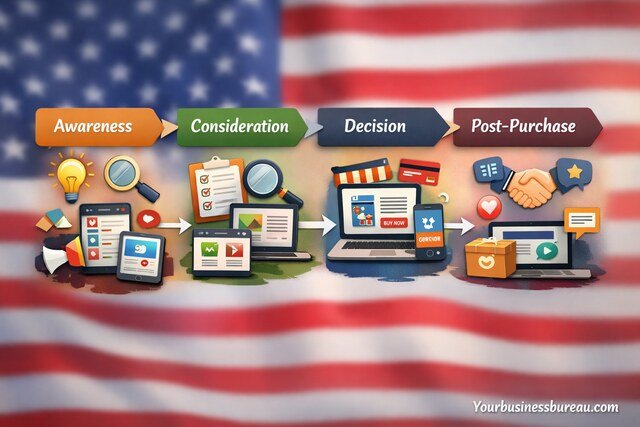
The US buyer journey involves clear, research-heavy stages: awareness, consideration, and decision. Many content creators overfocus on the awareness stage, forgetting that users need nurturing across the journey to become leads.
Most US users are not impulsive buyers when interacting with organic content. They want to verify credibility, explore options, and feel confident in their next move. When your content only addresses the “what” and not the “why” or “how,” users move on to competitors who do a better job of guiding them.
I’ve reviewed dozens of high-traffic blog posts that rank for awareness-level queries but have no internal links to deeper funnel content. No case studies, no comparison guides, no testimonials, just facts. That’s a major gap in a market where users expect layered value.
Absence of Mid-Funnel Content
Mid-funnel assets like downloadable guides, product comparisons, or industry-specific demos help convert interest into leads. Skipping this stage causes friction in decision-making.
Poor Lead Capture Strategy
US readers value personalization. Offering a generic PDF or an irrelevant webinar signup usually doesn’t resonate. Smart lead magnets tailored to the user’s industry, role, or specific challenge perform far better.
What Role Does Content Design Play in Conversion?

Layout and design directly affect how content is consumed and whether users take action. In the US, user behavior trends show a preference for clean design, mobile optimization, and easily scannable information.
I’ve seen sites with solid content fail simply because users can’t find what they’re supposed to do next. A visually cluttered page, confusing navigation, or poor CTA placement can lead users to bounce, even if the content is valuable. Content needs to breathe, guide, and convert, all through design.
Responsive layouts, consistent font usage, clear headline hierarchies, and sticky CTAs significantly improve engagement and conversions. Design should guide the user, not distract or confuse them.
Lack of Visual Hierarchy
Content blocks that blend into each other without strong visual cues reduce readability. Users in the US scan pages; headings, bold text, and white space help guide their attention.
CTA Visibility and Accessibility
A call-to-action should be visible above the fold, and it should repeat smartly throughout the content. If readers have to scroll too far to act, they usually won’t.
Why Is Emotional Relevance Key to Lead Generation?
Emotional appeal turns passive readers into engaged prospects. US consumers and professionals make decisions based on how content makes them feel: safe, understood, empowered, or curious.
From my personal experience working with service providers and SaaS platforms, the moment we added storytelling, relatable pain points, or future-oriented language into their content, leads started increasing. Facts alone don’t inspire action; emotion drives conversion.
You can’t afford to write robotic, SEO-only content. The US market demands tone, voice, and real human angles that make them want to act. Think testimonials, case narratives, and user-generated content, all of which help close the emotional loop.
Using Relatable Scenarios
Explaining problems in the context of real-life examples builds empathy. A blog post about “reducing churn” resonates more when it starts with a founder’s story about losing their first 100 customers.
Leveraging Future-Oriented Language
Using words like “imagine,” “picture this,” or “what if” opens emotional loops. The US audience responds strongly to language that helps them visualize their next success step.
How Do SEO Practices Impact Lead Generation Quality?
SEO strategies focused only on rankings often ignore what matters most: conversion intent. Many sites in the US chase volume-based keywords without asking if those terms attract buyers or just curious readers.
Keyword targeting without funnel awareness generates traffic from the wrong audience. I worked with a software brand that ranked #1 for a 40,000-volume keyword and saw zero leads. After pivoting toward long-tail, intent-driven phrases like “affordable payroll software for startups,” leads spiked.
Internal linking, metadata, content structure, and page experience must all support not just findability but also usability and persuasion. SEO is more than visibility, it’s about aligning with business goals.
Overuse of Broad Keywords
Broad terms bring unqualified traffic. Shifting to solution-focused phrases improves both traffic quality and conversions.
Missing Schema and Structured Data
Without structured data, Google may fail to present content as a rich result. That limits engagement from search features that enhance click-through and pre-qualify users.
What Is the Impact of Trust and Social Proof on US Readers?
Trust is a massive factor in the US digital environment. Content that lacks credibility cues: reviews, certifications, testimonials, or media mentions, struggles to convert visitors into leads.
Even when content is helpful, users hesitate to share personal information unless they feel safe and assured. I once audited a B2B consulting firm whose landing pages had no client logos or testimonials. Once we added those, conversion rates tripled in two months.
Trust-building isn’t optional, it’s foundational. US audiences are hyper-aware of scams and low-quality offers. They research before engaging, so proof points must be embedded into the content naturally.
Absence of Social Validation
Showcasing numbers like “trusted by 2,000+ companies” or “rated 4.8 on G2” builds immediate credibility. Social proof must be authentic and clearly visible.
Lack of Brand Storytelling
Readers engage more with companies they feel they know. Sharing the brand mission, leadership background, or team values adds warmth and builds familiarity.
What Actions Can You Take Today to Turn Traffic Into Leads?
You need to design a content system, not just write random blog posts. Start by mapping each article to a business goal and aligning it with the user journey. Make your CTAs irresistible. Test new formats and emotional hooks.
In my recent projects, I’ve helped brands in the US introduce mini-audits, chat-based lead forms, industry calculators, and personalized onboarding offers, all of which drove immediate lift in conversions without increasing traffic.
Getting leads from content is not a guessing game. It’s a strategic function of intent matching, clear messaging, strong design, and trust alignment. Treat every piece like a conversation, not a lecture.
Introduce Interactive Content
Tools like quizzes, calculators, or product recommendation engines not only engage users but also capture valuable lead data in return.
Implement Clear Conversion Paths
Each blog or landing page must have a defined user journey: from curiosity to solution to action. Navigation and internal links should naturally guide users toward taking that next step.
Key Comparison – High Traffic, Low Leads vs High Leads from Content
| Characteristic | High Traffic, Low Leads | High Leads from Content |
| Keyword Focus | Broad, Informational | Specific, Intent-Driven |
| CTA Placement | Buried or Generic | Strategic and Actionable |
| Design Clarity | Cluttered, Hard to Navigate | Clean, Guide-Oriented |
| Trust Signals | Absent or Weak | Strong Social Proof and Testimonials |
| Emotional Appeal | Factual and Flat | Story-Driven and Relatable |
| Funnel Strategy | Awareness-Only | Full Funnel Coverage |
Conclusion
Creating content that ranks is not enough, especially in a saturated US market. Your content must attract the right people, speak their language, build trust, and guide them toward a decision. I’ve worked with brands who had all the SEO checkboxes ticked but lacked emotional depth or funnel strategy and they struggled to grow. After applying the fixes discussed in this article, they started generating qualified leads without changing their traffic numbers. That’s the power of optimized content flow. Focus less on how many people you attract and more on how many you convert.
If you want to explore how we help businesses grow from the ground up, you can visit yourbusinessbureau.com to see what we offer.
FAQ’s
Your content likely doesn’t align with buyer intent, lacks strong calls-to-action, or fails to build trust. Without these conversion triggers, traffic won’t translate into business results.
Focus on specific search intent, embed emotional relevance, design intuitive CTAs, and add social proof. Use funnel-focused content to guide users from awareness to decision stages.
Not always. Often, updating existing content with better CTAs, emotional hooks, and conversion paths is enough to start seeing results.
Content types like comparison guides, case studies, webinars, and interactive tools often drive higher engagement and leads, especially when tied to actionable offers.
Yes, but only when paired with intent-driven targeting, quality UX, and conversion optimization. SEO gets the traffic, your content strategy must get the lead.


