



A CPA for small business helps owners turn messy financial activity into clear records, accurate tax filings, better cash flow decisions, and stronger long-term planning. Small businesses handle revenue, expenses, payroll, sales tax, contractor payments, financing, and compliance deadlines at the same time, so a qualified CPA can protect the business from costly mistakes while giving the owner better numbers for decisions. The right CPA does more than prepare a tax return; they help a business owner understand profit, plan for taxes, choose a structure, manage deductions, and prepare for growth.
Assess Your Small Business Accounting Needs
Start by identifying the financial tasks your business cannot manage confidently on its own. A CPA for small business should match the company’s size, industry, transaction volume, tax complexity, and growth plans. A freelance consultant with simple income needs different support than a retail shop with inventory, payroll, sales tax, and merchant processing fees.
Review your current accounting system, bookkeeping accuracy, tax deadlines, payroll setup, and financial reports. Your business should know whether it needs tax preparation, tax planning, bookkeeping review, payroll guidance, financial statements, budgeting, financing support, or advisory services.
A CPA becomes more valuable when the business has moving parts. Companies with employees need payroll tax guidance. Product businesses need inventory costing. Service businesses need revenue tracking by client or project. Online businesses need platform fee reconciliation, sales tax review, and payment processor cleanup. These details shape the scope, price, and value of CPA support.
| Business Situation | CPA Support Needed | Main Benefit |
| New business formation | Structure selection, EIN guidance, accounting setup | Cleaner start and fewer compliance errors |
| Growing revenue | Tax planning, estimated tax review, profit analysis | Better cash flow and lower surprise tax bills |
| Employees or contractors | Payroll tax guidance, W-2 and 1099 review | Reduced filing and classification risk |
| Inventory or e-commerce | Cost tracking, sales tax review, platform reconciliation | More accurate profit reporting |
| Loan or investor preparation | Financial statements, forecasts, cleanup | Stronger funding documentation |
Choose the Right CPA Service Package
Select a CPA service package based on the work your business needs throughout the year, not only during tax season. A basic package may include annual tax return preparation and limited advice. A mid-level package may include quarterly tax planning, bookkeeping review, estimated tax calculations, and financial statement review. A more advanced package may include monthly advisory meetings, budgeting, cash flow forecasting, payroll review, and entity planning.
Tax preparation records past activity, while tax planning improves future outcomes. Bookkeeping records transactions, while CPA review checks whether those transactions are categorized correctly. Advisory work connects financial numbers to pricing, hiring, debt, expansion, and profit decisions. A small business usually gets the best result when these services work together.
Your CPA package should also reflect how often decisions change. A seasonal business may need cash flow planning before slow months. A contractor may need project profitability tracking. A restaurant may need payroll, inventory, tip reporting, and sales tax support. A professional service firm may need owner compensation planning, retirement contribution strategy, and quarterly tax estimates.
Verify CPA Credentials and Small Business Experience
Confirm that the accountant is a licensed CPA and has experience with small businesses similar to yours. A CPA license signals that the professional has met state licensing requirements, passed the CPA exam, and follows professional standards.
Ask about industry experience, business size, accounting software knowledge, tax planning approach, and communication style. A CPA who works mainly with large corporations may not be the best fit for a local contractor, online seller, medical practice, salon, agency, or family-owned retail store. Industry familiarity matters because deductions, margins, revenue cycles, and compliance issues vary widely.
A strong CPA should explain financial matters in plain language. They should help you understand income, expenses, gross margin, net profit, owner draws, payroll taxes, deductible costs, depreciation, and estimated payments. The goal is not just technical accuracy. The goal is better decision-making.
Organize Financial Records Before Hiring a CPA

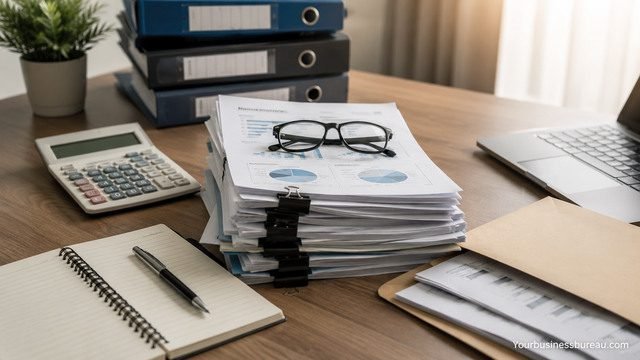
Prepare your records before meeting a CPA so the engagement starts efficiently. Gather bank statements, credit card statements, loan documents, payroll reports, prior tax returns, sales reports, receipts, invoices, contractor records, asset purchases, lease agreements, and accounting software access. Organized records reduce cleanup time and allow the CPA to focus on higher-value advice.
Accurate records support income reporting, deduction claims, payroll filings, and tax return preparation. Poor records can cause missed deductions, overstated income, late filings, and avoidable penalties.
Use separate business bank accounts and credit cards whenever possible. Mixing personal and business spending creates confusion, weakens financial reports, and increases bookkeeping costs. A CPA can still help clean up mixed records, but clean separation makes every report more reliable.
| Record Type | Examples | CPA Use |
| Income records | Sales reports, invoices, deposits, payment processor reports | Confirms gross revenue |
| Expense records | Receipts, vendor bills, subscriptions, utilities | Supports deductions |
| Payroll records | Payroll summaries, tax deposits, W-2 data | Reviews wage and tax compliance |
| Contractor records | W-9 forms, payment totals, 1099 details | Supports contractor reporting |
| Asset records | Equipment invoices, vehicle purchases, depreciation schedules | Plans deductions and asset treatment |
| Debt records | Loan agreements, interest statements, repayment schedules | Separates principal and interest |
Set Up Bookkeeping With CPA Oversight
Use bookkeeping as the foundation for every CPA service. Bookkeeping records daily transactions, while a CPA uses those records to prepare returns, review tax positions, analyze profit, and guide business decisions. Without clean bookkeeping, even the best CPA must spend time correcting errors before giving meaningful advice.
Your bookkeeping system should categorize revenue, cost of goods sold, operating expenses, payroll, owner payments, loan payments, taxes, and assets correctly. It should also reconcile bank and credit card accounts every month. Reconciliation confirms that recorded transactions match actual bank activity.
CPA oversight improves bookkeeping quality. A bookkeeper may handle transaction entry, but a CPA can review the chart of accounts, identify tax-sensitive categories, correct balance sheet errors, and ensure reports match tax needs. This separation works well for small businesses because it keeps daily work affordable while reserving technical review for the CPA.
Review Tax Obligations Early
Review tax obligations before deadlines arrive. A CPA for small business should help identify federal, state, and local taxes that apply to your company. These may include income tax, self-employment tax, payroll tax, sales tax, franchise tax, excise tax, property tax, and estimated tax payments.
Many small business owners must pay taxes as income is earned rather than waiting until the annual return. A CPA can calculate estimated payments based on actual profit, prior-year safe harbors, owner income, withholding, and expected growth.
Tax obligations also depend on business structure. A sole proprietor reports business income differently than an S corporation, partnership, or C corporation. A CPA can explain how income flows to the owner, how payroll may apply, and how business profit affects personal tax liability.
Plan Deductions and Expense Categories
Work with your CPA to identify legitimate deductions and categorize them properly. Small businesses commonly deduct ordinary and necessary expenses such as rent, utilities, software, advertising, insurance, professional fees, office supplies, travel, business meals, vehicle costs, equipment, and employee wages. The exact treatment depends on facts, documentation, and tax rules.
A CPA helps separate deductible business expenses from personal costs. For example, a phone bill may be partly business and partly personal. A vehicle may require mileage tracking or actual expense support. A home office may need exclusive and regular business use. Equipment may be expensed, depreciated, or treated under specific tax provisions.
Good deduction planning should happen during the year. Waiting until tax season limits options because spending, payroll, retirement contributions, and entity decisions may already be locked in. A CPA can help you time purchases, document expenses, and avoid aggressive deductions that create audit risk.
Manage Payroll and Contractor Compliance
Handle payroll and contractor payments carefully because worker classification affects taxes, forms, and penalties. Employees usually require payroll withholding, employer payroll taxes, wage reporting, and W-2 forms. Contractors usually require W-9 collection, payment tracking, and possible 1099 reporting.
A CPA can review whether workers are being treated correctly. Misclassifying employees as contractors can create tax, wage, and legal problems. Payroll also affects cash flow because payroll taxes must be deposited on schedule. Late deposits can become expensive quickly.
Small businesses should also track owner compensation properly. Sole proprietors take draws, partners receive distributions or guaranteed payments, corporate owners may need wages, and S corporation shareholder-employees often require reasonable compensation. A CPA can explain the correct treatment for the business structure.
Use Financial Statements for Better Decisions
Use financial statements to run the business, not just to file taxes. The main reports are the profit and loss statement, balance sheet, and cash flow statement. Each report answers a different business question. The profit and loss statement shows revenue, expenses, and profit. The balance sheet shows assets, liabilities, and equity. The cash flow statement shows how money moves in and out of the business.
A CPA can help make these reports accurate and useful. For example, loan payments must be split between principal and interest. Inventory must be reflected correctly. Owner draws should not appear as business expenses.
These reports support pricing, hiring, financing, expansion, and cost control. A business with strong sales may still have weak cash flow. A company with high profit may still be carrying too much debt. A CPA helps connect the numbers so the owner sees the full picture.
Build a Tax Planning Calendar
Create a tax planning calendar with your CPA so deadlines do not control the business. The calendar should include bookkeeping close dates, payroll tax deadlines, sales tax filing dates, estimated tax payments, annual return deadlines, retirement contribution deadlines, license renewals, and financial review meetings.
A tax calendar reduces stress because the business knows what is due and when cash must be available. It also helps the CPA provide timely advice. For example, quarterly planning gives the CPA enough time to adjust estimated payments, review profit, and suggest year-end actions.
The calendar should include internal deadlines before official deadlines. If sales tax is due on the 20th, records should be reconciled before that date. If quarterly estimates are due in June, the CPA should review year-to-date profit before the deadline. This rhythm keeps the business proactive.
Compare CPA Fees Against Business Value
Evaluate CPA fees based on value, not only price. A low-cost tax preparer may complete a return, but a skilled CPA may prevent penalties, improve deductions, guide structure decisions, and help the owner understand profitability. The right fee depends on complexity, service frequency, cleanup needs, and advisory depth.
Common pricing models include hourly billing, fixed-fee packages, monthly retainers, and project-based pricing. Annual tax preparation may be priced separately from bookkeeping review or advisory work. Cleanup work often costs more because the CPA must correct past errors before preparing reliable reports.
Ask for a written engagement letter. It should define services, deadlines, responsibilities, fees, communication channels, and document requirements. A clear agreement protects both sides and prevents misunderstandings.
Prepare for Business Growth With CPA Guidance

Use CPA guidance before making major growth decisions. Hiring employees, opening a second location, buying equipment, taking a loan, changing structure, or expanding into new states can affect taxes, payroll, accounting, and cash flow. A CPA can model the financial impact before the business commits.
Growth often creates hidden costs. More revenue may require more inventory, more payroll, more insurance, higher software costs, and larger tax payments. A CPA helps estimate these costs and compare them with expected profit. This prevents the common problem of growing sales without growing cash.
CPA guidance also supports financing. Lenders may ask for tax returns, profit and loss statements, balance sheets, debt schedules, and forecasts. Clean accounting records make the business more credible when applying for loans or credit lines.
Protect the Business During Audits and Notices
Ask your CPA how they handle tax notices, audits, and agency correspondence. A small business may receive notices about missing forms, payment discrepancies, payroll issues, sales tax questions, or income matching. A CPA can review the notice, compare it with records, and prepare a response.
Not every notice means the business did something wrong. Some notices result from timing differences, payment posting errors, mismatched forms, or missing documentation. However, ignoring notices can lead to penalties, interest, liens, or collection action.
Good CPA support includes prevention and response. Prevention comes from accurate records, timely filings, and reasonable tax positions. Response comes from clear documentation, professional communication, and organized proof.
Review Business Structure Regularly
Review your business structure with a CPA as revenue, profit, ownership, and risk change. A sole proprietorship may be simple at the beginning, but an LLC, S corporation, partnership, or corporation may become more appropriate as the business grows. Structure affects taxes, payroll, liability separation, owner compensation, and administrative requirements.
A CPA should explain the tax impact of each structure in practical terms. For example, an S corporation may reduce certain self-employment tax exposure in some cases, but it also requires payroll, reasonable compensation, separate filings, and more formal accounting. A C corporation may fit some companies, but double taxation and retained earnings issues must be reviewed.
Structure decisions should involve both tax and legal advice. A CPA can explain tax consequences, while an attorney can address legal formation, liability, operating agreements, shareholder rights, and contracts.
Improve Cash Flow With CPA Reporting
Use CPA reporting to improve cash flow, not just profit. Cash flow measures whether the business has enough money to pay bills, payroll, taxes, debt, and owners. A profitable business can still struggle if customers pay late, inventory ties up cash, or debt payments are high.
A CPA can help build a cash flow forecast that includes expected receipts, fixed costs, variable costs, payroll, taxes, loan payments, and owner withdrawals. This forecast helps the owner prepare for slow months, seasonal demand, large purchases, and tax deadlines.
Cash flow planning also improves decision timing. A business may delay a purchase, accelerate collections, adjust payment terms, build reserves, or secure a line of credit before cash becomes tight. These choices are easier when reports are accurate and reviewed regularly.
Measure CPA Performance Each Year
Review your CPA relationship every year to confirm that the service still fits the business. A good CPA should file accurately, communicate clearly, answer questions, meet deadlines, explain tax positions, and help the owner make better financial decisions. The relationship should feel organized and useful, not rushed and confusing.
Measure performance using practical signs. Did the CPA help reduce surprises? Did they identify planning opportunities before year-end? Did they respond to questions within a reasonable time? Did they explain reports clearly? Did they coordinate with your bookkeeper or payroll provider? Did they help you understand next steps?
As the business grows, your CPA needs may change. You may need more frequent meetings, stronger advisory support, better reporting, or a specialist in your industry. The right CPA relationship should evolve with the business.
Conclusion
A CPA for small business gives owners more than tax filing support. The right CPA helps organize records, review bookkeeping, plan taxes, manage payroll issues, improve cash flow, prepare financial reports, and guide major business decisions. Small businesses face constant financial pressure, so accurate numbers and timely advice can protect profit, reduce risk, and support growth. When you choose a CPA with the right experience, clear communication, and practical planning skills, your business gains a financial partner who helps turn accounting from a burden into a decision-making advantage.
FAQ’s
CPA costs vary by business complexity, location, service package, and record quality. Simple tax preparation may cost less, while monthly advisory, payroll review, bookkeeping cleanup, and tax planning usually cost more.
Many businesses need both. A bookkeeper records transactions, while a CPA reviews financial accuracy, prepares or advises on taxes, and helps with planning.
A business should consider hiring a CPA when revenue grows, taxes become confusing, payroll begins, contractors are paid, financing is needed, or the owner wants better financial reports.
Yes, a CPA can help identify legitimate deductions, choose better timing for expenses, calculate estimated payments, review structure options, and prevent costly filing mistakes.
A CPA may not process payroll directly, but they can review payroll setup, tax treatment, owner compensation, employee classification, and payroll reports.
A simple business may meet annually, but growing businesses often benefit from quarterly or monthly meetings. Regular reviews help prevent tax surprises and improve financial decisions.


