








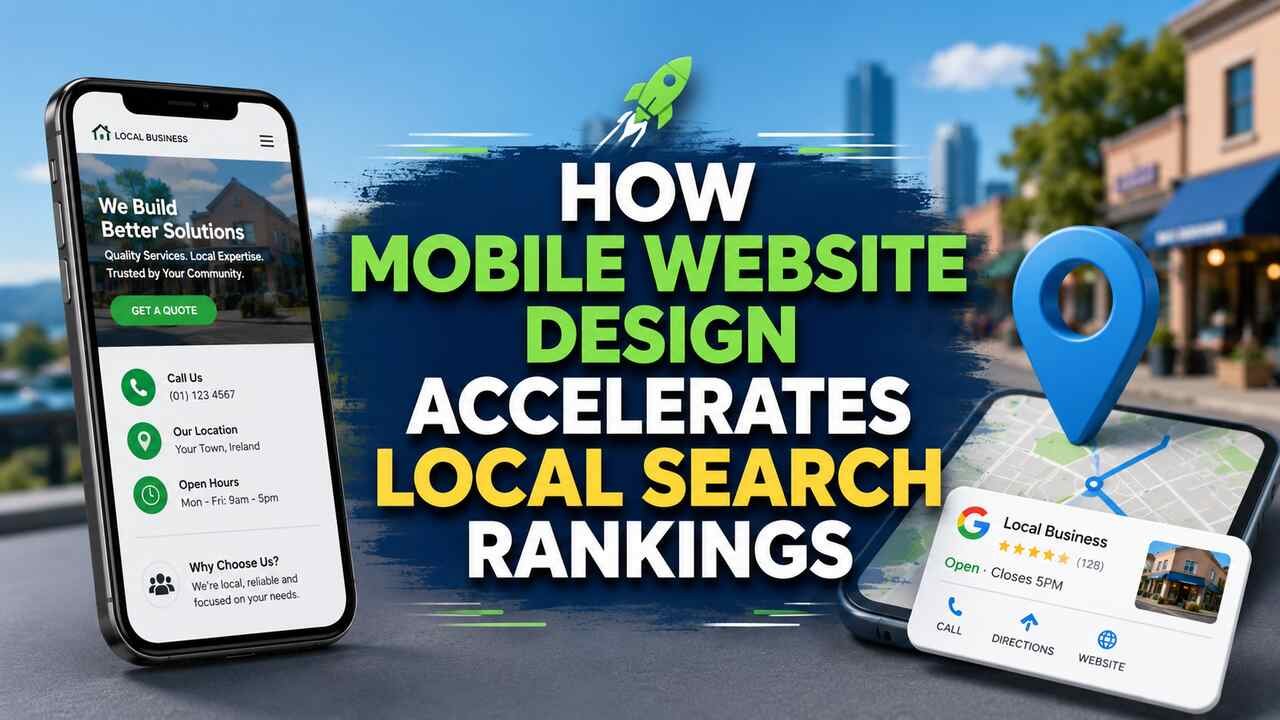
It is no secret that consumer behavior has shifted entirely to the palm of our hands. Recent digital reports indicate that approximately 97% of Australians now own a smartphone, and mobile devices accounted for roughly 68% of all online search queries across the country in 2025. For small and medium-sized businesses, this is not just a shift in browsing habits; it is a fundamental change in how local customers find and interact with regional services. Furthermore, mobile search engine results pages are becoming increasingly crowded. They now feature significantly more rich elements, such as image carousels and local map packs, than traditional desktop versions. This reality pushes traditional organic listings further down the screen, making an accelerated local ranking more vital than ever.
The Direct Link Between Mobile Experience and Foot Traffic
When a user searches for a local service on their phone, they are typically looking for an immediate solution rather than casual browsing. The relationship between precise mobile optimization and real-world sales is undeniable. According to a comprehensive industry report by Ahrefs, 76% of people who search on their smartphones for something nearby visit a business within a day. This staggering statistic highlights that technical design directly impacts local sales and physical foot traffic. A streamlined, intuitive mobile layout effectively turns a fleeting local search query into an actual paying customer walking through your front door.
Conversely, a clunky mobile foundation actively damages brand trust and inhibits word-of-mouth marketing. Current data shows that a vast majority of consumers state they will not recommend a local enterprise if its mobile website is poorly designed or difficult to navigate. Frustrated users who experience slow load times frequently engage in “pogo-sticking”, meaning they immediately bounce back to the search engine results pages to find a faster competitor. Search algorithms read this rapid, recurring exit as a highly negative behavioural signal, which can severely downgrade your hard-earned local visibility over time.
Technical Performance as a Local Ranking Factor
The mechanics behind local search are heavily reliant on how quickly and smoothly your website operates. The latest local search ranking factors highlight that a significant portion of a business’s local pack influence comes directly from on-page website signals, with a distinct emphasis on mobile responsiveness. Keeping up with these evolving metrics often requires specialized knowledge and proactive adjustments. Whether a growing brand decides to manage its local visibility internally or hire a Search Engine Optimization Agency in Sydney, refining the mobile user journey remains a non-negotiable step for capturing competitive regional traffic.
Technical speed directly influences regional revenue and overall conversion rates. Industry benchmarks continually demonstrate that mobile pages loading within one to two seconds convert up to five times better than pages taking five seconds to render. The shift towards using Interaction to Next Paint as a stable core metric means sites are now actively penalised if they take longer than a fraction of a second to respond to a user’s tap or click. Meeting these rigorous speed standards ensures that search engines will confidently present your business to nearby prospective clients.
Strategic Steps to Elevate Mobile Website Design
Improving your mobile site requires a blend of targeted technical adjustments and careful structural planning. Implementing these changes ensures that search engines can easily crawl your content while users enjoy a seamless browsing experience. By refining your broader marketing and website architecture, you can build a highly competitive local presence that effectively dominates nearby search queries. A well-structured digital footprint is essential for communicating relevance and authority to modern search algorithms.
Consider implementing the following actionable strategies to rapidly accelerate your local search rankings and improve your user experience:
- Implement Next-Gen Image Formats: Serving oversized desktop images to mobile users on cellular networks wastes bandwidth and spikes latency. Optimising visual assets into modern formats like WebP is recognised by industry professionals as one of the fastest ways to stabilise mobile performance and retain incoming local traffic.
- Build Dedicated Location Pages: Geographic site architecture acts as a massive growth lever for regional businesses. Data reveals that local companies structuring their websites with mobile-optimised, multi-location service pages drive significantly more traffic than single-location competitors.
- Optimize for Voice Search: Voice search via mobile devices represents a growing portion of all mobile queries. Consumers increasingly use conversational, long-tail prompts to find nearby regional services, making it absolutely essential to structure your written content in a natural, question-and-answer format.
- Adapt to Artificial Intelligence Summaries: The prevalence of artificial intelligence overviews appearing on local search queries continues to jump dramatically. A mobile-friendly, properly structured site allows these automated generative systems to easily parse, understand, and recommend your business directly to nearby searchers.
Accelerating your local search rankings is fundamentally tied to how well your digital presence performs on a modern smartphone. By focusing on rapid load times, intuitive touch navigation, and robust technical health, local businesses can confidently capture the growing wave of mobile-first consumers. Investing in a seamless mobile experience is the most effective way to turn digital local searches into loyal, real-world customers, ensuring your business thrives in an increasingly competitive economic landscape.


