


Highlights
- You started your business with excitement, chose the easiest path a sole proprietorship thinking it would be quicker to launch and avoid legal complexity.
- Unexpected lawsuit hits, and suddenly your personal savings and even your home are at risk because your business and personal assets aren’t legally separated.
- First big tax season arrives, and you’re shocked to find you’re paying more than you expected. You didn’t realize your structure didn’t offer any tax advantages.
- You try to bring in a partner or investor, but your current setup makes it nearly impossible to offer equity or negotiate a fair agreement.
- You attempt to switch your entity, but the paperwork, filing fees, and legal work delay your business expansion by several months.
- You realize a different structure like an LLC or S-Corp would have protected your assets, lowered your taxes, and supported growth had you chosen it from the start.
- Now you’re stuck restructuring, spending money and time just to fix what could have been set up right from day one.
- You wish someone had told you that choosing the wrong entity wasn’t just a paperwork issue it defined your risk, income, and future success.
Introduction
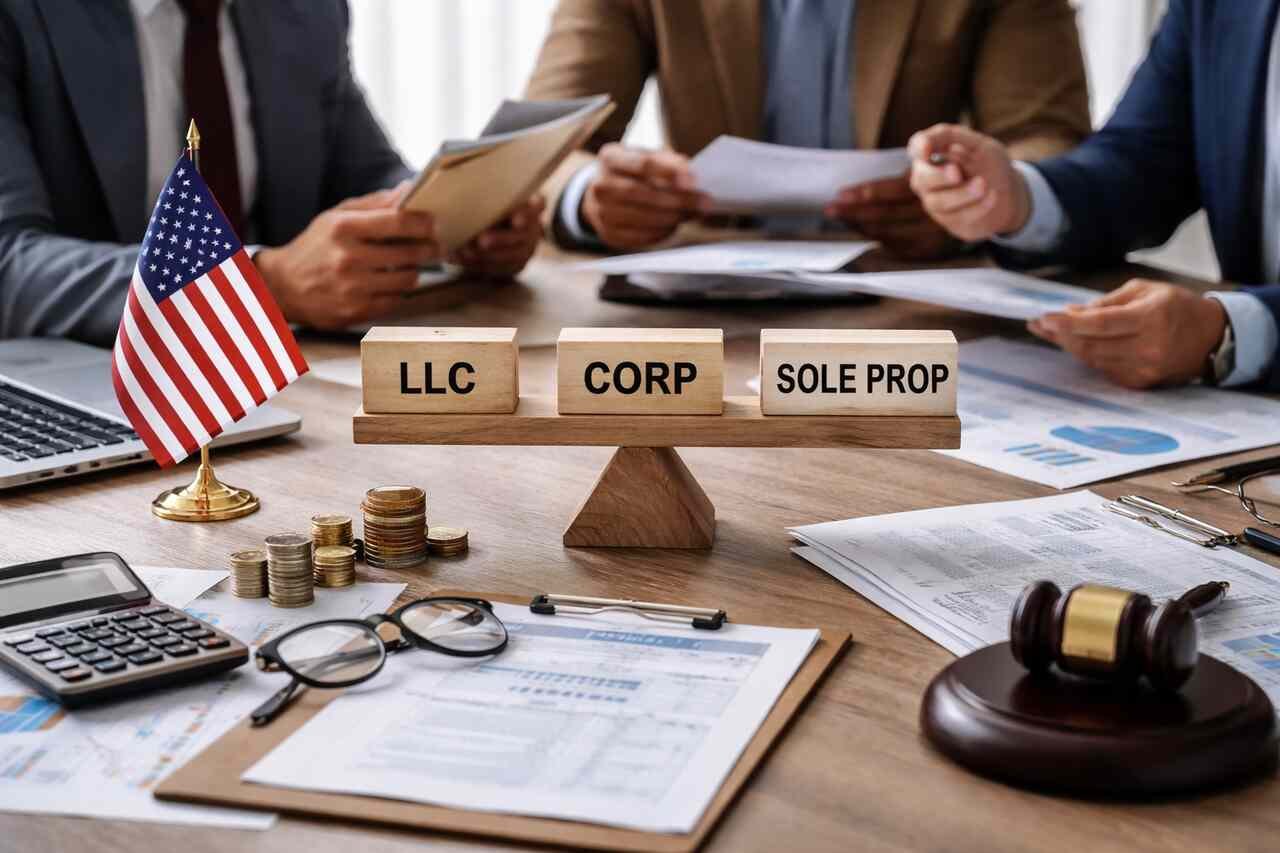
Choosing the wrong business entity in the United States often leads to long-term consequences that affect personal liability, tax responsibilities, and operational flexibility. Many entrepreneurs focus on getting their business off the ground quickly but overlook the foundational decision of legal structure. The choice between an LLC, corporation, partnership, or sole proprietorship defines how profits are taxed, how lawsuits affect personal assets, and how easy it is to bring in investors or partners. I’ve seen firsthand how startups crumble under poor decisions made at this stage. Talking directly to many founders, I’ve realized most regret not taking legal structure seriously until it’s too late. Let me help you avoid that same mistake through this article.
What Happens When You Select an Inappropriate Business Structure?
Making the wrong decision regarding business structure usually leads to legal exposure, higher taxes, and limited scalability. Most entrepreneurs underestimate the seriousness of this choice and find themselves tangled in lawsuits or paying excessive taxes. Personal assets, such as homes or savings, can be at risk if the structure doesn’t shield them properly.
Sole proprietorships are attractive for their simplicity, but they offer no legal separation between personal and business liabilities. On the other hand, corporations provide limited liability but come with complex tax filing requirements and formalities. The wrong choice means either over complicating operations or leaving yourself exposed.
In my conversations with business owners, I’ve noticed that many didn’t fully understand the implications of their structure until it cost them money or opportunities. They had to either restructure later, which is time-consuming, or live with constraints that made scaling nearly impossible.
Personal Liability Exposure
Sole proprietorships and general partnerships do not separate the owner from the business, which means personal assets can be seized during legal disputes. Choosing these structures to save on paperwork may end in severe financial loss if lawsuits arise.
Tax Burden Discrepancies
Corporations face double taxation unless structured as S-Corps, while LLCs offer pass-through taxation. Many new business owners select a corporation without knowing the tax consequences, resulting in high federal and state tax bills they could have avoided with better planning.
How Does Business Structure Affect Taxation and Revenue Distribution?


The type of legal structure determines how profits are taxed, who is responsible for reporting income, and how losses are handled. A poor decision often means overpaying taxes or mismanaging distribution of earnings, creating long-term inefficiencies.
LLCs and S-Corps offer pass-through taxation, where business income is reported on the owner’s personal tax return. C-Corps, however, face double taxation, once at the corporate level and again on dividends. Many first-time business owners assume a corporation is more legitimate, but the tax pressure can stifle cash flow.
I spoke with a client who started with a C-Corp thinking investors would take him more seriously. Three years in, he ended up restructuring into an S-Corp due to overwhelming tax burdens. A conversation with an advisor could have saved him thousands in the first year alone.
Revenue Allocation Complexities
In partnerships and multi-member LLCs, revenue distribution must follow the terms of the operating agreement. Improper structure can lead to disputes among owners when profits are not allocated fairly or equitably.
Payroll and Self-Employment Tax Issues
Sole proprietors and partners are subject to self-employment taxes. S-Corp owners can designate a portion of income as salary and the rest as distribution, potentially reducing overall tax liability when done legally and strategically.
Why Does the Choice of Business Type Influence Legal Compliance?

Each business form comes with specific compliance duties, such as filing annual reports, maintaining records, and holding meetings. Choosing a type that’s incompatible with your business’s needs leads to missed filings, fines, and loss of good standing.
Corporations require detailed record-keeping and formalities, such as annual shareholder meetings and board resolutions. Many entrepreneurs start a corporation without fully grasping these obligations, risking penalties. On the flip side, sole proprietorships and LLCs require less paperwork but offer fewer protections if improperly maintained.
I once helped a friend who forgot to renew their LLC with the state. The business was marked inactive, which jeopardized a new client contract. He had no idea the annual report was mandatory. That’s why choosing a structure based on actual bandwidth for compliance is so crucial.
State Filing Requirements
States have different filing deadlines and document requirements depending on the business type. Corporations may need bylaws and board minutes, while LLCs usually require operating agreements and fewer formal updates.
Risk of Administrative Dissolution
Failing to follow compliance rules for your chosen structure can lead to dissolution by the state. Once dissolved, contracts become voidable, and the business loses legal protections.
How Does Business Structure Impact Investment and Growth Opportunities?
Choosing the wrong business entity can limit your ability to raise capital, onboard partners, or enter new markets. Investors often require clear equity terms, formal share structures, and legal protection, which some business types cannot easily provide.
C-Corps are preferred for venture capital and institutional funding due to their formal share system and growth-oriented structure. LLCs and partnerships might suit small teams but can deter big investors due to their complexity in equity distribution and tax treatment.
A tech founder I worked with had an LLC for two years. When angel investors showed interest, he had to convert to a C-Corp in Delaware just to meet basic funding requirements. That process delayed his deal and added legal costs he hadn’t budgeted for.
Equity and Stock Issuance Limits
LLCs cannot issue stock in the traditional sense, making it difficult to attract investors who expect equity in return. Corporations can issue preferred shares and customize voting rights, making them more attractive to sophisticated investors.
Exit Strategy Constraints
Some entities make selling or merging the business more difficult. For instance, sole proprietorships cannot be sold as legal entities, only their assets. Corporations, on the other hand, can transfer ownership via share sales with minimal disruption.
What Are the Operational Limitations of an Ill-Suited Entity Type?
Every business type comes with built-in rules that affect daily operations. A mismatch between business needs and structure leads to inefficiency, confusion, and missed opportunities for growth or delegation.
Corporations demand formality in decision-making, including keeping meeting records and following bylaws. This process slows down startups that need agility. Sole proprietorships allow fast decisions but may lack the credibility or structure needed for larger projects.
I remember consulting with a service-based startup that struggled to add new partners. Their sole proprietorship structure made onboarding new owners legally complex. Had they set up an LLC initially, they would have saved months in legal rearrangement.
Delegation and Management Flexibility
LLCs offer flexible management structures, allowing members or managers to run operations. Corporations follow a strict board and officer hierarchy. Choosing the wrong format can cause bottlenecks in decision-making or confusion in authority.
Contractual Power and Business Credibility
Banks, vendors, and partners often prefer working with LLCs or corporations due to legal clarity. Sole proprietors may face rejections for loans or high-risk contracts simply due to structural limitations.
How Can You Change or Correct a Poor Entity Choice?
Changing your business entity is possible but can be complicated depending on the state and structure involved. Many businesses go through a conversion or form a new entity to correct earlier mistakes, often incurring unnecessary costs and delays.
You’ll likely need to file articles of conversion or dissolution, settle tax accounts, and notify creditors. Depending on how your business is registered, this process may involve double taxation during transition periods or legal exposure if not done properly.
I’ve walked clients through entity conversions and seen how stressful it gets. One food business owner waited too long to convert from a sole proprietorship to an LLC. By the time a legal issue came up, his personal assets were already at risk.
Conversion vs. Dissolution
Conversions allow you to keep your business identity while changing the structure. Dissolutions require shutting down and starting over, often causing disruptions in contracts and tax status.
Tax Implications During Transition
Switching entities may trigger taxable events, especially when transferring assets or changing ownership percentages. Professional tax advice is crucial to avoid penalties and unnecessary financial losses during this period.
What Should You Consider Before Choosing a Business Entity?
Making the right decision requires analyzing your long-term goals, funding strategy, tax preferences, and risk tolerance. Rushing this choice just to “get started” often backfires when your business evolves faster than your structure can support.
Ask yourself if you plan to take on investors, scale nationally, or keep it as a local operation. The more future-facing your goals, the more likely a corporation or LLC fits your needs. Simplicity may feel right in the beginning but can trap you later.
When I started helping clients, most didn’t think their business would grow fast. But six months later, they needed partnerships, tax planning, or investment. Starting with the right structure gave them the flexibility to pivot without legal or tax burdens.
Future-Proofing Your Business
Choosing a structure that supports growth, investor entry, and legal flexibility reduces the need for restructuring later. LLCs and corporations offer better tools for scalability than sole proprietorships or informal partnerships.
Cost vs. Protection Balance
Initial setup fees may feel like a burden, but they are investments in long-term safety. Weighing upfront costs against legal protection, credibility, and tax efficiency helps ensure you’re not sacrificing future success for short-term convenience.
Comparison of Business Entity Types in the United States
| Business Type | Liability Protection | Taxation Type | Investor-Friendly | Compliance Requirements |
| Sole Proprietorship | None | Personal Income | Low | Minimal |
| Partnership | Shared Personal | Pass-through | Low to Medium | Low to Medium |
| LLC | Limited | Pass-through | Medium | Moderate |
| S-Corp | Limited | Pass-through | Medium to High | Moderate to High |
| C-Corp | Limited | Double Taxation | High | High |
Conclusion
Choosing the wrong business entity in the United States often creates barriers that only surface after your business gains momentum. From tax burdens to legal risks, an inappropriate structure affects every aspect of growth, management, and investor access. I’ve seen entrepreneurs drown in paperwork or miss critical opportunities just because they picked the wrong format at the beginning. Whether you’re just starting out or revisiting your decision, take time to align your structure with your goals. Legal and tax clarity isn’t optional; it’s essential for sustainable success.
If you want to explore how we help businesses grow from the ground up, you can visit yourbusinessbureau.com to see what we offer.
FAQ’s
A sole proprietorship is the easiest to start because it doesn’t require registration beyond local permits. However, it offers no liability protection.
Yes, you can convert or dissolve and reform your business entity. The process involves legal filings and possible tax consequences, so professional guidance is recommended.
While not legally required, a lawyer or accountant can help you understand the financial and legal implications of each structure and ensure you don’t make costly mistakes.
C-Corporations are typically preferred by investors due to their stock issuance capabilities and legal protections. LLCs may work for smaller investors but are often too complex for larger deals.
LLCs and S-Corps allow pass-through taxation, meaning income is reported on your personal return. C-Corps are taxed separately, which can lead to double taxation if dividends are distributed.


