



Highlights
- Business registration requirements vary state-by-state, causing confusion for first-time founders.
- Terms like “foreign qualification” and “nexus” are often misunderstood, leading to non-compliance.
- Choosing a state like Delaware may seem ideal but could double costs if you’re operating elsewhere.
- Business structure (LLC, C-corp, etc.) affects fees, tax obligations, and registration requirements.
- Hiring remote workers or selling in different states can trigger unexpected legal obligations.
- Annual reports, franchise taxes, and permit renewals differ across states, and missing them can cost you.
- Legal consultations, state portals, and registered agent services are crucial support tools.
- Entrepreneurs must match their operational reality to their registration strategy to avoid penalties.
- I made early mistakes by following popular trends, not practical needs, which delayed growth.
- Managing state compliance correctly helps build business credibility and smoother expansion.
Introduction
Many new business owners across the United States find themselves confused when navigating the legal maze of state-level registration. Launching a company already involves complex decisions, and registering at the state level only adds to the burden. Entrepreneurs frequently struggle with understanding where and how to register, what compliance rules apply in different states, and which state offers the most advantageous legal structure. Having spoken with dozens of fellow founders, including going through this process myself, I realized how easily one can misstep legally and financially just because of misaligned state requirements or terminology. Let’s break down the core challenges and solutions for this confusing journey.
What Creates the Initial Confusion Around State Business Registration?


State-specific terminology, inconsistent processes, and varying rules generate immediate confusion. A company formed in one state may still need to register as a foreign entity in another. That creates early doubt: Where is the “right” state to register? Most entrepreneurs mistakenly assume that forming in their home state covers everything. Unfortunately, that’s not always the case, especially for online businesses or service providers operating nationally.
Another major problem arises from terminology. Some states refer to business registration as “formation,” others call it “qualification.” The term “foreign entity” doesn’t mean overseas, it just refers to doing business in a different state than the one where the business was formed. Entrepreneurs often panic or delay registration due to this misleading term, assuming it implies complex international laws.
The moment I started forming my LLC, I was bombarded by legal jargon that wasn’t explained clearly on government websites. My first mistake was believing that forming in Delaware automatically solved everything. Only after talking with other founders and attorneys did I realize that operating in California also required foreign registration, even though my LLC was already active.
Business Formation vs Foreign Qualification
Business formation means establishing the legal foundation of the company in a selected state. That involves filing the Articles of Organization or Incorporation. Most people start with their home state or a business-friendly state like Delaware or Wyoming.
Foreign qualification refers to registering your already-formed business in another state where you’re also conducting business. This step is legally required when hiring employees, opening offices, or servicing a significant customer base in a different state.
State Definitions of “Doing Business”
Each state defines “doing business” differently. For example, placing remote employees in a state may qualify as “doing business” in California, while Texas might not require foreign registration until you lease property or open a bank account locally.
Many founders overlook these differences and get fined or face tax penalties. Even offering remote services across state lines can sometimes qualify as transacting business.
How Do State Requirements Differ and Why Does That Matter?
Every state has its own definition of what it means to operate within its jurisdiction. That alone leads to conflicting advice from professionals and online articles. For example, California demands higher franchise taxes and compliance filings, while Florida offers a simpler setup with fewer ongoing forms.
Filing fees, annual report requirements, and registered agent obligations all vary. Some states require business licenses at both the state and city level, while others don’t. I remember being shocked when I discovered New York not only required an LLC formation but also a legal notice to be published in newspapers for several weeks. No one warned me about that upfront.
This discrepancy creates unnecessary risk and confusion. A business may unknowingly become non-compliant in a state just because the entrepreneur followed advice that only applied to another jurisdiction. There’s no one-size-fits-all playbook. Understanding each state’s unique obligations is essential.
Annual Reports and Franchise Taxes
Annual reporting requirements differ drastically. Delaware requires a flat annual tax, while Illinois calculates fees based on the number of shares issued. Missing a deadline can cause the company to fall out of good standing, which can damage credit lines or disqualify the business from funding opportunities.
Franchise taxes, too, vary not just in amount but in how they are calculated. Entrepreneurs often underestimate these costs when choosing a state based solely on reputation.
Registered Agent Regulations
All states require a registered agent, but rules differ. Some states allow digital-only agents; others demand physical presence and normal business hours. I once used a cheap online agent service, only to have important legal documents go unnoticed because they weren’t available during required hours.
Having a registered agent who fully understands the compliance nuances of your chosen states saves major headaches. Don’t just choose based on cost.
What Role Do Business Structures Play in State-Level Registration?
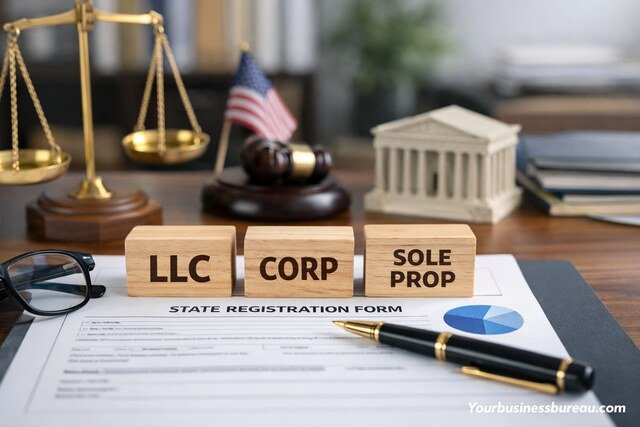
Choosing between an LLC, corporation, or sole proprietorship heavily impacts how you register at the state level. Each structure comes with different paperwork, tax treatment, and state fees. LLCs are the most popular, but some states impose steep fees or additional compliance on LLCs compared to corporations.
For example, California charges an $800 annual franchise tax for LLCs, regardless of income. Meanwhile, forming a corporation in Nevada may offer lower long-term costs, especially for businesses planning to raise capital.
During my first company formation, I defaulted to an LLC. Later, I realized a C-corp would have been better for my funding plans. Restructuring afterward was both expensive and time-consuming, something I could have avoided by understanding structure implications across states earlier.
LLCs vs Corporations Across States
LLCs offer flexibility and fewer formalities, making them ideal for small teams. However, certain states like Massachusetts impose hefty fees on LLCs, which can cancel out the benefits.
Corporations, particularly C-corps, are preferred by investors and required by many venture capitalists. States like Delaware have investor-friendly laws, but may add complexity for founders unfamiliar with corporate governance.
Sole Proprietorship and Partnerships
Sole proprietorships often bypass formal registration unless operating under a trade name. However, states still require business licenses or tax registrations, especially in regulated industries.
Partnerships must often register fictitious names and file separate tax documentation. Some states treat them similarly to corporations in terms of oversight and compliance.
Why Does Nexus Complicate State Registration for Remote Businesses?
Nexus describes the connection between a business and a state that triggers tax or registration obligations. With remote work and e-commerce on the rise, nexus laws have evolved quickly, making it easy to violate rules unintentionally.
For instance, having remote contractors in a state like Washington might establish economic nexus even without a physical office. Selling goods online with a high sales volume to a particular state could also trigger nexus, which then demands sales tax registration.
I had a remote assistant based in Pennsylvania, and suddenly I received correspondence asking why I hadn’t registered as a foreign entity there. That was a wake-up call. Hiring someone in a state creates obligations, even if you’re 2,000 miles away.
Economic Nexus and Sales Tax
Economic nexus laws require businesses to register for tax collection once they meet specific thresholds, such as 200 transactions or $100,000 in sales in a particular state. Not understanding these rules can result in back taxes, penalties, and damaged trust with customers.
Sales tax compliance software helps, but only if you know where you need to register. Many founders only discover economic nexus after being audited.
Hiring and Payroll Nexus
Employing remote staff in another state means registering for payroll taxes in that jurisdiction. That includes unemployment insurance, workers’ comp, and state income tax withholding.
Ignoring these rules puts both the company and the employee at legal risk. Always verify employment laws before onboarding remote workers.
How Can Entrepreneurs Choose the Right State to Register?
Choosing the right state depends on multiple variables like operational footprint, team location, funding strategy, and compliance capacity. Registering in Delaware is often recommended for C-corps, but LLCs may benefit more from local registration in their home state to avoid complex foreign qualifications.
Many entrepreneurs get caught up in hype. When I launched my second business, I avoided the Delaware default and formed in my actual state of operation. That saved over $1,200 in compliance costs in the first year alone.
You should evaluate where your customers live, where your team works, and where your legal or tax exposure is highest. There’s no universal best state. It’s about alignment with your business model.
Benefits of Registering in Home State
Registering in your home state often means fewer hurdles. Local laws, taxes, and processes are usually easier to navigate, and you won’t need to maintain a foreign qualification elsewhere unless you expand.
Operating locally also fosters trust. Clients often feel more comfortable with a business rooted in the same region.
Downsides of Following Trends
Forming in Delaware or Wyoming just because others do can create redundant costs. You may still need to register in your operating state, effectively doubling annual fees and compliance tasks.
Unless you’re seeking VC funding or planning for IPO-level growth, those “popular” states may not serve your best interests early on.
What Support Resources Can Help Reduce Confusion?
Reliable support is essential for navigating state-level registration. Legal counsel, specialized formation services, and state business portals provide varying levels of help. However, not all support is created equal. Automated services often skip over key details about foreign qualification or employment compliance.
I learned more from one 30-minute consultation with a business attorney than from dozens of articles online. That conversation uncovered three missed registrations that could’ve triggered tax audits if not fixed quickly.
Digital tools like compliance dashboards and tax registration software can bridge gaps, but only when combined with sound legal advice.
Legal Consultation vs DIY
Hiring a business attorney or CPA ensures your registration aligns with both legal and tax needs. They help navigate multi-state obligations, draft correct documents, and avoid future problems.
DIY services are cheaper but often miss nuanced compliance rules, especially with foreign qualifications or specific licensing needs.
Government and Secretary of State Portals
State government websites usually provide the most accurate information but are often hard to navigate. Some states, like Colorado or Texas, offer user-friendly dashboards and registration wizards.
Others, like New York, bury critical information deep in outdated PDF files. Use these resources with caution and always double-check deadlines.
How Can Entrepreneurs Avoid Long-Term Penalties or Compliance Issues?
Proactive management, calendar reminders, and state-specific compliance monitoring help prevent long-term issues. Once the business is registered, you still need to file annual reports, update agent information, and pay franchise or excise taxes.
Forgetting just one of these steps can lead to administrative dissolution or fines. I missed a simple annual report deadline once, and it cost me $250 to reinstate the business, plus lost time and credibility.
Automating reminders and maintaining a compliance checklist are simple steps that make a huge difference.
Maintaining Good Standing
Keeping your business in good standing requires active tracking of renewals, taxes, and address changes. Some states offer status checks online, while others require formal requests.
Loss of good standing can block access to business loans, partnerships, or new licenses. Prioritize this as a recurring task, not a one-time activity.
License and Permit Renewals
State, county, and city permits often need periodic renewal. These include health permits, signage licenses, and professional credentials. Missing a renewal could result in shutdowns or penalty fees.
Stay ahead by calendaring every permit’s expiration and renewal window. One overlooked permit can have ripple effects across your operations.
Common State-Level Differences for Business Registration
| State | LLC Annual Fees | Foreign Qualification Needed | Special Notes |
| Delaware | $300 | Yes | Best for C-corp funding |
| California | $800 | Yes | Franchise tax applies to all LLCs |
| Texas | $0 (initial) | Varies | No corporate income tax |
| New York | $25–$2,000 | Yes | Requires publication in newspapers |
| Florida | $138.75 | Yes | Easy online portal |
Conclusion
State-level registration challenges confuse thousands of entrepreneurs, including me during my first few launches. Legal terminology, inconsistent state rules, and misunderstanding the nexus of operations make even simple decisions feel overwhelming. By gaining clarity on where and how to register, matching your structure to your operational needs, and seeking expert guidance early, you avoid long-term problems. Always consider the specific location of your customers, employees, and resources when selecting a state, not just popular advice. Staying compliant ensures smoother growth, legal safety, and better chances for business success.
If you want to explore how we help businesses grow from the ground up, you can visit yourbusinessbureau.com to see what we offer.
FAQ’s
Yes, if you’re actively operating, hiring, or selling in that state, you must register as a foreign entity.
No. If your business operates in California, you must pay the franchise tax even if registered in another state.
You may face fines, tax penalties, and lose your right to sue in that state until registration is completed.
Not always. Delaware suits corporations seeking funding, but may create unnecessary costs for small or local businesses.
Review each state’s definition of doing business, or consult with a business attorney or CPA familiar with nexus laws.


