


Highlights
- An ATM business for sale provides immediate income potential because machines already generate transaction-based revenue
- Buyers focus on location quality because high-traffic areas increase withdrawal frequency and monthly earnings
- Investment recovery usually happens within 6 to 18 months when transaction volume remains consistent
- Operational effort stays low because management involves periodic cash loading and basic maintenance
- Scaling becomes achievable by adding more machines and securing better placement agreements
- Risk management depends on strong contracts, diversified locations, and accurate financial evaluation
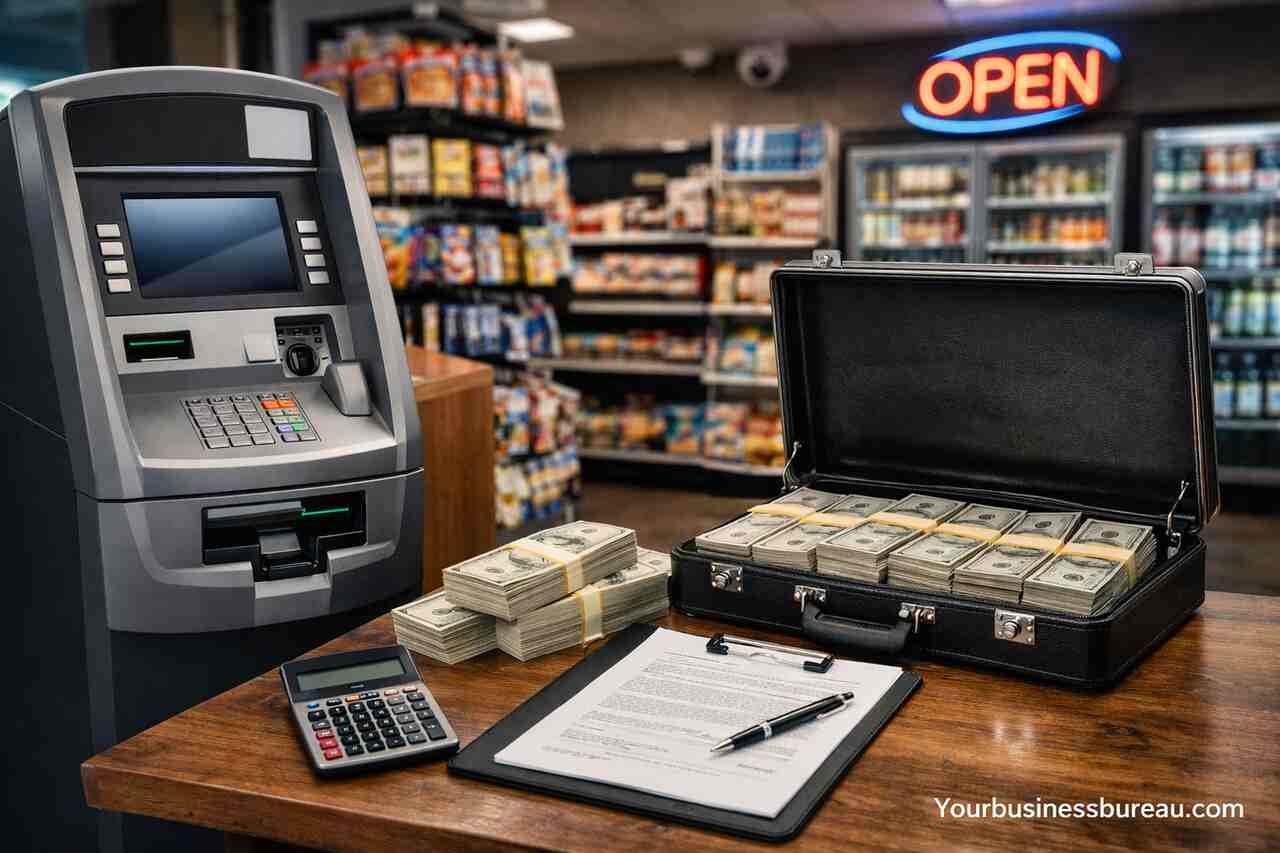
An ATM business for sale represents a ready-made opportunity for generating passive income through transaction fees, cash flow management, and strategic placement. Buyers searching for this opportunity usually want a low-maintenance business model with scalable potential and predictable returns. An ATM business operates through machines placed in high-traffic locations such as retail stores, gas stations, and shopping centers, where each withdrawal generates a surcharge fee. That surcharge fee becomes the primary revenue source, making location quality and transaction volume the most important success factors.
What Is an ATM Business for Sale and How Does It Work?
An ATM business for sale includes physical machines, placement contracts, transaction history, and existing revenue streams. A seller transfers ownership of machines and agreements, allowing the buyer to start earning from day one. That ownership structure makes ATM businesses attractive for beginners and experienced investors.
Revenue generation comes from surcharge fees paid by customers using the ATM. Each transaction generates a fixed fee, often ranging between $2 and $5, depending on location and competition. That fee becomes the primary income source, while interchange fees from banks provide additional small earnings.
Cash loading plays a central role in operations because machines must remain stocked to generate revenue. Owners either load cash themselves or hire a vault service. That operational decision affects profitability, time commitment, and risk exposure.
How Does Revenue Flow in an ATM Business?
Revenue flows through transaction surcharges and interchange fees collected per withdrawal. Each transaction contributes directly to gross income, and higher foot traffic increases earnings potential significantly.
What Assets Are Included in a Sale
Assets typically include ATM machines, location contracts, processing agreements, and historical transaction data. Buyers should evaluate each asset carefully to understand actual earning potential.
Why Should You Consider Buying an ATM Business?

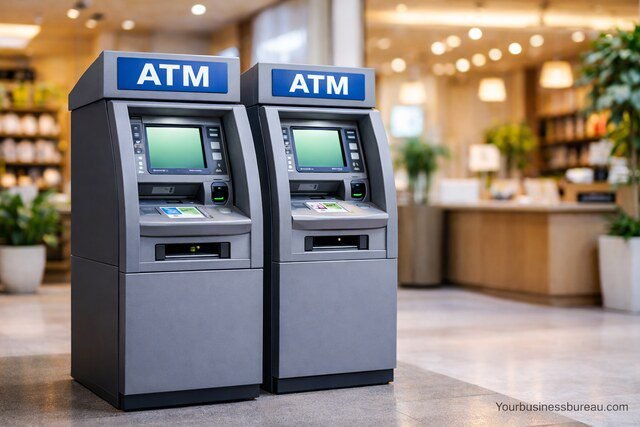
An ATM business offers passive income potential with relatively low operational complexity. Investors often prefer this model because daily involvement remains minimal compared to traditional businesses like restaurants or retail stores.
Scalability becomes a major advantage because adding more machines increases income without proportionally increasing workload. One machine generates limited income, but a network of machines can create substantial monthly cash flow.
Flexibility also plays a role because owners can operate part-time or full-time. I personally find this aspect appealing because it allows you to start small and expand gradually without overwhelming risk.
What Are the Key Benefits for Beginners?
Beginners benefit from low entry barriers, simple operations, and predictable income streams. Learning curve remains manageable compared to other investment opportunities.
How Does Passive Income Work in Practice?
Passive income develops once machines are installed and running consistently. Maintenance and cash loading require occasional effort, but daily operations remain largely automated.
What Should You Evaluate Before Buying an ATM Business?
Due diligence determines whether an ATM business becomes profitable or problematic. Buyers must evaluate transaction volume, location quality, and contract stability before making a decision.
Location analysis becomes the most critical factor because foot traffic directly affects transaction frequency. A machine in a busy convenience store generates far more income than one in a quiet office building.
Financial records provide insight into actual performance. Sellers may present optimistic projections, but verified transaction reports reveal the real earning potential. I always recommend asking for at least six months of data before proceeding.
How Important Is Location in ATM Profitability?
Location determines transaction volume, which directly affects revenue. High-traffic areas such as gas stations and nightlife venues perform significantly better than low-traffic locations.
What Financial Documents Should You Review?
Buyers should review transaction reports, maintenance costs, surcharge rates, and processing fees. These documents help calculate net profit accurately.
How Much Does an ATM Business for Sale Cost?

Pricing varies based on machine count, location quality, and monthly revenue. A single ATM machine may cost between $2,000 and $10,000, while a small network can reach tens of thousands.
Profitability influences valuation more than equipment cost. A machine generating $500 monthly holds more value than a newer machine with lower transaction volume. Buyers should focus on income rather than just hardware.
Return on investment typically ranges between 6 months and 24 months depending on performance. Personally, I always look for opportunities where the payback period stays under one year, as that reduces risk significantly.
| Factor | Impact on Price | Explanation |
| Location Quality | High | Busy areas increase value |
| Monthly Transactions | High | More transactions mean higher income |
| Machine Condition | Medium | Newer machines reduce maintenance costs |
| Contract Length | High | Long-term agreements provide stability |
What Is a Good ROI for an ATM Business?
A good ROI usually falls within 12 months. Faster recovery periods indicate strong profitability and lower investment risk.
Are There Hidden Costs to Consider?
Hidden costs include maintenance, processing fees, and cash loading expenses. Ignoring these costs can reduce actual profit margins significantly.
How Do You Operate and Manage an ATM Business?
Operation involves cash loading, monitoring transactions, and ensuring machine functionality. Many systems provide remote monitoring, allowing owners to track performance without visiting each location frequently.
Maintenance includes fixing hardware issues, updating software, and replacing parts when needed. Reliable machines reduce downtime, which directly impacts revenue.
Time commitment remains relatively low, which makes this business model attractive. From my experience perspective, managing a few machines feels manageable even alongside a full-time job.
How Often Should You Refill an ATM?
Refill frequency depends on transaction volume. High-traffic machines may require weekly refills, while low-traffic machines may need biweekly servicing.
Can You Outsource ATM Management?
Owners can outsource cash loading and maintenance to professional services. Outsourcing increases costs but reduces personal involvement.
What Are the Risks of Buying an ATM Business?
Risk exists in every investment, and ATM businesses are no exception. Location loss represents one of the biggest risks because removing a machine from a high-performing site can reduce income instantly.
Cash handling introduces security risks, including theft or mismanagement. Proper procedures and insurance reduce exposure to these risks.
Market competition also affects profitability. If multiple ATMs exist in one area, transaction volume may decrease. I always suggest evaluating nearby machines before purchasing any business.
How Can You Minimize Financial Risk?
Risk reduction comes from diversification, strong contracts, and careful location selection. Multiple machines spread across different locations provide stability.
What Happens If a Location Contract Ends?
Ending contracts may require relocating machines. New locations may not perform as well, which can impact income.
How Can You Grow and Scale an ATM Business?
Growth depends on acquiring new locations, increasing transaction volume, and optimizing surcharge pricing. Expansion strategy should focus on high-traffic areas with minimal competition.
Partnerships with business owners help secure better placements. Strong relationships often lead to additional opportunities for installing more machines.
Scaling becomes easier after understanding operations. From my perspective, growth feels natural once you see consistent income from initial machines, and confidence builds with each successful placement.
| Growth Strategy | Benefit | Outcome |
| Add More Machines | Increased revenue | Higher monthly income |
| Improve Locations | Better traffic | More transactions |
| Optimize Fees | Higher margins | Increased profit per transaction |
| Partner with Businesses | Exclusive placement | Stable long-term income |
How Many ATMs Do You Need to Scale?
Scaling often begins with 5 to 10 machines. Larger networks generate more consistent income and reduce dependency on single locations.
Is Expansion Better Than Optimization?
Expansion increases total revenue, while optimization improves efficiency. A balanced approach delivers the best long-term results.
Conclusion
An ATM business for sale provides a practical path toward passive income with manageable risk and scalable potential. Success depends on understanding location dynamics, evaluating financial data, and maintaining operational efficiency. Buyers who focus on transaction volume, contract stability, and cost control often achieve consistent returns. From a real-world perspective, starting small and expanding gradually creates confidence while minimizing financial exposure.
If you want to explore how we help businesses grow from the ground up, you can visit yourbusinessbureau.com to see what we offer.
FAQ’s
Profitability depends on location and transaction volume. High-traffic placements generate consistent income through surcharge fees.
Technical knowledge requirements remain minimal because most machines include user-friendly systems and support services.
Investment recovery typically takes between 6 and 18 months depending on performance.
Part-time operation remains possible because daily involvement is limited to maintenance and cash loading.
Location quality remains the most important factor because transaction volume directly impacts revenue.


