



Highlights
- Jeans can fit business casual standards when color, fit, and styling align with professional expectations. Dark-wash denim, structured silhouettes, and clean finishes create a polished appearance that blends with office environments.
- Workplace culture determines acceptability. Corporate offices often limit denim use, while creative and tech environments encourage flexibility. Observing colleagues and understanding internal expectations helps guide clothing decisions.
- Styling defines professionalism more than the garment itself. Pairing jeans with blazers, button-down shirts, and formal footwear elevates the overall look and communicates intention.
- Fabric quality influences perception. Premium denim with consistent color and durable stitching appears more refined than low-quality alternatives.
- Avoid distressed or overly casual styles. Rips, fading, and excessive embellishments reduce suitability for professional settings.
- Footwear and accessories complete the outfit. Leather shoes, minimal accessories, and neutral tones reinforce a business casual appearance.
- Jeans offer comfort and versatility but require thoughtful coordination to maintain credibility in the workplace.
A clear understanding of whether jeans fit into business casual attire helps professionals make confident wardrobe decisions without second-guessing their appearance. Many workplaces continue shifting toward flexible dress codes, which creates both opportunity and confusion around denim usage. You may have wondered before stepping out the door whether your jeans look polished enough or too relaxed for the office. That exact question drives this guide, where I walk you through practical insights, real-life experiences, and styling strategies so you can confidently decide when and how jeans work in a professional setting.
What Defines Business Casual in Modern Workplaces?
Business casual describes a dress code that balances professionalism with comfort, allowing flexibility without sacrificing a polished appearance. Modern workplaces increasingly adopt relaxed standards, which makes denim more acceptable when styled correctly. Professional environments evaluate clothing based on neatness, coordination, and appropriateness rather than strict formal rules.
Workplace culture influences how business casual is interpreted. Corporate offices often maintain stricter guidelines compared to startups or creative industries, where jeans may be a daily norm. Industry expectations, company values, and leadership preferences collectively shape acceptable attire. Understanding these dynamics helps individuals make smarter wardrobe decisions.
From personal experience, conversations with colleagues across different industries reveal one pattern: perception matters more than the clothing item itself. A clean, tailored look with intentional styling communicates professionalism even when wearing jeans. That understanding changes how you approach dressing every day.
How Do Workplace Cultures Affect Clothing Choices?
Workplace culture defines acceptable clothing by setting visible and invisible standards. Conservative environments emphasize structure and tradition, while modern offices prioritize comfort and individuality.
Why Does Perception Matter in Professional Dressing?
Perception influences how colleagues and managers interpret professionalism. A thoughtful outfit signals reliability, attention to detail, and respect for the work environment.
Can Jeans Be Considered Business Casual?
Jeans qualify as business casual when they meet specific criteria such as clean appearance, structured fit, and neutral color tones. Dark denim, especially in black or deep indigo, aligns closely with traditional trousers and blends seamlessly into professional outfits. Light washes or distressed styles often appear too relaxed for formal office settings.
Fit plays a crucial role in determining suitability. Slim or straight-leg jeans offer a polished silhouette, while overly tight or baggy styles disrupt the professional balance. Proper fit enhances confidence and ensures consistency with workplace expectations.
From my own experience, wearing dark jeans to meetings with a blazer and formal shoes consistently resulted in positive feedback. That reaction confirmed that styling choices, rather than the garment itself, determine acceptability. You can make jeans work, but intention must guide every detail.
What Types of Jeans Are Acceptable for Work?
Acceptable jeans include dark-wash, non-distressed, and well-fitted styles that resemble formal trousers in structure and tone.
What Types of Jeans Should Be Avoided?
Avoid ripped, faded, or overly embellished jeans because these styles communicate casualness rather than professionalism.
How Should Jeans Be Styled for a Business Casual Look?

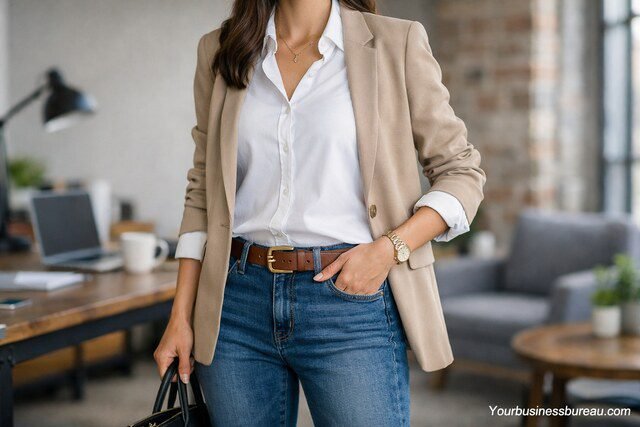
Styling transforms jeans from casual wear into a business-ready outfit. Pairing jeans with structured garments such as blazers, tailored shirts, or knit sweaters elevates the overall look. Footwear choices like loafers, heels, or polished boots further reinforce professionalism.
Color coordination enhances visual harmony. Neutral tones such as white, navy, beige, and gray complement denim and create a refined appearance. Accessories like belts and watches add subtle sophistication without overwhelming the outfit.
When I started experimenting with styling, I noticed that small changes made a huge difference. Switching sneakers for leather shoes instantly elevated my look. That realization helped me understand that business casual is about composition rather than individual pieces.
Which Tops Work Best With Jeans in Professional Settings?
Button-down shirts, blouses, and structured sweaters pair effectively with jeans to create a balanced and professional outfit.
What Footwear Complements Jeans in Business Casual Attire?
Loafers, ankle boots, and dress shoes provide a polished finish that aligns jeans with workplace expectations.
What Role Does Fabric and Quality Play in Professional Denim?
Fabric quality determines how jeans appear in a professional environment. Premium denim with a smooth finish and minimal texture resembles formal fabric, making it suitable for business casual settings. Low-quality denim often appears faded or uneven, which reduces its professional appeal.
Construction and stitching contribute to durability and aesthetics. Clean seams, reinforced stitching, and consistent color enhance the overall presentation. High-quality jeans maintain their shape throughout the day, ensuring a neat appearance.
In my experience, investing in fewer but higher-quality jeans proved more effective than owning multiple cheaper options. Quality pieces consistently delivered a sharper look, which boosted confidence during meetings and presentations.
Why is Premium Denim Preferred in Workplaces?
Premium denim offers a refined texture and consistent color, which aligns with professional dress standards.
How Can You Identify High-quality Jeans?
High-quality jeans feature strong stitching, even dye, durable fabric, and a structured fit that holds shape over time.
Are Jeans Suitable for All Professional Environments?
Not all workplaces accept jeans as business casual. Traditional industries such as finance, law, and corporate consulting often maintain stricter dress codes that prioritize formal attire. In contrast, tech companies, creative agencies, and startups frequently embrace denim as part of everyday wear.
Understanding workplace expectations requires observation and communication. Reviewing company policies, observing colleagues, and asking supervisors helps clarify acceptable standards. Adapting to these expectations demonstrates professionalism and awareness.
I have personally navigated different workplace environments, and each setting required a different approach. In a corporate office, I reserved jeans for casual Fridays, while in a startup, jeans became a daily staple. Flexibility helped me fit seamlessly into each environment.
Which Industries Commonly Allow Jeans?
Creative, tech, and startup industries often accept jeans as part of business casual attire.
Which Industries Restrict Jeans Usage?
Finance, law, and corporate sectors usually maintain stricter dress codes that limit or prohibit jeans.
What Are the Advantages and Limitations of Wearing Jeans to Work?
Jeans offer comfort, versatility, and ease of styling, which makes them appealing for daily wear. Durable fabric ensures longevity, while adaptable designs allow pairing with various professional pieces. These advantages contribute to convenience and confidence.
Limitations include potential misinterpretation of professionalism and lack of suitability in formal settings. Poor styling or inappropriate choices can negatively impact perception. Awareness of these limitations helps maintain balance.
From personal conversations and experiences, many professionals appreciate jeans for comfort but remain cautious about when and how to wear them. That balanced approach ensures both comfort and credibility in the workplace.
What Are the Main Benefits of Wearing Jeans at Work?
Comfort, durability, and versatility make jeans a practical choice for business casual environments.
What Are the Potential Drawbacks?
Improper styling or unsuitable workplace contexts can make jeans appear unprofessional.
How Will the Role of Jeans in Business Casual Evolve?

Workplace dress codes continue to evolve toward flexibility and inclusivity. Remote work trends and changing cultural norms encourage relaxed attire, which increases acceptance of jeans in professional settings. Future workplaces will likely prioritize comfort without compromising professionalism.
Fashion trends also influence workplace clothing. Designers increasingly create denim styles that mimic formal trousers, bridging the gap between casual and professional wear. These innovations expand the role of jeans in business casual wardrobes.
From what I have observed, conversations about dress codes are shifting toward individuality and practicality. You can expect jeans to become even more integrated into professional attire, provided styling remains intentional and context-aware.
How Are Workplace Trends Influencing Dress Codes?
Modern workplaces emphasize comfort and flexibility, which supports the inclusion of jeans in business casual attire.
Will Jeans Replace Traditional Office Wear?
Jeans will complement rather than replace traditional attire, offering an alternative that balances comfort and professionalism.
Jeans vs Traditional Business Casual Pants
| Feature | Jeans | Traditional Pants |
| Comfort | High | Moderate |
| Formal Appearance | Medium | High |
| Versatility | High | Medium |
| Workplace Acceptance | Varies | Consistent |
| Maintenance | Easy | Moderate |
Styling Guide Table for Business Casual Jeans
| Element | Recommendation |
| Color | Dark wash or black |
| Fit | Slim or straight |
| Top | Button-down or blazer |
| Shoes | Loafers or boots |
| Accessories | Minimal and refined |
Conclusion
Jeans can absolutely fit into a business casual wardrobe when chosen and styled thoughtfully. Fabric quality, fit, color, and workplace culture collectively determine suitability. A strategic approach allows you to balance comfort with professionalism while adapting to evolving dress codes.
Personal experience and real-world observations confirm that confidence and presentation matter more than the garment itself. When you dress with intention, jeans become a powerful and versatile option in modern professional environments.
If you want to explore how we help businesses grow from the ground up, you can visit yourbusinessbureau.com to see what we offer.
FAQ’s
Black jeans often qualify as business casual because their color closely resembles formal trousers and maintains a polished appearance.
Jeans are generally not recommended for interviews unless the company explicitly promotes a casual dress culture.
Skinny jeans can be appropriate if they are not overly tight and are styled with professional pieces.
Jeans paired with a blazer create a balanced business casual outfit that combines structure with comfort.
Choose dark colors, ensure proper fit, avoid distressing, and pair with structured clothing and polished footwear.


