



Highlights
- Many businesses fail because they chase viral trends without real market need.
- Trend-based ideas often lack customer retention, scalability, or long-term relevance.
- US consumer behavior is fast-moving, making hype-based businesses unstable.
- Dropshipping imitators, subscription boxes, and viral product stores collapse quickly.
- Social media can mislead founders with vanity metrics instead of real demand.
- Timing plays a crucial role joining a trend too late guarantees failure.
- Sustainable models grow by solving problems, not just riding temporary attention.
- Entrepreneurs should focus on systems, repeatable value, and long-term trust.
- Avoiding trend traps starts with validation, differentiation, and deep customer insight.
Introduction
Many people enter the business world by jumping on what’s currently hot, expecting to profit from the trend before it fades. In my experience helping early-stage entrepreneurs, I’ve seen firsthand how trend-driven business ideas can look shiny on the outside but collapse rapidly under market pressure. These ideas often lack staying power, sustainable value, or long-term demand. They attract fast interest due to viral attention, celebrity endorsement, or emerging tech buzz, but fail to establish repeatable customer engagement or scalability.
In the US, where consumer behavior shifts quickly and market saturation happens overnight, short-lived business ideas can result in wasted resources, broken dreams, and financial loss. Many trend-chasers miss the deeper structural needs of markets, mistaking visibility for viability. For a business to survive in a competitive and fast-paced economy, it needs more than hype; it needs timing, operational depth, and long-term relevance.
Why Do Trend-Driven Businesses Fail So Quickly in the US?

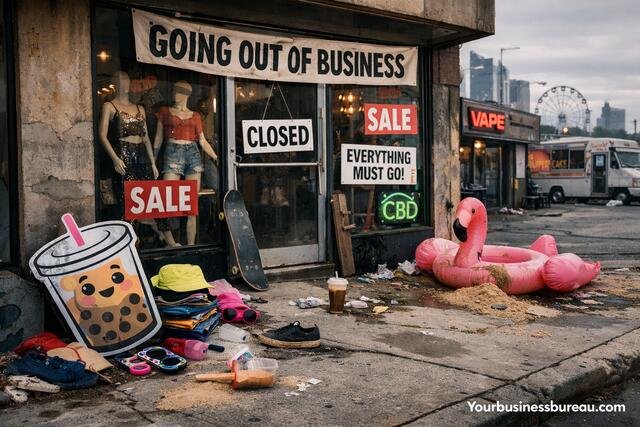
Failure of trendy business ideas stems from a lack of foundational stability, long-term strategy, and customer loyalty. In my consultations, I’ve seen entrepreneurs rush to market without validating need, assuming that popularity equals profitability. This usually leads to rapid launches but eve faster declines.
Short-term attention often creates a false sense of success. Many ventures mistake social media buzz, influencer marketing, or viral product launches for sustainable growth. However, once attention shifts elsewhere, the sales funnel dries up and customer engagement disappears. Popularity doesn’t guarantee retention or revenue consistency.
Saturated competition is another fatal factor. Trend-chasing invites copycats. In industries like health fads, NFTs, or fast fashion, dozens of lookalike businesses crowd the same space, leading to pricing wars and race-to-the-bottom strategies. Businesses collapse under margin pressure and customer fatigue.
Oversaturated Niches
Overcrowded markets make it impossible to differentiate. Take CBD products or charcoal detox drinks for example. Within months, hundreds of online stores emerged, leaving customers confused and businesses with inventory they couldn’t move.
Lack of Repeatable Demand
Trendy products rarely generate recurring purchases. Items like fidget spinners, adult coloring books, or viral TikTok gadgets sell once and disappear. Without recurring transactions, businesses can’t forecast or plan ahead, leading to a quick downfall.
What Are the Most Common Trend-Driven Ventures That Collapse?
In recent years, I’ve observed specific patterns across certain industries that tend to attract trend-chasing entrepreneurs. These ventures initially seem profitable but often lead to rapid burnout or shutdown within 12-18 months.
Subscription boxes for overly niche products, copycat dropshipping stores, and fast-fashion microbrands make up a large portion of these ventures. While some may survive the wave, most fold under performance anxiety and market shifts. Entrepreneurs often underestimate the backend logistics, customer retention strategy, and overhead cost.
Mobile apps centered around temporary trends also fall into this category. Whether it’s gamified fitness trackers or social networking clones, most fail to capture user interest beyond the initial novelty phase. User acquisition becomes expensive, and retention becomes almost impossible without fresh relevance.
Dropshipping Imitators
Many online stores copy each other using the same suppliers, descriptions, and ads. When the base idea isn’t unique or improved upon, customers notice and stop buying. Algorithms also penalize recycled content, making visibility harder.
Niche Subscription Boxes
Boxes for pet fashion, artisan hot sauces, or novelty socks can sound fun at first. However, they usually suffer from limited product variety, shipping challenges, and churn rates over 70% after three months.
How Do Social Media Trends Influence Poor Business Decisions?
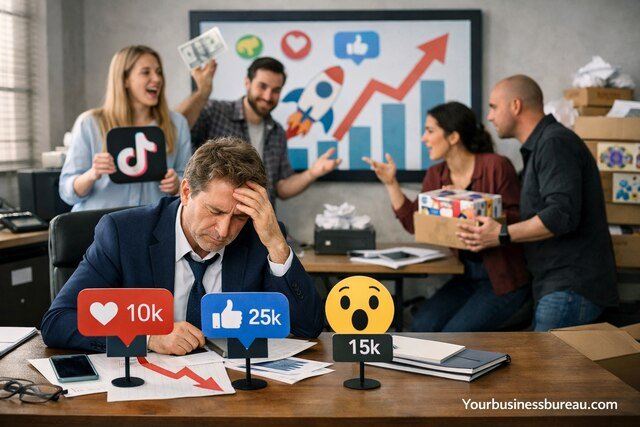
Platforms like TikTok, Instagram, and YouTube Shorts can be both a blessing and a trap. I’ve watched clients make impulsive business moves because a product went viral. These platforms reward short-term visibility, but rarely support long-term loyalty or quality discovery.
Algorithms favor the newest and most reactive content, meaning a brand that shines today could be buried tomorrow. Relying solely on a viral moment puts founders at the mercy of tech they don’t control. Monetizing attention isn’t the same as building a business.
Social media often distorts demand. People like, share, or comment for entertainment, not always intent to purchase. This illusion leads founders to over-invest in inventory, ads, or influencers based on vanity metrics instead of actual revenue behavior.
Vanity Metrics Trap
Engagement doesn’t mean intent. A video can hit 5 million views without driving any sales. When business owners confuse likes with demand, they miscalculate market size and end up overleveraged.
Influencer-Led Launches
Partnering with an influencer might bring an instant sales spike. But once the promotion ends, sales collapse. Businesses that lack internal momentum cannot survive beyond a single paid post.
What Role Does Consumer Behavior in the US Play in These Collapses?
American consumers are fast-moving, highly experimental, and quick to abandon. I’ve noticed they love to try the latest thing but only once. Without strong utility or daily relevance, they won’t form habits or loyalty.
Consumers in the US are also extremely comparison-driven. They read reviews, hunt for deals, and switch brands easily. Trends may attract attention, but sustaining interest requires more than novelty. Founders who fail to build a strong brand narrative get left behind.
Impulse buying is high, especially on platforms like TikTok Shop or Instagram ads. But so is buyer’s remorse. Refunds, returns, and negative reviews come fast when quality doesn’t match the hype. This drives up costs and reduces margins significantly.
Low Switching Costs
Customers have no reason to stay loyal to a brand that offers trendy items. Competitors can offer the same product at a lower price, causing customers to jump ship instantly. Retention strategies fall flat without long-term differentiation.
Constant Comparison Culture
US consumers actively compare product reviews, unboxing videos, and Reddit threads before committing. A trendy product may seem promising but can quickly be abandoned if users find something slightly better or cheaper.
How Does Timing Affect the Success or Failure of Trend-Based Ideas?
Timing is everything when it comes to trends. Businesses that enter too late miss the wave; those that enter too early have no audience. I’ve personally advised founders who launched just as the market became saturated or interest declined, leading to wasted investment.
Trends move in cycles, and missing the peak means losing momentum. By the time most people notice a trend and start building around it, the early adopters have already moved on. Businesses built on what was hot six months ago are already outdated.
Even the right idea launched at the wrong moment will collapse. For example, many NFT art platforms launched after the crypto crash of 2022. Even with solid design, they couldn’t overcome public fatigue and skepticism.
Late Entry Problem
Joining a trend after it’s hit mainstream saturation means competing with larger, more established players. Small businesses cannot out-advertise or out-scale early adopters who had time to refine their model.
Misreading Peak Interest
Assuming a trend has longevity just because it’s still on the explore page can be misleading. Public attention often peaks weeks before data shows decline. By then, you’ve invested in something that’s losing heat.
Can Sustainable Models Be Built from Trends?
Yes, but only if the business goes beyond the trend and anchors itself in long-term value. I always recommend founders think of the trend as a gateway, not the core. Using a trend to attract attention is fine as long as deeper infrastructure exists.
Sustainable models use the trend as a starting point and evolve based on customer behavior. For example, a fitness app that started with a trending challenge can shift into community building and coaching. That’s how businesses transition from trend-based to evergreen.
Strong backend systems, brand identity, and value ladders are key. Without them, even good ideas lose relevance. Businesses that succeed after the hype ends are those that find repeatable use cases, develop loyal users, and offer layered value.
Evolution of Offer
Businesses must build multiple layers of offerings. A viral skincare brand can survive the trend by introducing expert routines, content hubs, and personalized consultations keeping users engaged long after the buzz fades.
Brand Loyalty Strategy
Post-trend success comes from building trust. Businesses that offer consistent quality, strong customer support, and ethical practices earn loyalty. Trust keeps users returning even after the trend dies.
How Can Entrepreneurs Avoid Falling into the Trend Trap?
Entrepreneurs must develop discipline around validation, differentiation, and operational depth. From my own projects and those I’ve helped launch, I’ve learned that resisting urgency is key. Rushed launches almost always fail because they skip testing, planning, or customer insight.
Rather than asking “What’s trending?” ask “What problem is not being solved well?” Trends can be an entry point but real opportunity lies in solving consistent pain points. The best business ideas evolve out of curiosity and feedback, not viral posts.
Market research, long-term thinking, and sustainable growth strategies will always outlast any momentary buzz. Founders should focus on systems, not stunts. Systems generate results even when attention fades; stunts depend entirely on attention to survive.
Idea Validation Framework
Before launching, test the offer with a small group. Ask for honest feedback, watch behavior, and measure retention. Trends are flashy, but real business is boring and that’s where the gold lies.
Customer Problem Focus
Businesses that survive ask, “What real need am I meeting?” Trends distract, but needs endure. Solve something meaningful, and customers will stay no matter how the algorithm changes.
Comparison of Trend-Based Businesses vs Sustainable Models
| Feature | Trend-Based Businesses | Sustainable Business Models |
| Customer Retention | Very Low | High with loyalty strategies |
| Market Entry Time | Reactive to external buzz | Proactive based on market need |
| Sales Cycle | Short and impulsive | Long-term, relationship-focused |
| Scalability | Fragile under competition | Designed for growth |
| Risk of Collapse | Extremely High | Low with strong foundation |
| Revenue Consistency | Spiky and unpredictable | Predictable and repeatable |
Conclusion
Trend-chasing feels exciting, but it rarely leads to lasting success. I’ve worked with countless entrepreneurs who regretted not focusing on fundamentals earlier. The most successful ones slowed down, studied their customer, and built real solutions.
In the US, where competition is ruthless and consumer interest is fleeting, the only businesses that survive are those rooted in real value, not viral moments. Focus on quality, retention, and brand depth. Trends may come and go, but meaningful business lasts.
If you want to explore how we help businesses grow from the ground up, you can visit yourbusinessbureau.com to see what we offer.
FAQ’s
Examples include fidget spinner companies, NFT marketplaces post-2022, CBD-infused snack startups, and hyper-niche subscription boxes like beard glitter kits.
Most last between 6 to 18 months before sales decline sharply due to market fatigue, saturation, or shifting consumer interest.
Yes, if the founder shifts focus from the hype to solving a broader, recurring problem and invests in long-term value systems.
Social media can test attention but not loyalty. Use it to gather signals, but validate through direct feedback, usage, and repeat purchases.
Focus on underserved markets, long-term behavioral patterns, or emerging problems that don’t yet have scalable solutions. Longevity comes from depth, not speed.


