









Digital marketing in 2025 is driven by personalization, artificial intelligence, creator partnerships, immersive experiences, and community-centered storytelling. Brands no longer compete only through products or pricing. They compete through attention, emotional relevance, and audience participation. Consumers expect interactive experiences across social media, search engines, streaming platforms, retail apps, and connected devices. Businesses that fail to create memorable campaigns often struggle to maintain engagement in crowded markets.
The most successful innovative marketing campaigns in 2025 combine data-driven targeting with authentic communication. Companies use short-form video, AI-generated recommendations, live commerce, augmented reality, and user-generated content to increase conversions and improve retention. At the same time, trust, transparency, and sustainability remain central to long-term brand equity.
Build Hyper-Personalized AI Campaign Experiences
AI-powered personalization became one of the strongest competitive advantages in 2025. Leading brands moved beyond basic email segmentation and began delivering predictive customer journeys across websites, mobile applications, search ads, and social platforms. Companies used behavioral analytics, purchase history, and real-time engagement signals to customize product recommendations and campaign messaging.
Streaming platforms, fashion retailers, and food delivery brands expanded dynamic personalization through AI engines that adapted content according to user interests. Recommendation systems analyzed browsing patterns, time spent on pages, abandoned carts, and viewing habits to create highly individualized experiences. This approach increased customer satisfaction while reducing acquisition costs.
One of the most notable innovative marketing examples came from Netflix. The company refined AI-generated promotional artwork and trailer recommendations based on viewer preferences. Users received customized thumbnails and content previews designed to increase click-through rates. This strategy strengthened watch-time metrics and improved user retention because each customer experienced a unique interface aligned with personal interests.
Another strong example emerged from Spotify’s AI-enhanced music discovery campaigns. The platform combined listening behavior with mood-based recommendations and localized trends. Personalized playlists became shareable social assets, turning users into brand promoters across TikTok and Instagram.
| Brand | AI Strategy | Main Channel | Key Result |
| Netflix | Personalized content previews | Streaming platform | Increased watch engagement |
| Spotify | AI-generated playlist experiences | Mobile app and social media | Higher user sharing activity |
| Amazon | Predictive shopping recommendations | Ecommerce platform | Improved conversion rates |
| Sephora | AI beauty matching tools | Mobile app | Enhanced customer retention |
Businesses adopting AI personalization in 2025 focused on balancing automation with authenticity. Over-automation often created repetitive messaging, while carefully managed personalization improved trust and relevance.
Launch Short-Form Video Campaigns Across Multiple Platforms
Short-form video remained the dominant marketing format in 2025. Platforms such as TikTok, Instagram Reels, YouTube Shorts, and Snapchat Spotlight continued to influence purchasing decisions across nearly every consumer category. Successful campaigns used fast-paced storytelling, emotional hooks, and creator collaborations to maximize visibility.
Brands no longer relied solely on polished advertisements. Instead, companies invested in raw, relatable content that matched platform culture. Consumers responded more positively to behind-the-scenes footage, customer reactions, tutorials, and influencer-driven storytelling than traditional promotional videos.
Duolingo delivered one of the most recognizable innovative marketing campaigns through its mascot-led TikTok strategy. The brand transformed its owl mascot into a social media personality with humorous trends, reactive content, and creator collaborations. This campaign increased app awareness while maintaining strong organic engagement.
Nike also expanded short-form storytelling by combining athlete-driven content with motivational user-generated clips. Instead of focusing only on professional athletes, the company highlighted everyday fitness journeys. This broadened emotional connection and increased participation across fitness communities.
Beauty and skincare brands achieved strong performance through educational micro-content. Companies like Rare Beauty and Fenty Beauty used tutorial-driven campaigns that demonstrated products in real-world settings. These campaigns improved trust because customers could see practical results before purchasing.
Short-form campaigns in 2025 succeeded when brands optimized for:
- Fast audience retention within the first three seconds
- Platform-native editing styles
- Authentic creator partnerships
- Community interaction through comments and duets
- Consistent publishing frequency
- Mobile-first visual design
Businesses that integrated entertainment with education consistently achieved stronger engagement rates than brands focused solely on direct selling.
Create Community-Driven User Generated Content Campaigns
Community-driven marketing became essential for brand credibility in 2025. Audiences increasingly trusted real customer experiences over polished advertising campaigns. Businesses encouraged users to create content through hashtag challenges, review campaigns, contests, and customer storytelling initiatives.
User-generated content reduced production costs while increasing authenticity. Consumers viewed customer reviews, product demonstrations, and community reactions as more reliable than scripted advertising. This shift encouraged brands to prioritize audience participation instead of one-directional communication.
GoPro continued to dominate community marketing by showcasing customer-created adventure videos. The company encouraged users to upload action footage captured with GoPro devices. Winning content received exposure across the brand’s social channels, creating continuous engagement and reinforcing product value.
Starbucks expanded customer participation through seasonal social campaigns tied to limited-edition beverages. Consumers posted customized drink combinations, aesthetic photography, and café experiences. The campaign generated millions of organic impressions without requiring large-scale paid advertising.
Lego also strengthened community engagement by inviting customers to submit creative product ideas through collaborative design programs. Fans contributed concepts that could eventually become commercial products. This strategy transformed customers into active contributors within the brand ecosystem.
| Campaign Type | Customer Action | Marketing Benefit |
| Hashtag challenge | Upload branded content | Organic social reach |
| Product review videos | Share customer experience | Increased trust |
| Community voting | Participate in brand decisions | Higher loyalty |
| Fan-created designs | Submit creative ideas | Stronger engagement |
Brands that succeeded with user-generated content campaigns invested heavily in moderation, community management, and incentive structures. Recognition often mattered more than financial rewards because audiences valued visibility and interaction.
Integrate Influencer Marketing With Long-Term Brand Partnerships


Influencer marketing matured significantly in 2025. Instead of short-term sponsored posts, companies focused on long-term creator partnerships that aligned with brand values and audience demographics. Consumers became more skeptical of one-time promotions, especially when influencer messaging appeared scripted or disconnected from personal identity.
The most successful campaigns prioritized authenticity and continuity. Brands selected creators who genuinely used their products and maintained consistent communication over time. This approach improved credibility and increased audience trust.
Adidas implemented long-term collaborations with fitness creators, fashion influencers, and lifestyle personalities across regional markets. Rather than repeating identical campaigns globally, the company localized messaging to match cultural preferences and audience interests.
Glossier strengthened its creator ecosystem by turning micro-influencers into community ambassadors. The company encouraged influencers to share personal skincare routines and honest product experiences. This strategy reinforced brand authenticity while expanding customer reach.
Technology companies also used creator partnerships to simplify product education. Samsung collaborated with mobile photography creators to demonstrate camera capabilities through real-world usage. Instead of technical specifications alone, campaigns focused on relatable creative outcomes.
Key elements of successful influencer campaigns in 2025 included:
- Long-term collaboration agreements
- Creative freedom for influencers
- Audience alignment analysis
- Cross-platform storytelling
- Transparent sponsorship disclosure
- Performance-based measurement systems
Businesses increasingly measured influencer campaigns using customer lifetime value, retention, and engagement quality rather than impressions alone.
Expand Immersive Augmented Reality Marketing Experiences
Augmented reality marketing evolved from novelty campaigns into practical customer engagement tools in 2025. Retailers, beauty companies, automotive brands, and furniture businesses integrated AR technology into ecommerce platforms and mobile applications.
Consumers used augmented reality to visualize products before purchasing. This reduced uncertainty and improved online conversion rates. Interactive experiences also increased time spent within apps and websites.
IKEA expanded its AR furniture visualization platform, allowing customers to place virtual furniture inside their homes before ordering. Users could adjust dimensions, colors, and layouts directly through mobile devices. This campaign reduced return rates while improving customer confidence.
L’Oréal continued advancing virtual beauty tools through AI and augmented reality integration. Customers tested makeup shades and skincare combinations using smartphone cameras. The campaign improved online shopping convenience while reducing dependence on physical stores.
Automotive brands introduced immersive virtual showrooms where customers explored vehicle interiors, compared features, and customized models digitally. BMW and Tesla both strengthened interactive product experiences through mobile applications and virtual environments.
AR campaigns succeeded because they solved practical customer problems rather than functioning purely as entertainment. Brands that combined utility with visual engagement generated stronger commercial outcomes.
Use Purpose-Driven Storytelling to Strengthen Brand Identity
Purpose-driven marketing remained highly influential in 2025. Consumers increasingly supported companies that demonstrated environmental responsibility, diversity initiatives, ethical sourcing, and social impact. However, audiences also became more critical of performative activism and superficial messaging.
Brands that connected purpose with measurable action earned stronger credibility. Campaigns succeeded when companies aligned marketing communication with operational decisions and long-term commitments.
Patagonia continued leading sustainability-focused storytelling through environmental advocacy campaigns. The company highlighted repair programs, recycled materials, and conservation partnerships. Marketing content focused on action rather than abstract branding statements.
Ben & Jerry’s integrated social justice messaging into product campaigns while supporting advocacy initiatives. The company maintained a consistent public identity tied to activism, which reinforced customer loyalty among values-driven audiences.
Unilever brands expanded sustainability reporting within advertising campaigns to demonstrate measurable environmental progress. Transparent reporting improved trust because customers could evaluate specific outcomes instead of vague promises.
Purpose-driven campaigns in 2025 commonly emphasized:
- Sustainable sourcing practices
- Carbon reduction goals
- Ethical labor standards
- Community investment programs
- Diversity representation
- Accessibility improvements
Companies that failed to support campaign messaging with real operational changes often faced public criticism across social media platforms.
Combine Live Commerce With Social Shopping Experiences
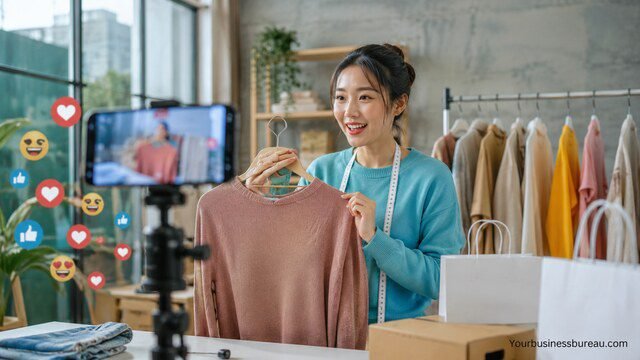
Live commerce became a major revenue driver in 2025, particularly in beauty, fashion, electronics, and lifestyle industries. Brands combined livestream content with instant purchasing functionality to create interactive shopping experiences.
Consumers engaged directly with hosts, influencers, and product specialists during live events. Real-time demonstrations increased trust while limited-time offers encouraged faster purchasing decisions.
TikTok Shop accelerated live commerce adoption through integrated checkout systems and creator-led product showcases. Fashion and beauty brands achieved significant sales growth through livestream tutorials, unboxing sessions, and product comparisons.
Amazon Live expanded product education by allowing brands to host interactive demonstrations inside the ecommerce ecosystem. Customers asked questions, viewed product usage examples, and completed purchases without leaving the livestream environment.
Chinese ecommerce platforms continued influencing global live commerce strategies. Western brands adopted flash sales, gamified rewards, and creator-hosted shopping events inspired by Asian digital retail models.
| Platform | Live Commerce Feature | Business Benefit |
| TikTok Shop | Creator-led livestream sales | High engagement conversion |
| Amazon Live | Product demonstration streams | Increased customer education |
| Instagram Live | Interactive shopping sessions | Stronger social interaction |
| YouTube Live | Long-form product showcases | Extended viewer retention |
Successful live commerce campaigns required strong production quality, charismatic hosts, rapid audience interaction, and frictionless checkout systems.
Personalize Email Marketing Through Behavioral Automation
Email marketing remained one of the highest-performing digital marketing channels in 2025. However, successful brands moved beyond generic newsletters and implemented sophisticated behavioral automation systems.
Companies triggered email sequences based on browsing behavior, abandoned carts, loyalty milestones, purchase history, and engagement patterns. Automated personalization improved open rates and increased repeat purchases.
Airbnb optimized email personalization by recommending destinations, experiences, and accommodations based on previous searches and travel preferences. The company also used seasonal timing and regional trends to improve relevance.
Ecommerce retailers implemented dynamic product recommendations that changed according to inventory, customer activity, and price sensitivity. Brands combined AI-driven recommendations with personalized subject lines and adaptive content blocks.
Fitness applications strengthened retention through milestone-based email campaigns that celebrated user achievements and encouraged continued participation. Emotional reinforcement improved long-term engagement.
High-performing email campaigns in 2025 focused on:
- Behavioral segmentation
- Mobile optimization
- Dynamic content personalization
- Trigger-based automation
- Interactive email design
- Data privacy compliance
Privacy regulations also influenced campaign strategies. Businesses invested more heavily in first-party data collection and consent-based communication systems.
Develop Omnichannel Customer Journeys Across Digital Touchpoints
Omnichannel marketing became essential as consumers interacted with brands across websites, physical stores, mobile apps, social platforms, and customer service channels. Successful campaigns maintained consistent messaging while adapting experiences to each environment.
Retail companies integrated loyalty programs across online and offline channels to create seamless customer experiences. Consumers expected synchronized shopping carts, personalized recommendations, and connected support systems.
Disney delivered one of the strongest omnichannel experiences through its integrated entertainment ecosystem. Mobile applications connected ticketing, hotel bookings, ride reservations, merchandise purchases, and personalized recommendations within a unified platform.
Apple maintained consistency across retail stores, digital channels, and customer support interactions. Product launches combined livestream events, social campaigns, in-store experiences, and online education resources.
Starbucks strengthened omnichannel convenience through app-based ordering, loyalty integration, and personalized promotions linked to customer purchase history.
Effective omnichannel marketing required:
- Unified customer data systems
- Cross-channel personalization
- Consistent brand messaging
- Mobile-first optimization
- Integrated loyalty programs
- Real-time customer support
Brands that fragmented customer experiences often lost conversions during transition points between platforms.
Leverage Data Analytics to Optimize Campaign Performance
Data analytics became central to marketing optimization in 2025. Businesses increasingly relied on predictive modeling, attribution systems, and real-time performance dashboards to guide strategic decisions.
Marketing teams analyzed engagement metrics, conversion pathways, customer acquisition costs, retention rates, and lifetime value to improve campaign efficiency. AI-powered analytics platforms identified performance trends faster than traditional reporting methods.
Meta expanded AI-driven advertising optimization tools that automatically adjusted creative formats, audience targeting, and bidding strategies. Advertisers used machine learning systems to improve efficiency while reducing manual campaign management.
HubSpot strengthened integrated analytics capabilities for inbound marketing teams. Businesses tracked customer interactions across email, websites, social media, and CRM systems to evaluate campaign effectiveness.
Retail brands also adopted predictive inventory marketing strategies. Companies aligned promotions with regional demand forecasts, seasonal behavior, and purchasing trends to reduce waste and maximize revenue.
Key analytics priorities in 2025 included:
- Attribution accuracy
- Customer lifetime value analysis
- Predictive behavior modeling
- Retention measurement
- Real-time campaign optimization
- Cross-platform reporting integration
Organizations that effectively combined analytics with creative execution achieved stronger marketing scalability.
Adapt Search Marketing Strategies for AI-Powered Discovery
Search marketing evolved rapidly in 2025 due to AI-generated search experiences, conversational search tools, and zero-click results. Brands adjusted content strategies to maintain visibility across search engines and AI assistants.
Businesses optimized content for semantic relevance, topical authority, and conversational intent instead of relying exclusively on keyword density. Search visibility increasingly depended on structured information, trust signals, and comprehensive content coverage.
Adobe expanded educational content ecosystems that addressed user problems through tutorials, guides, templates, and interactive resources. This strategy improved organic visibility while supporting customer education.
Canva strengthened search performance through user-focused landing pages and template-driven content designed around practical workflows. The company combined SEO with community sharing systems to generate ongoing traffic.
Brands also optimized video content for search discovery. YouTube Shorts, educational reels, and FAQ-driven content improved visibility across both traditional and AI-powered search environments.
Modern search marketing campaigns emphasized:
- Semantic content structure
- Topical authority development
- Multimedia optimization
- Conversational search alignment
- User experience improvements
- Structured data implementation
Businesses that adapted quickly to AI search ecosystems maintained stronger long-term visibility.
Strengthen Brand Loyalty Through Membership and Rewards Programs
Customer retention became more valuable than aggressive acquisition in 2025. Brands invested heavily in loyalty ecosystems designed to increase repeat purchases, community engagement, and subscription participation.
Modern loyalty programs extended beyond discount systems. Companies integrated exclusive content, early access opportunities, personalized rewards, gamification, and experiential benefits.
Sephora’s Beauty Insider program remained a leading example of loyalty marketing. Members received personalized recommendations, product samples, exclusive experiences, and community-driven beauty education.
Nike Membership expanded digital fitness experiences, personalized product access, and athlete-driven content. The ecosystem connected ecommerce, fitness applications, and community participation.
Gaming companies also introduced advanced loyalty systems through battle passes, digital collectibles, and reward-based engagement loops. These systems increased daily participation and long-term retention.
Strong loyalty campaigns focused on:
- Personalization
- Emotional connection
- Gamified participation
- Exclusive member experiences
- Data-driven rewards
- Community integration
Brands that created emotional loyalty achieved greater resilience during economic uncertainty.
Conclusion
Innovative marketing campaigns in 2025 are defined by personalization, authenticity, technology integration, and community participation. The most successful brands no longer rely on isolated advertising strategies. Instead, they build interconnected ecosystems that combine AI, influencer partnerships, immersive experiences, user-generated content, and data-driven optimization.
FAQ’s
AI-powered personalization delivered some of the strongest results in 2025 because it improved customer relevance, retention, and conversion rates across multiple channels.
Short-form videos capture audience attention quickly and align with mobile-first consumption behavior. Platforms such as TikTok, Instagram Reels, and YouTube Shorts prioritize engaging video content through algorithmic distribution.
User-generated content increases authenticity and trust because real customers demonstrate products and experiences. It also expands organic reach while reducing content production costs.
Long-term creator partnerships, audience alignment, authentic storytelling, and creative freedom contribute to higher engagement and stronger customer trust.
Brands use augmented reality for virtual product testing, furniture visualization, beauty simulations, interactive experiences, and immersive ecommerce engagement.
Omnichannel marketing creates consistent customer experiences across websites, mobile apps, physical stores, social platforms, and customer support systems, improving satisfaction and retention.


