


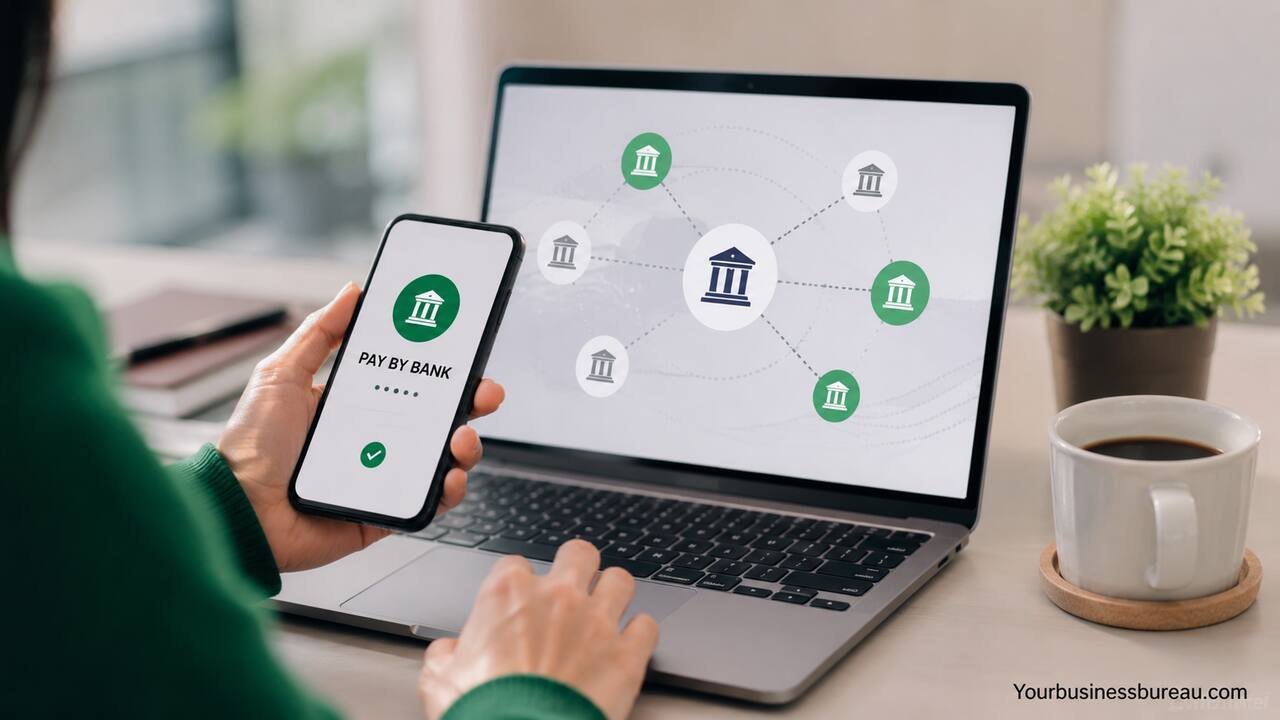
Trustly is a Pay by Bank payment solution that lets customers pay merchants directly from their bank accounts without using card details, wallet balances, or manual bank transfers. The keyword Trustly matters because businesses now need faster settlement, lower payment friction, stronger authentication, and refund experiences that match modern customer expectations. Trustly positions itself as a global Pay by Bank provider connecting merchants, consumers, and banks through one payment flow.
Connect Trustly to Your Checkout Flow
Trustly works best when the payment option appears clearly inside the checkout, deposit, invoice, or payout journey. A customer selects Trustly, chooses their bank, authenticates through their banking credentials or approved bank method, and confirms the payment. The merchant receives payment confirmation through the integration, which allows the order, account funding, or service action to continue with less card-based friction.
A Trustly checkout setup usually includes bank selection, payment initiation, user authentication, payment confirmation, merchant notification, reconciliation data, and refund or payout support. Trustly connects to thousands of banks worldwide through one API, giving merchants broad bank access without building separate bank integrations.
For customers, the experience feels familiar because the bank authorizes the payment. For merchants, the value comes from fewer intermediaries, better payment visibility, lower reliance on cards, and faster movement of funds where instant payment rails are available. Trustly combines payments, accounts, and data into a single payment experience.
Choose the Right Trustly Payment Use Case
Select Trustly when your business needs account-to-account payments, quick deposits, instant refunds, recurring payment alternatives, or lower-friction bank payments. Trustly is commonly used in ecommerce, financial services, travel, gaming, marketplaces, digital subscriptions, and other online payment environments where direct bank payment can improve completion rates.
The main use cases include customer payments, merchant settlements, consumer refunds, account funding, withdrawals, and payouts. Trustly supports instant refunds, deposits, and settlements that can improve cash flow and loyalty.
Different businesses use Trustly differently. An ecommerce store may use Trustly to reduce card processing dependency. A gaming operator may use it for fast deposits and withdrawals. A financial service may use it to verify account ownership and move funds. A marketplace may use payouts to send funds directly to bank accounts.
| Trustly use case | Main business need | Customer benefit |
| Pay by Bank checkout | Accept direct bank payments | No card entry required |
| Instant refunds | Return money faster | Better post-purchase experience |
| Payouts | Send funds to bank accounts | Faster access to money |
| Account funding | Move money into an account | Simple bank-based deposit |
| Recurring or repeat payments | Reduce repeated setup | Faster returning-user checkout |
Verify Bank Coverage Before Launch
Check Trustly’s supported markets, bank connections, payment rails, and product availability before implementation. Trustly operates across many countries and processes large payment volumes through its banking network.
A proper coverage review should include customer location, bank availability, currency support, refund capability, settlement timing, payout eligibility, authentication requirements, and compliance obligations. Trustly may offer different capabilities in Europe, the United States, and other supported regions because local banking systems and payment rails vary.
Coverage affects conversion. A customer who sees their bank listed can complete payment quickly. A customer whose bank is unavailable may need another payment method. For this reason, Trustly should sit inside a broader payment strategy that includes fallback options where needed.
Build a Clear Customer Payment Journey
Present Trustly as a direct bank payment option with simple wording. Customers should understand that they are paying from their bank account, not applying for credit, loading a wallet, or creating a new bank account. Users can pay without card details, manual entry, or unnecessary extra steps.
The customer journey should include a recognizable Trustly button, bank selection, secure authentication, payment approval, confirmation, and receipt. Returning users may benefit from remembered payment experiences where available, which reduces repeated setup and improves checkout speed.
Clear messaging reduces abandoned payments. Customers want to know which bank account is used, whether fees apply, when funds leave the account, how refunds work, and where to check payment status.
Apply Security and Authentication Standards
Trustly payments use bank-based authentication, which means the user confirms the transaction through their bank’s login or approved verification process. Open banking payments use bank login authentication and multi-factor authentication, helping reduce fraud and chargeback exposure.
Security planning should cover customer authentication, account verification, fraud scoring, payment confirmation, refund controls, data retention, and privacy notices. Trustly connects users to bank and financial accounts so they can make merchant payments and share information needed to deliver requested services.
Merchants should still maintain internal fraud controls. Trustly can reduce certain card-related risks, but businesses must manage account takeover risk, refund abuse, compliance screening, customer support workflows, and transaction monitoring.
Compare Trustly With Card and Wallet Payments
Compare Trustly against cards, wallets, ACH, manual bank transfers, and local payment methods before deciding where it fits. Trustly’s strongest advantage is direct bank payment with less card entry friction. It also supports faster refunds and payouts in eligible markets.
Cards remain useful because customers recognize them and card networks provide broad acceptance. Wallets work well when customers already store credentials. Manual bank transfers can be low cost but often create reconciliation problems. Trustly sits between these options by combining bank funding with a guided checkout experience.
| Payment method | Funding source | Main strength | Common limitation |
| Trustly | Bank account | Fast Pay by Bank flow | Bank coverage varies by market |
| Credit card | Credit line | Broad acceptance | Higher fees and card fraud risk |
| Debit card | Bank account via card network | Familiar checkout | Card data still required |
| Digital wallet | Stored card or balance | Quick returning checkout | Wallet adoption varies |
| Manual bank transfer | Bank account | Low infrastructure cost | Slower confirmation and reconciliation |
Optimize Trustly for Higher Conversion
Place Trustly where customers make payment decisions and explain the benefit in plain language. Phrases such as “Pay directly from your bank” or “No card details required” help users understand the option. Trustly supports high conversion potential and faster checkout experiences when implemented properly.
Conversion optimization includes button placement, payment method ordering, bank search quality, mobile usability, error handling, retry paths, and fallback methods. A payment method should not create confusion at the final step. Customers should know whether they are confirming a one-time payment, refund destination, or payout account.
Merchants should measure Trustly performance by authorization completion, abandoned bank selection, failed authentication, refund speed, settlement timing, customer support contacts, repeat usage, and average order value. These measurements show whether Trustly improves revenue, speed, and customer satisfaction.
Use Trustly Payouts and Refunds Carefully
Trustly payouts allow merchants to send funds directly to consumer bank accounts. The payout system supports fast disbursements where instant payment rails are available.
Refund and payout workflows should include customer identity checks, bank account confirmation, transaction matching, risk rules, error handling, support visibility, and timing disclosures. Customers care most about when funds arrive and whether the refund goes to the correct account.
Fast payouts can improve loyalty, especially in industries where customers expect quick access to money. However, speed also increases the importance of fraud prevention and operational controls. A merchant should decide which payouts qualify for instant handling and which require review.
Prepare Compliance, Privacy, and Support Processes
Before launching Trustly, align legal notices, privacy disclosures, customer support scripts, refund terms, and payment records. Personal data may be processed for payment services, and users may have rights such as access, correction, deletion, and consent withdrawal under applicable privacy laws.
Operational readiness includes training support agents, updating checkout FAQs, documenting payment statuses, defining refund timelines, and creating escalation paths. Customers may ask whether Trustly stores bank credentials, how the payment is authorized, or why a payment failed.
A strong support process turns Trustly from a technical payment option into a reliable customer experience. The payment page, order confirmation, email receipt, and help center should all use consistent language.
Measure Trustly Performance After Launch
Track Trustly from the first checkout impression to final settlement. The most useful metrics include payment method selection rate, completed payment rate, failed authentication rate, refund time, settlement time, dispute rate, customer support volume, and repeat usage.
Merchants should compare Trustly performance against cards, wallets, and other bank payment methods. A payment method may perform better in one country, bank group, device type, or customer segment than another. This comparison helps teams adjust payment ordering and messaging.
Performance review should continue after launch because bank coverage, customer behavior, regulations, and instant payment availability can change. Trustly’s value grows when businesses monitor results and refine the flow instead of treating the integration as a one-time setup.
Conclusion
Trustly gives merchants a direct way to accept Pay by Bank payments, issue refunds, and send payouts through a bank-connected payment experience. Its main value comes from reduced card dependency, faster bank-based movement of funds, secure authentication, and a checkout flow that can work across many banks and regions. Businesses that verify coverage, explain the customer journey clearly, apply strong risk controls, and measure performance can use Trustly as a practical payment method for modern digital commerce.
FAQ’s
No. Trustly is a financial technology payment provider, not a consumer bank. It connects customers, merchants, and banks for Pay by Bank transactions.
No. Trustly payments are funded directly from a bank account, so customers do not need to enter card details.
Trustly uses bank-based authentication and open banking payment flows. Customers should still confirm they are paying a legitimate merchant and should review payment details before approval.
Yes. Trustly supports refunds, and in eligible situations merchants can use Trustly to return funds quickly through the same bank-based payment network.
Customers can usually pay for goods and services without direct consumer fees, although merchants and markets may have their own commercial arrangements.
Trustly is useful for online businesses that need fast direct bank payments, lower card reliance, instant refunds, account funding, or bank-account payouts.


