


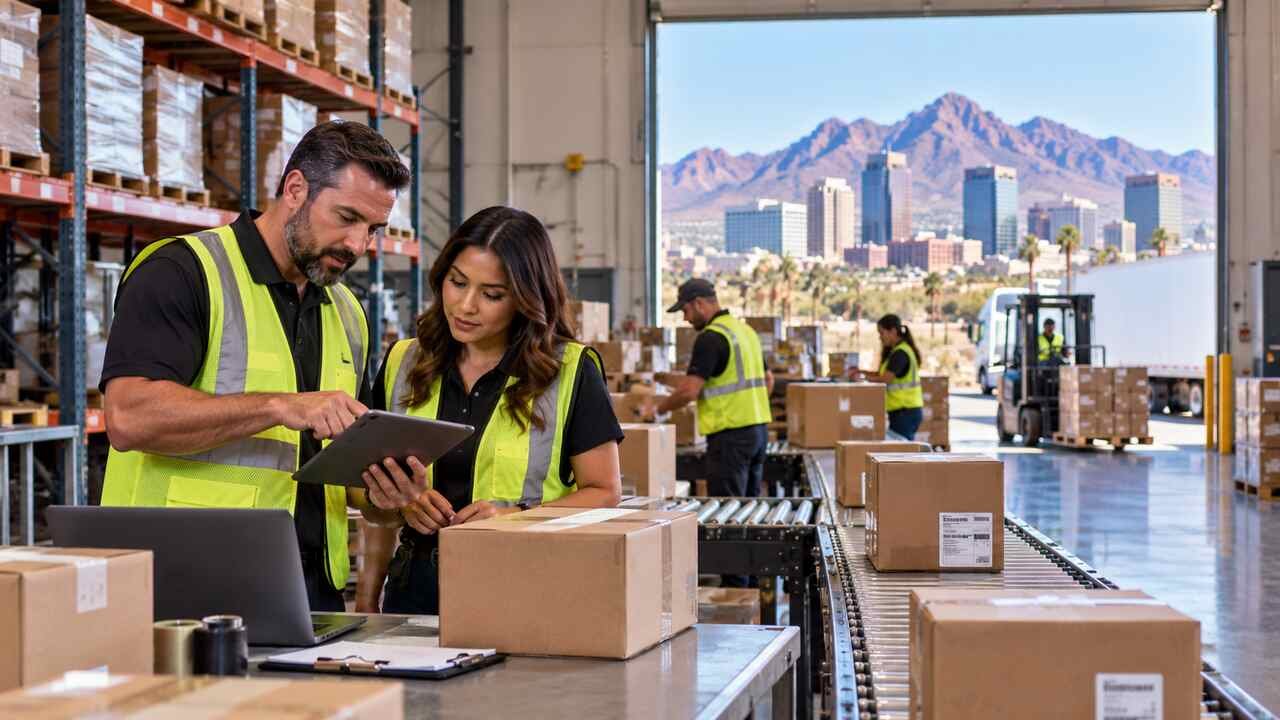
Why Fulfillment Resilience Matters in Arizona
For businesses serving Phoenix, Avondale, and the wider Arizona market, fulfillment is more than moving boxes. It is the daily process that connects suppliers, warehouse teams, carriers, customers, and support staff. Working with third party logistics companies can give growing businesses access to storage, order processing, and transportation support without requiring every capability to be built internally.
Customers expect orders to be accurate, packaged appropriately, and accompanied by useful tracking updates. When one part of the operation falls behind, the effect can spread quickly. A late inbound shipment may create stockouts, delayed picks, missed carrier cutoffs, customer inquiries, and more complicated returns.
Resilience does not mean preventing every disruption. It means creating an operation that can identify trouble early, prioritize work clearly, and recover without losing control of inventory or customer communication. A smaller company can often make meaningful improvements through disciplined processes before investing in major automation.
Arizona conditions also deserve attention in the plan. Summer heat can affect employee comfort, equipment use, loading schedules, and product handling requirements. Warehouse leaders should build safe work practices around local conditions, including the heat-prevention guidance published by the National Weather Service.busines
When internal space, labor, or shipping capacity is stretched, a qualified third party logistics provider may offer a flexible way to handle overflow, seasonal volume, or new distribution needs. The decision should still be based on service requirements, inventory controls, and the ability to communicate clearly with customers.
Start With a Fulfillment Risk Check
Before changing systems or adding warehouse space, map the full order journey from supplier receipt through final delivery. Include receiving, putaway, storage, order release, picking, packing, carrier handoff, delivery exceptions, and returns.
- Identify steps that depend on one employee, supplier, carrier, system, or facility.
- Review recent stockouts, late shipments, damaged goods, and delayed returns.
- Estimate the customer and financial impact of each recurring problem.
- Rank risks by urgency and business value.
- Assign an owner and a practical next action for the first issue to fix.
Build Better Inventory Visibility
Accurate inventory records allow teams to promise products with more confidence and reduce wasted time searching for stock. Each item should have a known location, status, quantity, and movement history. For products that require special handling, relevant lot, serial, expiration, or condition details should be recorded consistently.
Cycle counting is often more manageable than relying solely on a single annual physical count. Count fast-moving and high-value items more frequently, investigate differences promptly, and correct the process that caused the error. Useful measures include inventory accuracy, stockout rate, order fill rate, inventory turnover, and the number of adjustments made each month.
Plan for Demand Spikes Before They Happen
Promotions, seasonal demand, new product launches, and retail events can expose bottlenecks that are less visible during normal weeks. Review sales history alongside upcoming marketing activity, then create separate forecasts for expected, busy, and high-volume scenarios.
- Reserve labor, packaging supplies, dock time, storage locations, and carrier capacity early.
- Place fast-moving products in accessible pick locations.
- Set reorder points and safety-stock rules for critical items.
- Test high-volume processes through a smaller campaign or simulation before a major event.
Use Flexible Capacity to Control Costs
Permanent warehouse space and labor can be valuable when volume is steady, but they can become expensive when demand changes. Businesses should compare the cost and control of maintaining their own facility with options such as temporary storage, shared space, contract warehousing, or outsourced fulfillment.
Flexibility is not automatically the best answer. Outside capacity may require more coordination, clearer service-level expectations, and dependable data sharing. Review capacity plans at least quarterly so that storage and staffing decisions reflect current sales patterns rather than last year’s assumptions.
Strengthen Transportation Planning
Transportation resilience begins with matching the shipment to the customer promise. Consider delivery urgency, product value, service area, package characteristics, and total cost. Where practical, maintain approved alternatives for carriers and routes instead of relying on a single option.
- Track on-time shipment, on-time delivery, transit time, damage claims, and freight cost per order.
- Create a backup routing plan for severe weather, road closures, carrier disruptions, or missed pickups.
- Communicate revised delivery expectations as soon as an exception becomes known.
Make Warehouse Workflows Easier to Repeat
Standardize the Essential Steps
- Receiving: Verify quantities, purchase order details, labels, and any visible damage.
- Putaway: Store products in assigned locations that support safe, efficient retrieval.
- Picking and packing: Use clear pick instructions, product checks, approved packaging, and correct labels.
- Shipping and returns: Confirm carrier service and tracking, then quickly inspect returned items for restocking, repair, recycling, or disposal.
Written procedures should cover routine work and exceptions. Warehouse safety should be part of those instructions, particularly around equipment, loading areas, material handling, and employee training. The warehouse safety resources from OSHA provide a useful reference point for reviewing workplace practices.
Choose Technology That Solves a Real Problem
Warehouse management, order management, barcode scanning, and transportation tools can improve visibility by addressing specific operational needs. Start with one workflow, facility, or product group. Useful capabilities may include mobile scanning, location control, inventory history, alerts, exception reporting, and connections between order and shipping systems.
A complicated platform will not fix unclear processes. Define the desired result first, train users thoroughly, test the change, and measure whether it reduces errors, delays, or manual rework.
Keep People at the Center and Prepare for Disruptions
Cross-training helps prevent a single absence from stopping receiving, picking, carrier scheduling, or customer updates. Employees who perform the work every day can also identify recurring errors, unnecessary walking, confusing labels, and unsafe practices that managers may miss.
Create a concise disruption playbook for supplier delays, carrier failures, demand surges, system outages, and warehouse incidents. It should name decision-makers, list backup contacts, explain how inventory transactions will be recorded during an outage, and define how customers will receive revised timelines.
Measure What Customers Actually Feel
Track perfect-order performance, order accuracy, on-time shipment, return cycle time, and customer complaints alongside cost measures. Review trends monthly rather than reacting to one unusual week. A simple scorecard that frontline teams can understand creates accountability and helps leaders see whether improvements are strengthening service.
Conclusion
Resilient fulfillment in Arizona is built through steady operational decisions, not one large fix. Start with the most costly weak point, improve inventory accuracy, standardize warehouse work, prepare for changing demand, and test backup plans before they are needed. Businesses that balance dependable service with flexible capacity will be better positioned to serve customers as conditions change in 2026.


