







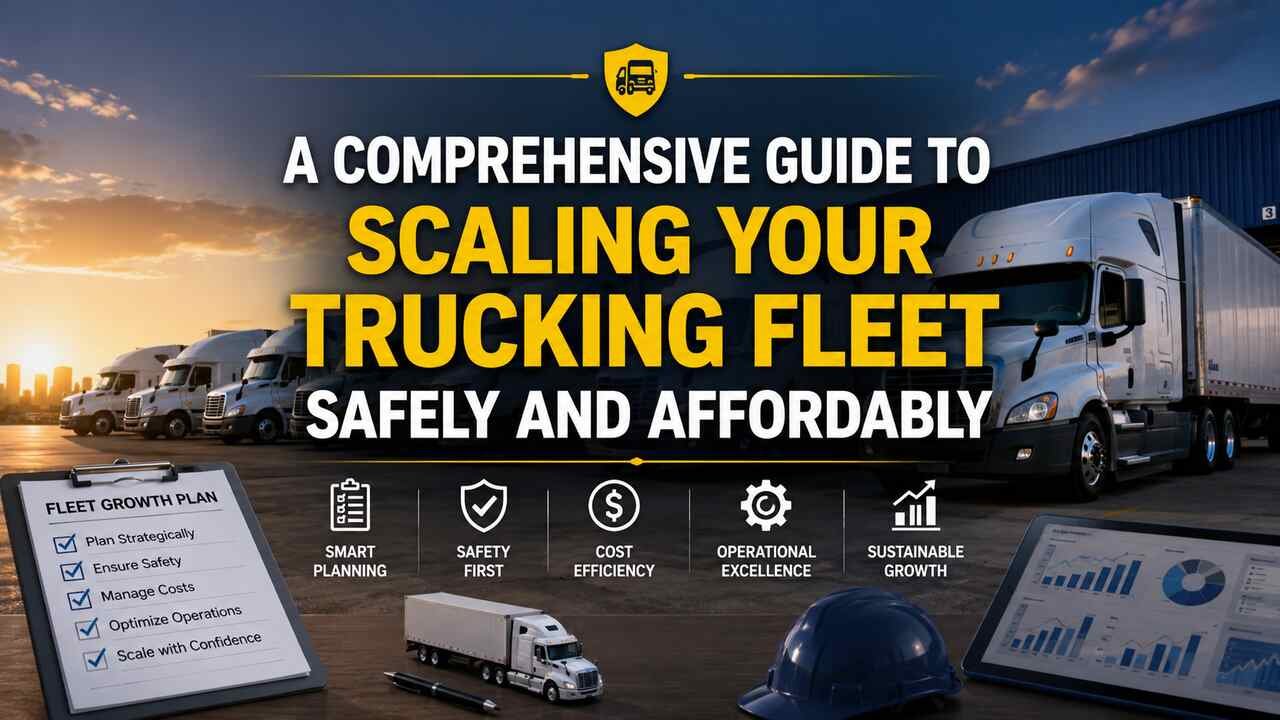
Growing your business in a way that doesn’t compromise safety isn’t just important for protecting your reputation and your team, it’s important for your bottom line. Unsafe growth isn’t just bad for the world, it’s also bad for business.
Know Your Numbers Before You Add a Single Truck
When business improves, the natural response is to think about growing. More lanes, more trucks, you’re already set up to handle it, right? The future looks bright, so why not scale? An easy rule of thumb: don’t even consider expansion until you’re sure you can.
Your operating ratio, that’s operating expenses divided by operating revenues, is a good indicator of whether your current operation can endure the additional risk and burden that come with growing. Operating ratios above 95% signal thin margins that leave you vulnerable to a bad month, one major breakdown, or a single liability claim putting you in a hole. You’ll want that number to be consistently below 90% before you figure on getting bigger.
As you track your operating ratio, also calculate your true cost-per-mile. According to the American Transportation Research Institute’s 2023 analysis, the average marginal cost to operate a commercial truck reached a record high of $2.251 per mile. But your specific costs may be different. That number represents fuel, maintenance, driver pay, and insurance, but based on the lanes you run, the age of your equipment, and your carrier profile, your costs could vary. Know what they are. If you can’t identify the costs within a few cents, you’re not ready to scale, you’re guessing. Fix that first.
Leasing vs. Buying: Pick the Structure That Fits Your Cash Flow
Investing in additional trucks is a strategic decision since it involves the commitment of capital. Having the wrong ownership or financing structure, either purchasing trucks or taking them on a lease, can severely reduce the liquidity you’ll need to operate as you expand.
Buying trucks, either new or used, makes the most sense for fleets with excess liquidity and solid operating history. If you’re just starting to scale though, you won’t have the volume to absorb the increased overheads and avoid month-end cash stresses. As far as new trucks go, it takes some time to build your specifications and test the model’s reliability. You don’t want to suffer a large depreciation event by dumping the truck in year two of a building three-year lease.
Used trucks make the most sense for early scaling fleets if you want to avoid the steeper depreciation that typically hits in the first two years. The downside with used equipment is that it’s used, and it needs more maintenance. That’s why some fleets mix the approaches, owning the first truck, and then leasing look-alike trucks two and three for the length of the first contract.
Build a Hiring Process That Protects Your Safety Profile
Every driver that you add to your fleet is making it either easier or harder to sign that next shipper contract. They’re making it more or less likely that your insurers will kick you to a costlier tier. They’re making your fleet safer or more prone to accidents. They’re raising or lowering your CSA Scores. There is no and never will be such thing as a neutral hire.
Pre-check the FMCSA Drug and Alcohol Clearinghouse on every applicant. It’s a federal database that flags CDL holders with unresolved drug or alcohol violations from previous employers. It’s low-hanging fruit of due diligence, easy to administer. Show you care, because few things are more glaringly outrageous to an insurer than not even bothering to check this. It’s not just bad safety practice, it’s bad business.
Pull the last three to five years of every prospective driver’s Motor Vehicle Record (MVR). One at-fault accident may be acceptable if there are extenuating circumstances and the record is otherwise clean. A half-dozen speeding tickets might disqualify an otherwise acceptable applicant. If you already have this level of granularity in your hiring process, good, but still hire for safety not immediate need. Working with specialists like Rig Insurance Pros can help you understand how driver records affect your rates. It’ll cost more in the long run to take on extra risk than to struggle understaffed for a little longer.
Beyond the paperwork, do actual road tests. Not a check-the-box procedure, a real evaluation of how a driver handles the truck under load, how they manage tight spaces, and how they communicate. Add a structured orientation period before new drivers are dispatched independently. The drivers who cause the most damage to fleet safety profiles tend to be those who were rushed into service without proper onboarding.
CSA Scores Are a Financial Instrument, Not Just a Compliance Metric
Treat your CSA scores, the FMCSA’s Compliance, Safety, Accountability tracking system, with the same level of importance as you would your business credit score. The two areas that have the most negative impact on your CSA are Hours of Service violations and vehicle maintenance violations. 100% within your control.
ELD compliance removes the “he said, she said” of HOS violations. Drivers no longer have the freedom to mismanage their logs and cloud your HOS score. You will know where your hours are going and where they are being wasted. Which, by the way, is often a sure sign of driver fatigue slipping into noncompliance.
Shop-generated vehicle maintenance violations come as a result of reacting to bad data. A well-defined preventative maintenance program, triggered off of your actual engine data or vehicle’s mileage, will eliminate defects and their associated violations from darkening your CSA. Preventable, unnecessary road assist bills and out-of-service orders will come down while your shop expenses will become predictable.
Use Telematics and Cameras as Coaching Tools, Not Just Monitoring Tools
Telematics and dash cams have been seen as tools to monitor drivers. But used properly and explained well, they are investments that can not only protect your good drivers but make them and your business better.
When someone tries a fraudulent claim against your driver, the legal advice used to be, “Settle fast. It’s cheaper.” It still is if you don’t have a witness or a camera. With a dual-facing camera, you have footage. You can confirm fault or exonerate a guy before dinner, not six months of litigation away, and bring the real perpetrators to light. Do that a few times and the fraudsters look for easier targets.
Telematics give you real-time data on things like hard braking, idle time, fuel consumption, and route efficiency. The purpose is not to catch a driver with an over-rev. The purpose is to spot patterns that can lead to more fuel in the tank, a longer life from your equipment, and prevention from bad things happening to good people.
Structure Your Insurance to Scale With Your Fleet
Insurance is not a flat expense that you establish and then ignore. It should be regularly updated as your fleet expands. Coverage gaps and coverage mismatches lead to additional expenses, one immediately and the other later on.
Commercial trucking insurance includes multiple elements that need to be tailored as you increase your number of units: primary liability, physical damage, cargo insurance, and non-trucking or bobtail insurance, depending on your operational setup. When you acquire a new truck, you aren’t just dealing with an additional monthly expense, you are also getting additional exposure that needs to be correctly insured from the first moment that truck is used to haul freight.
It’s truly much easier if you partner with a broker who specializes in commercial transportation. A general broker can set up a policy but will be unfamiliar with how your CSA scores impact your premiums, how to configure cargo limits based on the cargo you transport, or how to add a unit in the middle of your current policy term.
Assess your insurance each time you acquire a truck, change the freight you will carry, or begin to operate in new lanes. Don’t allow your coverage to become obsolete compared to your new business.
Retention is Cheaper Than Recruitment, Every Time
The driver turnover issue in the trucking industry is well known, and it’s exacerbated during rapid growth because companies hire quickly and poorly. Replacing a driver, which includes recruiting, screening, on-boarding, and covering the productivity loss of a new recruit, costs a few thousand dollars a head, all of which comes straight off the margin of that new revenue.
The good drivers that are worth hanging on to aren’t picky about much, just a few basics that are hard to get wrong: pay that’s at least in the ballpark of the competition and doesn’t fluctuate randomly, equipment that works, home time in line with what they were promised during hiring, and a dispatcher who approaches them like a skilled professional. Companies that get the basics right keep drivers way longer than the companies that burn through staff, and recruiting costs, adjusting for inflation, have a way of being the same year over year regardless of growth.
In some cases, pay structure is even more important than the bottom-line pay raise, guaranteed salary versus mileage versus percentage versus bonus structure. If your drivers understand exactly how they get paid, they’ll make wiser decisions and feel like they’re playing an achievable game. A pay structure that’s too confusing is taken as a sign that you’re trying to underpay for no reason other than to underpay, and no one wants that game to be going on.
Driver retention also has a direct connection to safety. Experienced drivers who know your freight, your lanes, and your standards are lower-risk than a constant stream of new hires still learning your operation. Stability in the driver seat shows up in your CSA scores, your claim frequency, and ultimately your insurance premiums.
Scaling is Sustainable When Safety Leads the Way
The fleets that grow well aren’t always the ones with the best freight contracts or the most trucks. They’re the ones that kept their operating costs low, their drivers competent and stable, and their safety record clean enough to maintain access to quality shippers and manageable insurance rates. Each of those outcomes is connected, and each one is driven by decisions made long before the next truck rolls off the lot.


