


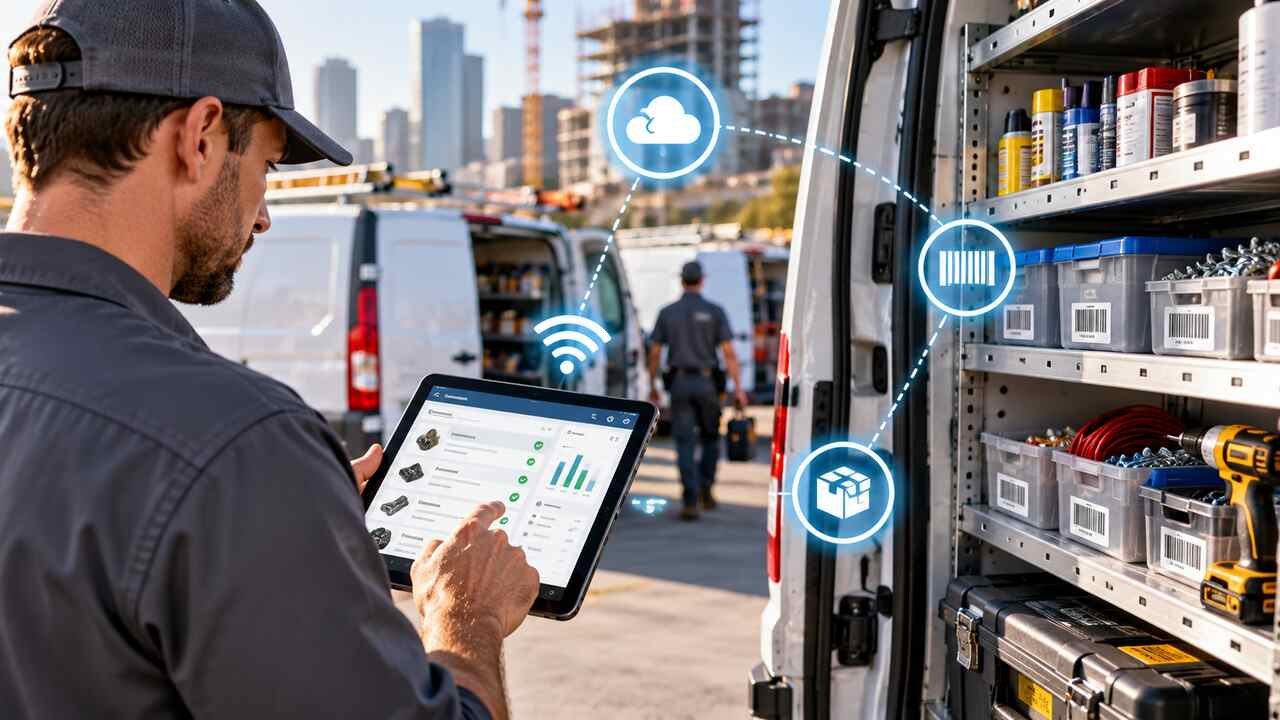
Managing a fleet of mobile service vehicles is one of the most complex logistical challenges a growing trade business can face. As companies scale, the traditional methods of tracking equipment with paper checklists or basic spreadsheets quickly fall apart. Without a reliable system in place, business owners are left dealing with misplaced tools, duplicate material purchases, and a frustrated workforce. For modern field service companies, transitioning to comprehensive business process automation is no longer optional. However, these digital software upgrades are only truly effective when they are paired with a highly organized physical workspace.
The High Cost of Disorganized Fleet Inventory
Before investing in new field service management software, it is vital to understand the true cost of operational inefficiency. When technicians spend their mornings searching for misplaced equipment or waiting for replacement parts, profit margins shrink rapidly. Disorganised stock directly inflates labour costs. In fact, unreliable inventory systems often lead to tool hoarding, a costly phenomenon where field workers secretly hide communal equipment in their personal vehicles because they do not trust the dispatch system to provide what they need. This kind of unpredictability ultimately damages client relationships, as jobs are frequently delayed while technicians run to the supplier for missing materials.
This lack of visibility also leaves mobile businesses incredibly vulnerable to opportunistic crime, especially as general theft rates continue to climb. According to recent data compiled by MapTrack, Victorian tradespeople alone lose over $40.8 million worth of hand and power tools in a single year due to theft from vehicles and worksites. Reviewing statistics on equipment theft and tool loss highlights exactly why businesses need robust physical and digital solutions. To mitigate these severe financial risks, companies must adopt modern tracking systems that secure assets efficiently while holding staff accountable.
Bridging the Physical and Digital Divide
A common mistake that growing service businesses make is purchasing expensive cloud-native software without first standardizing the physical layout of their vehicles. Mobile fleets cannot fully leverage automated tracking systems if the interior of their vans or utes is chaotic. For instance, without a proper toolbox aluminium setup to systematically organize gear, digital tracking efforts often fail. If a digital system notes that a specific power drill is in vehicle three, but vehicle three is a cluttered mess, the software is essentially useless to the worker on the ground. When the physical environment contradicts the digital record, workforce adoption rates for the new software plummet.
To solve this, fleet managers are increasingly adopting the 5S system, a methodology that focuses on sorting, setting in order, shining, standardising, and sustaining. Standardising your fleet layout is the critical foundational step. By using quality compartments and heavy-duty storage units, businesses can assign specific digital inventory categories to precise physical locations. This zoning approach places frequently used items at an accessible height, while rarely used items are secured in secondary bins.
Key Steps to Automate Your Mobile Stock
Once the physical foundation is completely standardised, trade and service businesses can implement automation technology to streamline their daily operations. Connecting robust physical storage systems with modern tracking software requires a strategic, phased rollout. Proper implementation prevents operational bottlenecks and allows technicians to seamlessly adapt to the new workflow.
Consider these essential steps to successfully automate your fleet inventory:
- Audit and Standardise Storage: Empty every vehicle entirely, remove broken or redundant tools, and establish a uniform layout across your fleet. Ensure that every item has a dedicated, secure compartment before you log it digitally.
- Implement Smart Tracking Tags: Attach durable barcodes, QR codes, or Bluetooth RFID tags to your high-value tools. When technicians remove an item from their vehicle, they can simply scan it with their smartphone to update the central database instantly.
- Integrate Field Service Software: Utilise software that connects your inventory data directly to job scheduling and invoicing. This ensures that dispatchers know exactly which vehicle has the necessary parts before they assign a specific job.
- Set Up Automated Replenishment: Configure your software systems to send automatic alerts to the purchasing department when consumable materials, such as specific cables or fasteners, drop below a minimum threshold.
Embracing digital transformation is completely changing the way mobile trades operate across the country. Upgrading to automated asset tracking can reduce carrying costs significantly by preventing duplicate purchases and eliminating delays. By tackling the physical organisation of your vehicles first and pairing secure storage solutions with modern tracking technology, you can eliminate major operational waste. Ultimately, a synchronised system protects your most valuable assets and ensures your technicians can focus entirely on delivering excellent service.


