


Introduction
A Vodafone Business SIM Only plan gives companies access to mobile connectivity without the expense of purchasing new devices. Whether you run a small startup, manage a growing business, or oversee a large enterprise, a SIM-only solution allows you to keep existing smartphones while benefiting from competitive data allowances, flexible contract terms, business-grade support, and advanced communication features.
Businesses increasingly rely on mobile connectivity for customer communication, cloud collaboration, video meetings, remote working, and secure access to business applications. Choosing the right Vodafone Business SIM Only plan helps reduce operating costs while ensuring employees remain connected wherever work takes them. This guide explains how to select the right plan, compare available options, evaluate features, and maximize value for your business.
Assess Your Business Mobile Requirements
Before selecting a Vodafone Business SIM Only plan, identify exactly how your employees use mobile services. Different businesses have different communication needs, and understanding those needs helps prevent overspending or choosing a plan with insufficient resources.
Consider the number of employees who require mobile connectivity. Sales teams typically consume more mobile data than office-based staff, while customer support representatives may rely heavily on unlimited calls. Remote workers often require larger data allowances for video conferencing and cloud applications.
Also review current mobile usage reports. Examine average monthly data consumption, call minutes, international calling requirements, roaming frequency, and device compatibility. These factors provide a reliable foundation for selecting the most suitable business mobile package.
Compare Contract Lengths and Business Flexibility

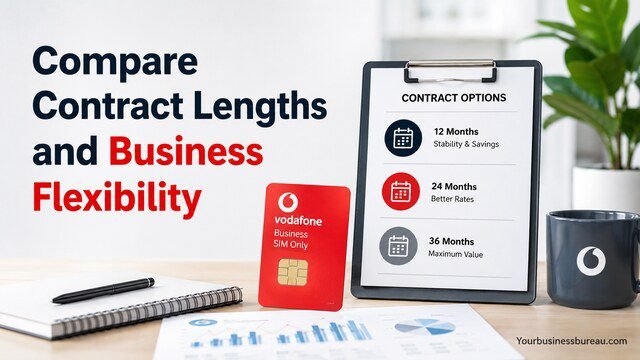
Contract duration plays an important role in managing business expenses and operational flexibility. Vodafone Business SIM Only plans often provide multiple contract options to accommodate different business strategies.
Shorter contracts allow businesses to adapt quickly as staffing levels change or technology evolves. Longer agreements may offer lower monthly pricing or additional business incentives, making them attractive for organizations with stable workforce requirements.
Businesses experiencing rapid growth should prioritize flexibility, while established organizations may benefit from locking in favorable pricing over an extended period. Evaluating future hiring plans alongside contract commitments helps avoid unnecessary costs.
| Contract Length | Best For | Main Advantage | Potential Limitation |
| Monthly Rolling | Startups | Maximum flexibility | Higher monthly cost |
| 12 Months | Small businesses | Balance of flexibility and savings | Moderate commitment |
| 24 Months | Established businesses | Lower monthly pricing | Longer commitment |
| Custom Enterprise | Large organizations | Tailored business solutions | Requires negotiation |
Choose the Right Data Allowance
Mobile data is one of the most significant considerations when selecting a business SIM-only plan. Purchasing excessive data increases costs, while inadequate allowances can reduce employee productivity.
Employees who mainly answer emails and use messaging applications generally require relatively modest monthly data. Teams conducting video conferences, uploading media, using cloud-based CRM systems, or working remotely throughout the day usually need significantly larger data allowances or unlimited plans.
Businesses should also account for future growth. Cloud software adoption continues to increase, meaning average business data consumption often rises each year. Selecting scalable plans minimizes future disruptions.
Evaluate Voice Calling and Messaging Features
Although digital collaboration platforms continue to expand, voice communication remains essential for many businesses. Customer service departments, field technicians, consultants, and sales representatives often depend on reliable voice calling throughout the working day.
Review the included call minutes, messaging allowances, voicemail capabilities, conference calling options, and business communication features available with each Vodafone Business SIM Only plan.
Businesses operating internationally should also consider international calling bundles or discounted overseas rates. These features may significantly reduce communication expenses for companies serving customers across multiple countries.
Review Business Roaming Options
Many businesses operate across national borders or require employees to travel regularly. Roaming features can greatly influence the overall value of a business mobile contract.
Consider how often employees travel internationally. Occasional travelers may only need standard roaming services, while frequent international business travelers often benefit from inclusive roaming packages or regional business travel bundles.
Businesses should verify roaming destinations, fair usage policies, speed limitations, and potential additional charges before finalizing any agreement. Understanding these details prevents unexpected expenses during overseas business trips.
Verify Network Coverage and Reliability
Reliable coverage directly affects employee productivity. Even the most affordable business mobile plan loses value if employees cannot maintain dependable connections while traveling or working remotely.
Evaluate coverage across your primary operating regions, customer locations, warehouses, retail stores, and remote work areas. Consistent indoor and outdoor coverage ensures uninterrupted access to calls, messaging, cloud applications, and collaboration tools.
Businesses with field engineers, delivery teams, or nationwide sales representatives should pay particular attention to network performance in rural and suburban locations alongside urban coverage.
Confirm Device Compatibility
One of the biggest advantages of SIM-only plans is the ability to continue using existing smartphones, reducing hardware expenditure.
Ensure current devices support the required network technologies and business applications. Compatibility includes network bands, 4G or 5G support, dual SIM functionality, eSIM capability where applicable, and security updates.
Businesses planning phased device upgrades should verify that future smartphones will also function seamlessly with their chosen SIM-only plans. This approach simplifies long-term mobile management.
Strengthen Business Security
Mobile devices frequently access sensitive company information, making security an essential consideration.
Choose plans that support secure authentication, mobile device management integration, encrypted communication options, and enterprise security policies. Businesses should also implement internal security practices including device encryption, strong passwords, multi-factor authentication, and remote device management.
Employee education is equally important. Staff should understand phishing risks, public Wi-Fi security, and procedures for reporting lost or stolen devices promptly.
Manage Multiple Business Connections Efficiently
Organizations with multiple employees require centralized mobile management. Administrative tools simplify billing, usage monitoring, and service adjustments.
Look for business account management capabilities that allow administrators to monitor data usage, add or remove users, adjust plans, review invoices, and manage permissions through a single interface.
Centralized management reduces administrative workload while providing greater visibility into mobile spending across departments.
| Business Feature | Benefit | Ideal Business Size |
| Central Billing | Simplifies accounting | All businesses |
| Usage Monitoring | Controls costs | Small and medium businesses |
| Multiple User Management | Easier administration | Growing companies |
| Dedicated Business Support | Faster issue resolution | Medium and large businesses |
| Flexible Plan Changes | Supports business growth | All organizations |
Optimize Costs Without Reducing Productivity
Reducing communication costs should not compromise employee efficiency. Vodafone Business SIM Only plans often provide opportunities to optimize spending while maintaining strong mobile performance.
Review historical usage regularly to identify underused plans. Employees with consistently low data usage may move to lower-cost packages, while heavy users can upgrade to avoid excess usage charges.
Businesses should also reassess mobile requirements annually. Workforce growth, hybrid working, cloud adoption, and changing communication habits can significantly alter mobile usage patterns over time.
Support Remote and Hybrid Working
Hybrid working has become a standard operating model for many organizations. Mobile connectivity allows employees to remain productive regardless of location.
Business SIM-only plans enable staff to participate in video meetings, access cloud storage, respond to customer inquiries, collaborate through productivity platforms, and maintain communication while traveling.
Organizations with distributed workforces should ensure employees have sufficient data allowances and dependable coverage to maintain business continuity outside traditional office environments.
Prepare for Business Growth
Scalability is an important consideration when selecting any business communication solution.
As businesses expand, additional employees, remote offices, and increased mobile usage require flexible mobile services. Choosing scalable Vodafone Business SIM Only plans helps organizations adapt without replacing their entire communications infrastructure.
Growth planning should include future staffing levels, increased international activity, greater cloud application usage, and evolving security requirements. Selecting adaptable plans today reduces future migration challenges.
Monitor Usage and Improve Efficiency
Effective mobile management extends beyond selecting the right plan. Ongoing monitoring ensures continued value.
Regularly analyze employee usage reports to identify trends in data consumption, international calls, roaming, and unused allowances. These insights enable informed adjustments that align mobile services with actual business requirements.
Department managers and IT administrators should collaborate to optimize mobile resources while maintaining employee productivity.
Build a Long-Term Mobile Communication Strategy
Business mobility continues to evolve alongside cloud computing, remote collaboration, and digital transformation. A long-term strategy should balance affordability, flexibility, security, and scalability.
Organizations should periodically evaluate changing communication requirements, emerging technologies, employee work patterns, and business expansion plans. Reviewing mobile services as part of broader IT planning ensures communications remain aligned with organizational goals.
Rather than focusing solely on monthly pricing, businesses should evaluate total value, including reliability, support quality, scalability, and administrative simplicity.
Conclusion
Choosing the right Vodafone Business SIM Only plan involves more than comparing monthly prices. Businesses should carefully assess employee usage, contract flexibility, data requirements, voice services, roaming needs, security features, network reliability, and long-term scalability. A well-selected SIM-only solution reduces hardware costs while supporting productivity, remote working, and future business growth. By reviewing current mobile usage and regularly optimizing plans, organizations can create a cost-effective communication strategy that continues delivering value as their needs evolve.
FAQ’s
Yes. Small businesses often benefit from lower upfront costs, flexible contracts, and the ability to use existing smartphones without purchasing new devices.
In most cases, yes. As long as the devices are compatible with the network and are unlocked if required, they can usually be used with a business SIM-only plan.
The ideal allowance depends on employee usage. Office-based staff generally need less data than field workers, remote employees, or teams that frequently use video conferencing and cloud applications.
Yes. They provide mobile connectivity for accessing cloud services, participating in virtual meetings, communicating with customers, and collaborating from virtually any location with network coverage.
Most business mobile solutions are designed to scale. Organizations can typically add new users, adjust data allowances, and modify services as business requirements change.
Businesses can lower expenses by reviewing employee usage regularly, selecting appropriate data allowances, removing unused services, choosing suitable contract lengths, and managing all business mobile connections through centralized administration.


