








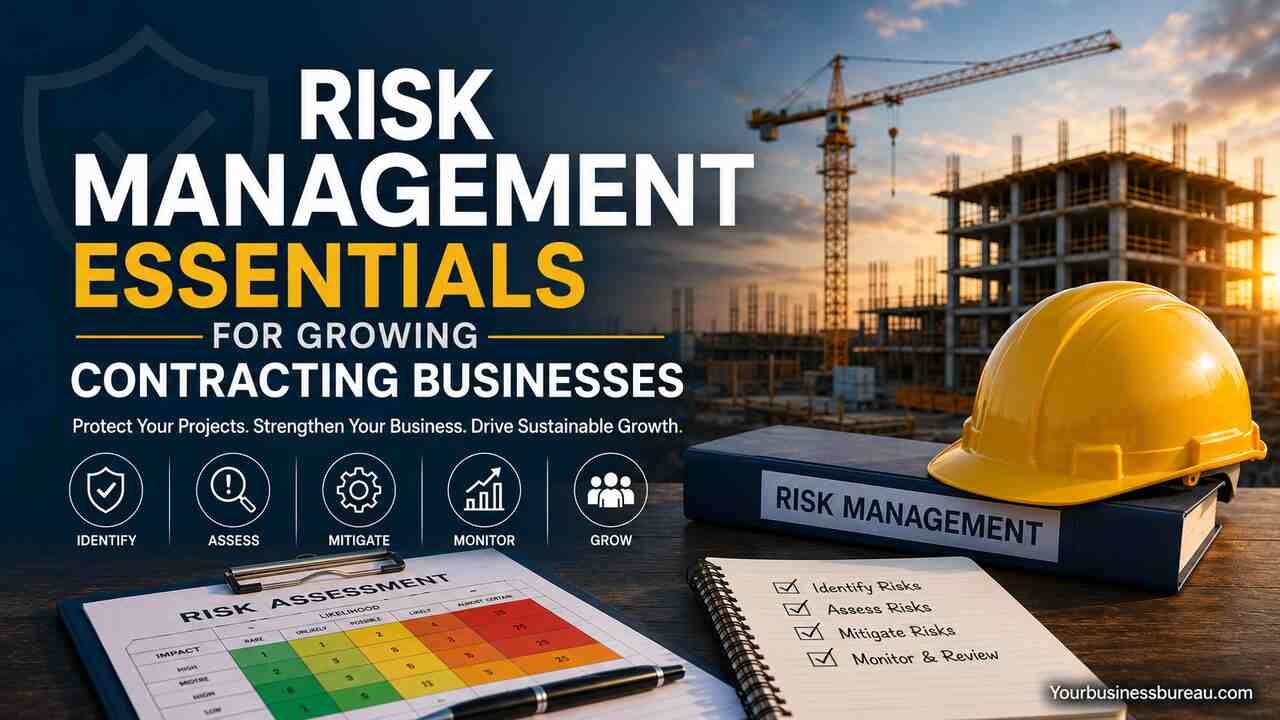
Growing a contracting business comes with exciting opportunities, but expansion also introduces new risks. As teams grow, projects become more complex, and client expectations increase, contractors must take a proactive approach to risk management. A strong risk management strategy helps protect profitability, maintain a positive reputation, and ensure long-term business stability.
Understanding the Risks Facing Contractors
Every contracting business faces a variety of risks, ranging from workplace accidents to contractual disputes. Construction sites and project environments are often unpredictable, making it essential to identify potential hazards before they become costly problems.
Common risks include employee injuries, equipment damage, project delays, property damage, and legal claims from clients or third parties. Financial risks can also arise from cash flow challenges, unexpected expenses, or changes in market demand. By recognizing these threats early, business owners can create plans to minimize their impact.
Building a Culture of Safety
One of the most effective ways to reduce risk is by establishing a strong safety culture throughout the organization. Safety should not be viewed as a compliance requirement alone; it should become a core business value.
Regular training sessions help employees understand workplace hazards and follow proper safety procedures. Clear communication regarding expectations, site rules, and emergency protocols can significantly reduce accidents. Managers should also conduct routine inspections to identify potential dangers before they lead to incidents.
When employees feel responsible for maintaining a safe environment, businesses often experience fewer injuries, reduced downtime, and improved productivity.
Strengthening Contracts and Documentation
Contracts serve as a critical tool for managing risk in the contracting industry. Well-written agreements clearly define project scope, timelines, responsibilities, payment terms, and dispute resolution procedures.
Without detailed contracts, misunderstandings can lead to costly disagreements and legal complications. Contractors should review all agreements carefully and ensure that documentation is maintained throughout every project.
Keeping records of communications, change orders, inspections, and project milestones can provide valuable protection if disputes arise. Proper documentation creates transparency and demonstrates professionalism while helping businesses defend their interests when necessary.
Managing Financial Risks Effectively
Rapid growth can place significant pressure on a contractor’s finances. While taking on more projects may increase revenue, it can also create cash flow challenges if expenses rise faster than incoming payments.
Business owners should regularly monitor budgets, track project costs, and maintain financial reserves for unexpected situations. Accurate forecasting helps identify potential issues before they become serious problems.
Diversifying client portfolios can also reduce financial risk. Relying too heavily on a single customer or project may leave the business vulnerable if work is delayed or canceled. A balanced client base creates greater stability and supports sustainable growth.
Protecting Equipment and Assets
Contractors often invest heavily in tools, machinery, vehicles, and specialized equipment. Damage, theft, or breakdowns can disrupt operations and create significant financial losses.
Implementing maintenance schedules helps ensure equipment remains reliable and safe to use. Secure storage facilities, tracking systems, and clear asset management procedures can further reduce losses.
Employees should also receive proper training on equipment use and care. Preventive measures are typically far less expensive than replacing damaged assets or dealing with project delays caused by equipment failures.
The Importance of Insurance Coverage
Insurance plays a vital role in a comprehensive risk management plan. Even businesses with excellent safety procedures and operational controls can face unexpected incidents.
Appropriate coverage helps protect contractors against liability claims, property damage, employee-related risks, and other unforeseen events. Working with experienced providers such as David Ison Insurance can help contracting businesses evaluate their specific exposures and secure coverage that aligns with their operational needs.
Insurance should be reviewed regularly, particularly during periods of growth, to ensure coverage remains adequate as the business expands.
Preparing for Long-Term Success
Risk management is not a one-time task but an ongoing process that evolves alongside the business. Contractors who regularly assess risks, strengthen safety practices, maintain clear documentation, monitor finances, protect assets, and review insurance coverage are better positioned to navigate challenges successfully.
As a contracting business grows, effective risk management becomes a competitive advantage. By proactively addressing potential threats, business owners can focus on delivering quality work, building strong client relationships, and achieving sustainable growth with greater confidence.


