








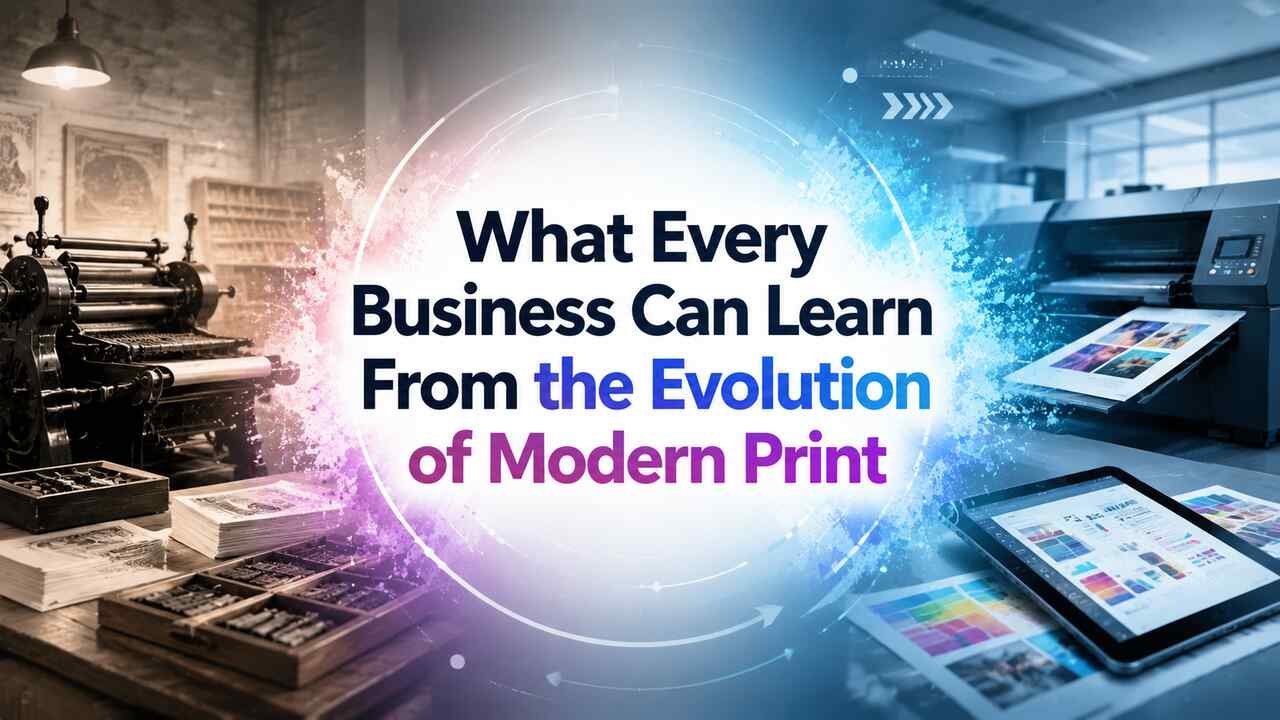
For years, many predicted that digital technology would make print obsolete. Instead, print has adapted, evolved, and found new ways to deliver value. Today’s print industry is more innovative, sustainable and technologically advanced than ever before, proving that long-term success often comes from evolution rather than revolution.
Businesses in every sector can take inspiration from this transformation. The way modern print has responded to changing customer expectations, environmental pressures and technological advances offers valuable lessons for organisations looking to remain competitive in an increasingly fast-moving marketplace.
Innovation Is About Continuous Improvement
Many businesses assume innovation means launching entirely new products or services. The print industry demonstrates that improving existing processes can be just as powerful.
Advances in digital printing, colour management, automation and production workflows have made printing faster, more accurate and more cost-effective without changing its core purpose. Rather than replacing traditional strengths, technology has enhanced them.
Businesses that continually refine what they already do well are often better positioned for long-term growth than those constantly chasing the next big trend.
Sustainability Has Become Part of Quality
Environmental responsibility is now an important part of purchasing decisions across almost every industry. Customers increasingly expect businesses to reduce waste and offer more sustainable solutions without compromising performance.
This shift has encouraged the print sector to invest in recyclable materials, PVC-free alternatives and environmentally conscious production methods. Companies looking for high-performance materials with sustainability in mind can explore solutions from Soyang Europe, whose sustainable frontlit banner materials are designed to balance durability, print quality and environmental considerations.
The wider lesson is clear. Sustainability works best when it is integrated into product development rather than treated as a separate marketing initiative.
Technology Should Support People, Not Replace Them
Automation has transformed the print industry by speeding up production, reducing waste and improving consistency.
At the same time, creative professionals remain central to successful projects. Designers, marketers and production specialists continue to shape campaigns, while technology removes repetitive tasks and improves efficiency.
Businesses adopting new technologies should view them as tools that strengthen human expertise rather than replace it.
Flexibility Creates New Opportunities
Modern print businesses now serve industries ranging from retail and hospitality to construction, exhibitions, healthcare and interior design.
This adaptability has been made possible through versatile materials, faster production processes and a willingness to meet changing customer needs.
Organisations in every sector can benefit from building flexibility into their operations. The ability to respond quickly to new markets, customer demands and industry trends is often a greater competitive advantage than simply offering more products.
Quality Still Matters
While consumers spend much of their day interacting with digital content, physical materials continue to leave a lasting impression.
Whether it is retail signage, exhibition displays, branded environments, or promotional graphics, the quality of printed materials influences how customers perceive a business.
The same principle applies across every industry. Customers frequently judge a company by the quality of the experience it delivers, from its products and communications to its customer service.
Strong Partnerships Deliver Better Results
The modern print industry relies on close collaboration between manufacturers, designers, printers and suppliers to deliver successful projects.
By combining different areas of expertise, businesses can achieve higher standards, solve problems more efficiently and produce better outcomes for customers.
Companies across all industries can benefit from building strong partnerships instead of attempting to manage every specialist function internally.
Listening to Customers Drives Long-Term Success
Customer expectations have changed dramatically over the past decade. Faster turnaround times, greater personalisation, sustainable products and consistently high quality have become standard expectations rather than premium features.
The print industry has responded by investing in smarter technology, improved materials and more efficient production methods. Businesses that continually adapt to changing customer expectations are far more likely to remain relevant than those relying on outdated ways of working.


