







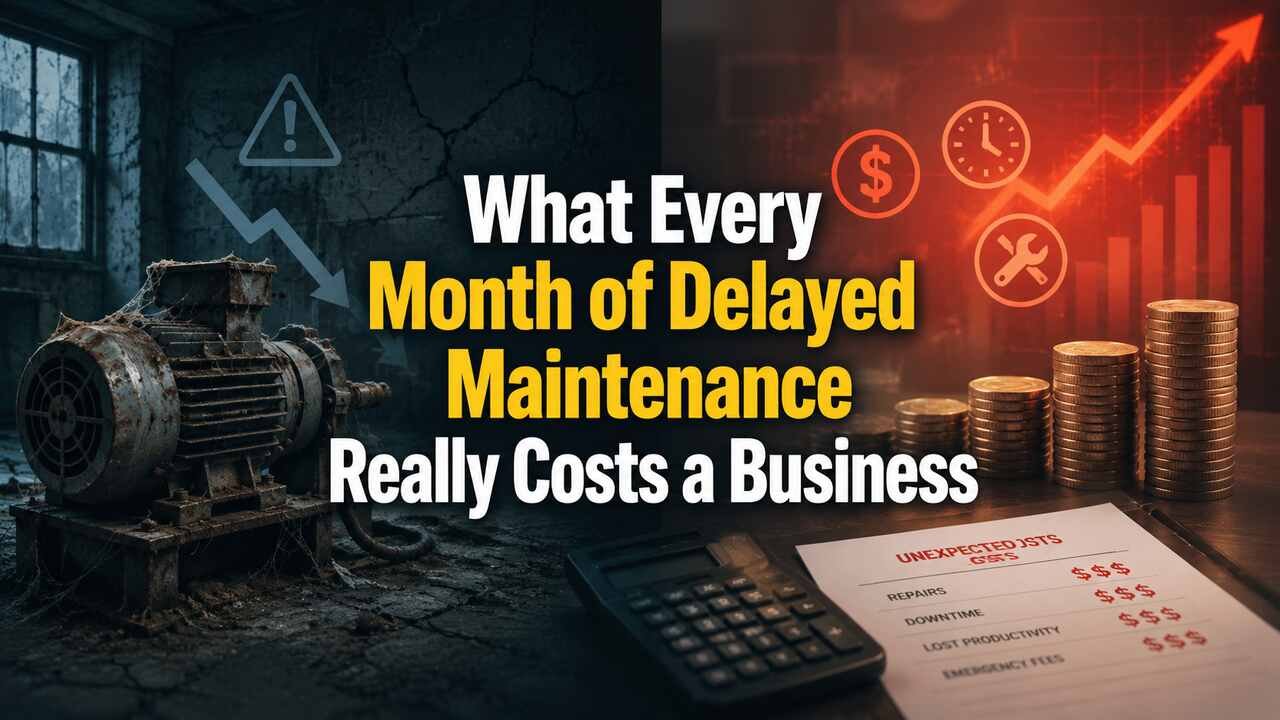
Maintenance is easy to delay when equipment still appears to be working. If a system turns on, production continues, and no one is raising immediate concerns, it can feel practical to push servicing into next month’s budget. However, delayed maintenance rarely stays harmless for long. Every month a business waits, small problems can grow into bigger, more expensive risks.
Minor Faults Become Major Repairs
Many maintenance issues start quietly. A loose component, worn filter, blocked duct, overheating motor, or unusual vibration may not stop operations straight away, but it can place extra strain on the rest of the system. Over time, this strain can cause connected parts to fail.
A business that could have paid for a simple service visit may instead face emergency callout costs, replacement parts, and unplanned downtime. The longer faults are left unchecked, the fewer options a company has. Instead of choosing a convenient time for maintenance, the business may be forced to react when something breaks.
Downtime Disrupts More Than Equipment
When machinery, ventilation, extraction, or safety systems fail, the cost is not limited to the repair invoice. Staff may be unable to work efficiently. Production schedules can slip. Customers may experience delays. In some cases, entire areas of a site may need to be paused until the issue is fixed.
These disruptions can affect revenue, reputation, and team morale. Employees become frustrated when they are expected to work around unreliable systems, while customers may lose confidence if delays become noticeable.
Energy Costs Can Creep Up
Poorly maintained equipment often works harder than it should. Blockages, leaks, worn parts, and inefficient airflow can all increase energy use. A system may still function, but it may need more power to deliver the same result.
This creates a hidden monthly cost. The business might not notice one large expense, but it may be paying more through higher energy bills. Regular servicing helps equipment run more efficiently and can make operating costs more predictable.
Compliance Risks Can Increase
For many businesses, maintenance is not just about performance. It is also about health, safety, and legal responsibility. Systems that control dust, fumes, heat, air quality, or workplace hazards must be kept in suitable working condition.
Delaying checks can leave a business exposed if an inspection, incident, or employee complaint occurs. For companies using local exhaust ventilation systems, arranging professional LEV servicing can help ensure equipment continues to protect workers and meet required standards.
Small Delays Can Affect Staff Safety
Employees rely on properly maintained systems more than they may realize. Ventilation, extraction, alarms, lighting, machinery guards, and other workplace systems all contribute to a safer environment. When maintenance is postponed, employees may be exposed to avoidable risks.
This can result in illness, accidents, absenteeism, or reduced productivity. It may also damage trust if staff feel their working environment is not being properly managed.
Maintenance Protects Long-Term Value
Delaying maintenance can seem like saving money, but it often moves the cost into the future, where it becomes larger and harder to control. Regular servicing helps businesses identify problems early, protect equipment, reduce downtime, support compliance, and create safer working conditions. In reality, every month of delayed maintenance carries a cost. The smartest businesses understand that planned maintenance is not an inconvenience. It is a practical investment in continuity, safety, and long-term performance.


